The National Social Security Fund (NSSF) and city businessman Amos Nzeeyi have agreed to settle their long-running dispute over land in Temangalo, Wakiso district, bringing closer to an end a wrangle that has persisted since 2008.
The dispute, which has for years been associated with Nzeeyi and the Fund, centres on land that NSSF purchased from Nzeeyi and Arma Limited in 2008. The parties have now agreed on a settlement involving the transfer of 10 acres to NSSF and payment for a further 45 acres based on valuations by the chief government valuer and a private valuer.
NSSF acting managing director Patrick Ayota said the agreement followed efforts to resolve the matter and establish the portions of land that met the conditions contained in the parties’ agreements.
“Nzeeyi will transfer the 10 acres of land to the Fund and, for the 45-acre balance, we have agreed that he pays for them using the market rate as determined by the chief government valuer and private valuer,” Ayota said.
Nzeeyi welcomed the agreement, saying resolving the dispute was important to protect his reputation and allow him to pursue partnerships with reputable international organisations.
“I can be partners with reputable international organisations. Because of that, I have to clear my name,” Nzeeyi said.
He added: “Temangalo has been on me for many years and it is not worth it. Even if they wanted it for free, I would have given it up.”
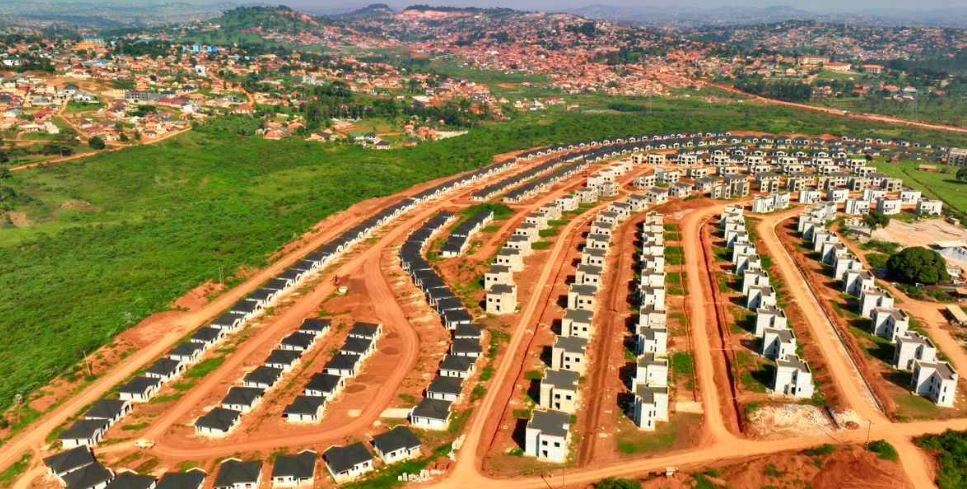
The dispute dates back to 2008 when NSSF purchased 463.87 acres of land from Arma Limited and Nzeeyi. The land was comprised in six separate certificates of title, which NSSF says were subsequently registered in the Fund’s name.
However, at the time the purchase agreement was signed, NSSF and Nzeeyi entered into a Memorandum of Understanding (MOU) allowing him to retain 104.88 acres containing his farmhouse, paddocks and other developments.
Under the agreement, Nzeeyi was required to provide NSSF with suitable alternative land within six months in exchange for the 104.88 acres.
The arrangement later became contentious after NSSF rejected the alternative land offered by Nzeeyi, arguing that it did not meet the conditions agreed upon in the MOU.
The disagreement centred on the land that Nzeeyi was expected to surrender to the Fund and the suitability of the alternative land he had offered.
In October 2011, the parties attempted to resolve the matter through negotiations. They agreed that Nzeeyi would cede 50 acres, reducing the land subject to the swap to 54.88 acres, while he would provide NSSF with 64.5 acres of alternative land.
The proposed arrangement was, however, rejected by the minister responsible for the matter, according to NSSF.
The dispute was subsequently referred to arbitration in February 2013 after NSSF and Nzeeyi agreed to seek an alternative mechanism to resolve the impasse.
The arbitration award upheld the terms of the original MOU and the subsequent negotiated position between the parties.
Under the arrangement, the alternative land was required to be of equal value and suitable for the purpose, adjacent to land already owned by NSSF, appropriate for the Fund’s planned housing developments and free of squatters.
NSSF says that since 2013, two independent valuations have been conducted to assess the suitability of the land offered by Nzeeyi.
According to the Fund, the assessments established that only 10 acres of the alternative land offered met the agreed conditions.
The failure to resolve the dispute over the remaining land kept the matter alive for years, with NSSF maintaining that the disputed property formed part of the land it had purchased in 2008.
In June 2026, NSSF issued Nzeeyi an ultimatum to provide suitable alternative land by June 30. The Fund warned that failure to comply would force it to take steps to enforce its rights and secure possession of the property.
Following the expiry of the deadline, NSSF said it had commenced the process of seeking orders from the High Court to execute the terms of the land swap, including the possible eviction of Nzeeyi from approximately 55 acres.
The latest agreement now provides for Nzeeyi to transfer 10 acres to NSSF, while the remaining 45 acres will be valued and paid for by Nzeeyi.
“I am offering the Fund what they have requested me to offer. They will sign and take the 10 acres, and we will agree on the figure which I will pay for the 45 acres,” Nzeeyi said.
The settlement is expected to bring an end to one of Uganda’s longest-running land disputes involving a public institution and a private businessman, although the parties will still have to complete the agreed valuation and transfer processes.
NSSF has maintained that its actions are aimed at protecting the interests of its members and enforcing its ownership and possession rights over the Temangalo property.

 Black News