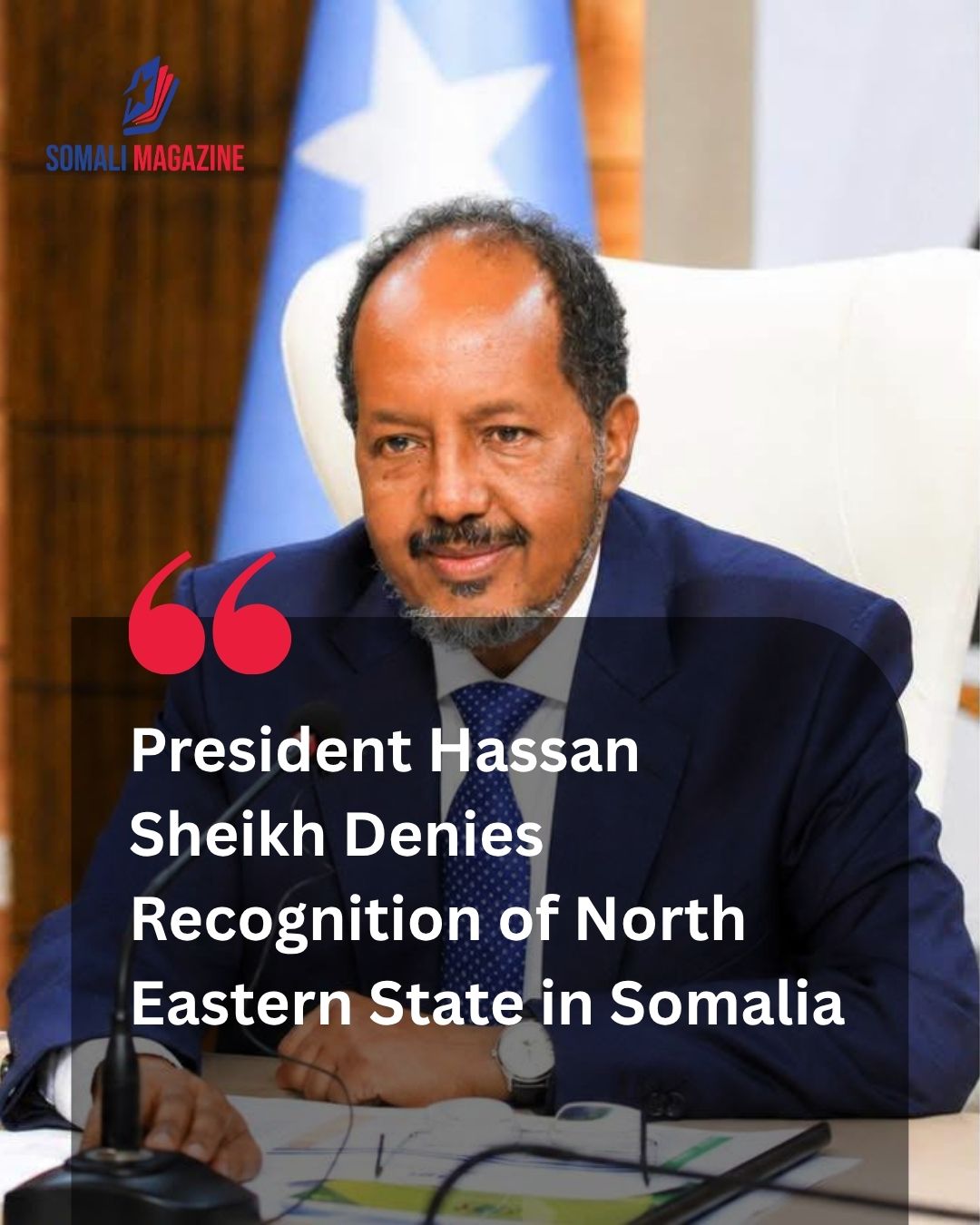
During a public address concerning federalization processes, Somali President Hassan Sheikh Mohamud appears to deny formal recognition of North Eastern State, creating widespread political debate across the country. Addressing national constitutional frameworks, President Hassan Sheikh stated that Hirshabelle remains the most recently established federal member state in Somalia. His statement strongly implied that no subsequent regional administration, including the newly declared authority centered in Las Anod, has fulfilled the formal constitutional requirements necessary for official integration into the federal governance structure.
The president’s unexpected declaration has generated significant confusion regarding the official position of the Federal Government of Somalia toward the interim administration in Las Anod. Observers note that these recent remarks appear to directly contradict previous administrative actions and executive statements. The Ministry of Interior reportedly spent several months in Las Anod facilitating local stakeholder consultations and overseeing foundational administrative processes. Furthermore, Prime Minister Hamza Abdi Barre had previously announced that the regional formation process was complete and that the new entity held recognized status within the federal republic.
The apparent contradiction highlights ongoing institutional ambiguity regarding the legal mechanics of creating new federal member states under Somalia’s provisional constitution. Political analysts emphasize that establishing a recognized federal member state requires specific constitutional procedures, including parliamentary approval and bilateral border demarcations with existing regional administrations. President Hassan Sheikh’s comments have led legal scholars and civic leaders to question whether the North Eastern State possesses full legal standing or if it remains an interim administrative structure operating under temporary federal oversight.
This developing debate arrives at a delicate moment for regional security and political stability across northern Somalia. Surrounding territories, including Puntland and Somaliland, continue to closely monitor federal policy decisions regarding governance arrangements in the Sool, Sanaag, and Cayn areas. While local leaders in Las Anod maintain that their regional administration reflects the genuine democratic aspirations of the local populace, federal hesitation to grant explicit constitutional recognition could complicate long-term governance coordination, public service delivery, and revenue-sharing mechanisms between Mogadishu and the northern administration.

 Black News