Raped, rejected, abandoned: How Zimbabwe’s system failed rape survivor for 20 years
IN 2006, 26-year-old Mildred Mapingure was working in Chegutu when armed robbers stormed her workplace during the night. What began as a violent robbery turned into a years-long nightmare that destroyed her marriage, separated her from her family, pushed her into poverty and left her bitter at a government she says failed her at every […] The post Raped, rejected, abandoned: How Zimbabwe’s system failed rape survivor for 20 years appeared first on NewZimbabwe.com.
 Black News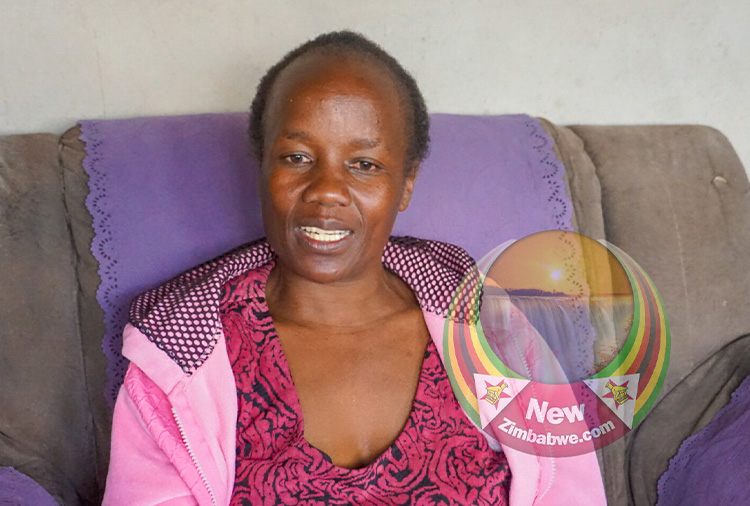
IN 2006, 26-year-old Mildred Mapingure was working in Chegutu when armed robbers stormed her workplace during the night.
What began as a violent robbery turned into a years-long nightmare that destroyed her marriage, separated her from her family, pushed her into poverty and left her bitter at a government she says failed her at every stage.
“One of the robbers beat me on the knee with an iron bar and then raped me,” Mapingure recalled during an interview with NewZimbabwe.com.
The next morning, the attack was reported to the police.
What she remembers most is not only the pain from the assault, but the humiliation that followed.
“I spent the whole day there without assistance. Police officers would come in pairs saying, ‘This is the woman I was talking about,’” she said.
At the Victim Friendly Unit, she said there was no privacy and instead of receiving immediate medical attention, she spent the entire day at the station without help.
A concerned citizen then eventually helped her get to hospital, but doctors refused to treat her without a police officer present.
That officer only came four days later.
By then, the critical 72-hour window needed to collect forensic evidence and prevent pregnancy had passed.
“They told me they could no longer drain the sperm.”
She was instructed to take a pregnancy test which Chegutu Hospital reportedly did not have. She only tested a month later and the results confirmed she was pregnant.
At the time, Mildred was married with a two-year-old son while her husband, who was a police officer stationed in Harare, had not visited her for nearly two months.
“My husband was quiet at first. He did not say anything for a long time,” she said.
But as court delays mounted and the pregnancy advanced, suspicion replaced silence. Mapingure said the suspects repeatedly failed to appear in court, with authorities giving excuse after excuse.
“One month they said the accused were sick. Another month they said prisons had no fuel,” she said.
As time went by with no progress on the case, her husband started accusing her of knowing the rapists accusing her of prostitution and lying that she was raped.
Then came the meeting at his rural home where the family resolved that she must be divorced and leave.
The rejection spread beyond her marriage as her church also expelled her.
“The pastor said I was a bad example.”
Her own biological father disowned her too and anyone else who tried to assist her in any way.
“He said the child belonged to the government and he wanted nothing to do with him.”
With nowhere to stay, Mildred said she moved from one place to another seeking temporary shelter from well-wishers while trying to fight for justice.
As the pregnancy advanced, she desperately sought to terminate it saying she did not want “mwana webhinya”.
“I was very sure I did not want the child and I did not care about the baby. I really wanted the child gone out of my life. I tried three times to get rid of the pregnancy without success. I tried running into a train and a car. I tried all the backdoor recipes I used to hear about and still failed to abort the baby,” Mapingure said.
By the time she was seven months pregnant, the rape trial had still not begun.
After seven months, she finally obtained a termination order from the courts, but doctors reportedly refused to carry out the procedure.
“They said the probability of the child surviving or dying was 50-50 and they did not have incubators if the child survived,” she said.
One doctor refused to proceed and advised her to return to court, saying he feared she might later accuse him of killing her child.
The matter was escalated to senior judicial officials and even the Attorney General’s Office, but she said officials maintained that the law only permitted termination within the first three months of pregnancy.
“The Chief Magistrate then said, ‘I have the power to say terminate, but I am a Christian and I do not want to shed innocent blood,’” she said.
Mildred said she was later taken to a shelter for vulnerable young mothers where counselling sessions eventually persuaded her to keep the child.
Eventually, she gave birth.
She claims authorities promised her a house, a car and projects to help her survive, but the promises were never fulfilled.
Raising a child born from rape
Although she initially wanted nothing to do with the pregnancy, Mapingure eventually kept and raised the child born from the rape after counselling sessions at a shelter persuaded her against giving the baby up for adoption.
For years, she relied on the assistance of well-wishers to survive, with one benefactor paying her daughter’s school fees from Grade Three up to Form Three before withdrawing support.
However, poverty continued to haunt the family and her daughter later failed her O-Level examinations before getting married at the age of 17 in what Mapingure believes was an attempt to escape their difficult living conditions.
Tragedy struck again after the teenager’s husband died when she was eight months pregnant.
“The husband’s family wanted to remarry my daughter to the deceased’s young brother and I refused and brought her back home,” Mapingure said.
She now looks after her daughter, grandchild and another child belonging to a rape survivor who failed to cope with the trauma.
Compensation that turned worthless
Years later, Mapingure managed to sue the government over the handling of her case with assistance from women’s rights lawyers.
Although the courts later ordered the Health and Home Affairs ministries to pay her US$6,500 in damages and compensation in 2013 after litigation, Mapingure said the money only came six years later in RTGS currency after its value had significantly eroded.
“When they finally paid in 2019, it was only worth around US$560,” she said.
She added that despite earlier promises, the government never provided maintenance support for the child born from the rape.
Mildred says she is still searching for closure and has written at least five letters seeking an audience with President Emmerson Mnangagwa, but is yet to receive a response.
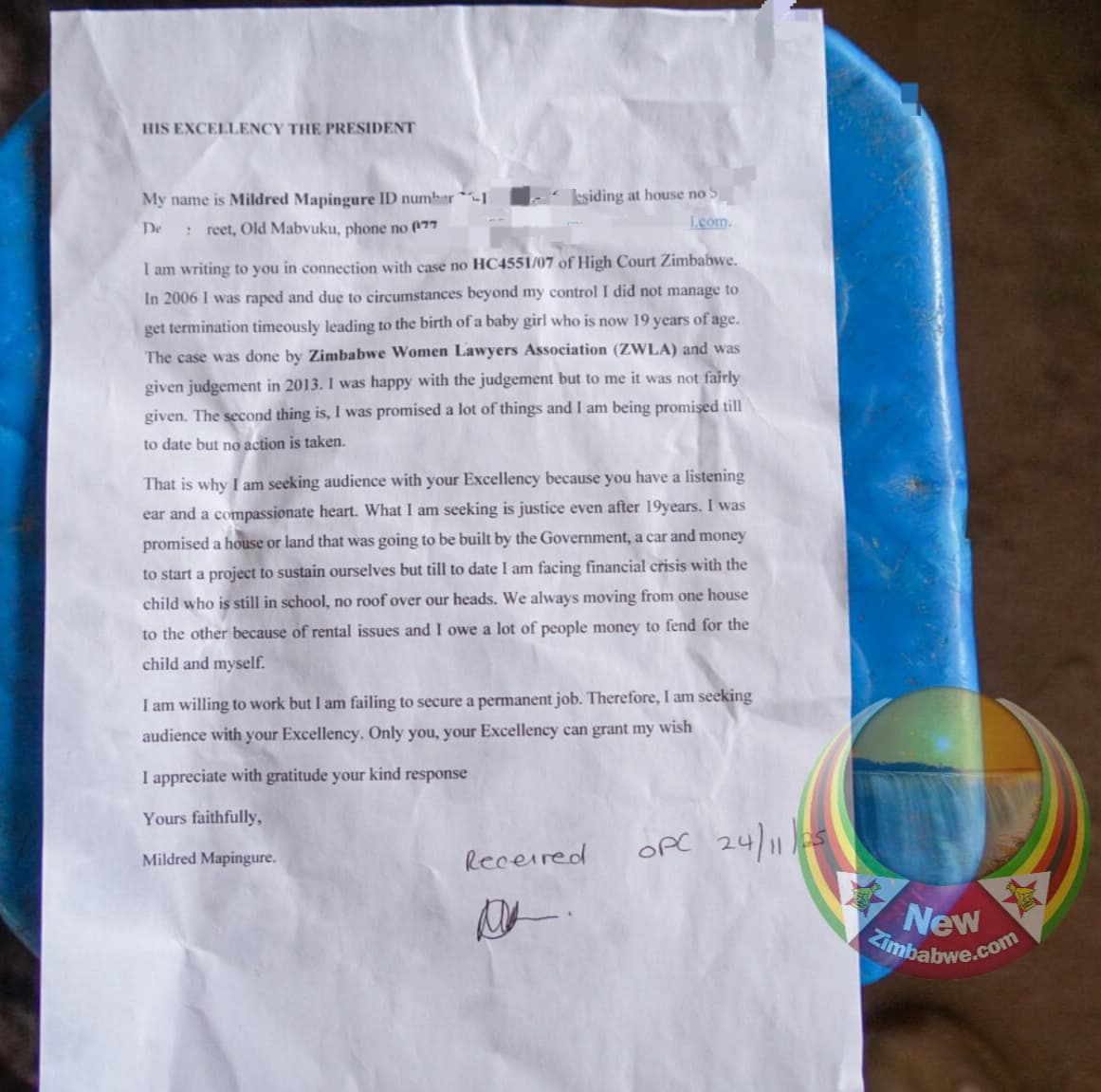
In one of the letters seen by NewZimbabwe.com, Mapingure appealed directly to the President for intervention, saying she was still living in poverty despite promises allegedly made to her after the landmark court case.
“That is why I am seeking audience with your Excellency because you have a listening ear and a compassionate heart.
“What I am seeking is justice even after 19 years,” she wrote.
Mapingure told the President that although the High Court ruled in her favour in 2013 following litigation handled by the Zimbabwe Women Lawyers Association, she felt the assistance she received afterwards was inadequate and many promises remained unfulfilled.
Now she says she is struggling to survive and often relies on informal jobs to feed the people under her care.
“We are surviving from hand to mouth. Sometimes we eat one meal a day,” she said.
Despite having seven O-Level subjects, she said she has failed to secure stable employment and is willing to take any honest job that can help her rebuild her life.
“I owe many people a lot of money and I do not know where to get it,” she said.
Meanwhile Mapingure also expressed frustration with some NGOs and activists she claims benefited from her story while she remained in poverty.
“They would call me whenever they had donors and use me to tell my story. After getting grants they would go quiet. I feel NGOs and women’s rights advocates use me to get grants and I get nothing after that. However, I am not bitter at them. I am bitter at my government,” she said.
“Women fear reporting because of my experience”
Nearly 20 years after the ordeal, Mildred says she is still battling emotional scars from the rape case which she believes exposed major failures in the way authorities handle sexual abuse survivors in Zimbabwe.
Now 46, she says the trauma did not end with the rape itself, but continued through years of court delays, rejection by family members, poverty and what she describes as abandonment by the state.
“Twenty years later, I am still very bitter and I feel that the government did let me down,” she said.
She believes her experience has discouraged many women from reporting rape cases to police.
“I live in a community where women are raped almost daily, but many do not report the cases.
“If you ask them why they are not reporting rape cases, they will give me as an example of what reporting can do to you
“You lose your job, your family, everything and become a laughing stock.”
Restrictive abortion laws blamed for rise in unsafe backstreet terminations
Her case has over the years become one of Zimbabwe’s most cited examples in debates around the country’s restrictive abortion laws and the difficulties rape survivors face when seeking legal termination services.
The debate around abortion laws in Zimbabwe recently intensified following the controversy surrounding Clause 11 of the Medical Services Amendment Bill, which sought to amend provisions of the country’s 1977 Termination of Pregnancy Act.
The clause proposed expanding access to abortion services under regulated medical settings and reducing some of the legal and administrative barriers faced by rape survivors and vulnerable women.
Among the proposed changes were provisions that would have allowed easier access to legal abortions in certain circumstances, including for minors, while also removing some requirements such as spousal notification and multiple medical approvals.
However, the clause triggered fierce opposition from churches, traditional leaders and conservative groups, resulting in the Senate eventually removing Clause 11 from the Bill before it was passed.
For Mapingure, whose rape ordeal became one of Zimbabwe’s most prominent examples of the difficulties rape survivors face when seeking legal termination of pregnancy, the country’s restrictive abortion laws continue to push desperate women and girls towards unsafe procedures.
“The government has to legalise abortion, whether you like it or not, backdoor abortions are happening daily,” she said.
She said many people publicly condemn abortion while privately seeking illegal procedures for their own relatives.
“Here in Mabvuku, a well-known pastor’s wife took her daughter for a backdoor abortion while the husband was busy preaching against legal abortion,” she said.
Mildred, however, said reforms should still be guided by clear legal safeguards.
“Let the law legalise abortion but with clear guidelines, not to be at freewill. This will help those who need it the most,” she said.
Mapingure’s ordeal mirrors the struggles of millions of ordinary Zimbabweans trapped between poverty, unemployment and institutions they believe have long stopped listening to their cries for help.
The post Raped, rejected, abandoned: How Zimbabwe’s system failed rape survivor for 20 years appeared first on NewZimbabwe.com.