Follow PAPER Undercover at New York Art Week
Every May, Manhattan becomes clogged with Uber Blacks as two of the art world’s most prominent fairs open simultaneously: Frieze New York and TEFAF New York. While both are major events, they tentatively coexist by catering to different segments of the collecting base.Frieze, one of the two biggest contemporary art fair brands (the other being Art Basel), takes over The Shed in Hudson Yards as galleries from 28 countries bring in their brightest, most ambitious works to woo buyers. The fair is only a stone’s throw from the robust Chelsea gallery scene, underscoring its positioning as a global art event at the top of the food chain. Meanwhile, TEFAF is a more intimate affair, offering not only contemporary and modern art but also fine jewelry, antiques and Old Masters. Nestled in the Park Avenue Armory, the fair has become an Upper East Side staple, where well-heeled patrons drift through the halls with champagne flutes in hand. As is fitting for the city that never sleeps, every day of art week is crammed with talks, gallery openings, and museum galas galore. Local institutions shine the brightest, promoting upcoming shows and courting philanthropists to open their wallets for another year of programming; however, there is no shortage of out-of-state arts organizations hosting events to court the New York crowd. Read on for a selection of the events I found myself at during the busiest three days of art week. I survived!Wednesday, May 13On Wednesday morning, the place to be was the Frieze VIP opening. The Shed always feels slightly too small for the fair, with galleries crammed into diminutively sized booths. The Focus section, intended to spotlight young New York galleries, felt like an afterthought, tucked away in a corner that required some navigating to find despite the abundance of signage pointing toward it. Still, there were strong works across the board. My personal favorite was James Cohan’s solo presentation of Kelly Sinnapah Mary, staged against mint-green walls painted with leaves and wildflowers. The paintings depict girls and women who shift between fully human and mythological beings. Their skin, emblazoned with plant life, references Sinnapah Mary’s grandmother Violette and her spiritual connection to the jungles of Guadeloupe. In the Focus section, Aki Goto stood out with a glittering dentist’s office installation, complete with psychedelic videos of swirling colors and disembodied smiles - a hallucinogenic childhood memory of getting one’s teeth cleaned, perhaps. Gallery G, an edgy contemporary gallery from Seoul, presented works by Rachel Youn, in which colorful fake flowers are pierced and manipulated by delicate machine claws in a way that evokes cyberpunk-sex-machine-Georgia O’Keeffe.After finally escaping Frieze by arguing with a suited-up collector over the last Citi Bike, I made my way to Oiji Mi, where Frieze partnered with Korean powerhouses Kukje Gallery and Tina Kim Gallery to promote the upcoming Frieze Seoul. The buzzy restaurant was packed with Asian art luminaries from across the diaspora, catching up over barbecued meat skewers and bubble tea ice cream. A handful of celebrity faces turned up as well, including actor-producer Daniel Dae Kim and singer Eric Nam.Another day, another VIP opening. This time, it was TEFAF’s turn to shine, and the mood was decidedly different from Frieze. In the Armory, huge flower arrangements floated above exhibitors’ booths as crowds squeezed through the aisles. I was constantly at risk of crashing into either a mini poodle stuffed into a Goyard tote, one of the giant Lalanne bronzes lining the hallway (anyone want an oversized rabbit-fish-seagull hybrid?), or yet another neon Kelly bag. At TEFAF, prices skew higher and the work is generally safer, tailored to the tastes of the Upper East Side collector. No neon dentist tools here.Hauser & Wirth put on an enchanting presentation of the Danish painter Vilhelm Hammershøi, active from the late 19th to early 20th century. His empty interiors show beautiful, moonlit rooms devoid of occupants; picture Degas, but without the ballerinas. Meanwhile, Galerie Patrick Seguin, a giant in the design world, staged what felt like a miniature museum exhibition. The gallery presented 12 miniature models of houses designed by the renowned midcentury architect Jean Prouvé, however, the kicker was that the models themselves were not for sale; buyers were purchasing the houses, which would later be assembled on their properties. That evening, the Guggenheim hosted its 30th annual Young Collectors Council Party in the rotunda. Every year, the event draws a rare concentration of art-world attendees under 35: new collectors, aspiring socialites, nepo babies, artists, and everyone in between. The evening opened with iconic DJ duo The Muses, who arrived in towering platforms and cybersigilism-inspired metal headdresses. Artist Diane Severin Nguyen transformed the space with silver curtains and icy blue lighting, while sp
 Black News

Every May, Manhattan becomes clogged with Uber Blacks as two of the art world’s most prominent fairs open simultaneously: Frieze New York and TEFAF New York. While both are major events, they tentatively coexist by catering to different segments of the collecting base.
Frieze, one of the two biggest contemporary art fair brands (the other being Art Basel), takes over The Shed in Hudson Yards as galleries from 28 countries bring in their brightest, most ambitious works to woo buyers. The fair is only a stone’s throw from the robust Chelsea gallery scene, underscoring its positioning as a global art event at the top of the food chain.
Meanwhile, TEFAF is a more intimate affair, offering not only contemporary and modern art but also fine jewelry, antiques and Old Masters. Nestled in the Park Avenue Armory, the fair has become an Upper East Side staple, where well-heeled patrons drift through the halls with champagne flutes in hand.
As is fitting for the city that never sleeps, every day of art week is crammed with talks, gallery openings, and museum galas galore. Local institutions shine the brightest, promoting upcoming shows and courting philanthropists to open their wallets for another year of programming; however, there is no shortage of out-of-state arts organizations hosting events to court the New York crowd.
Read on for a selection of the events I found myself at during the busiest three days of art week. I survived!
Wednesday, May 13


On Wednesday morning, the place to be was the Frieze VIP opening. The Shed always feels slightly too small for the fair, with galleries crammed into diminutively sized booths. The Focus section, intended to spotlight young New York galleries, felt like an afterthought, tucked away in a corner that required some navigating to find despite the abundance of signage pointing toward it.
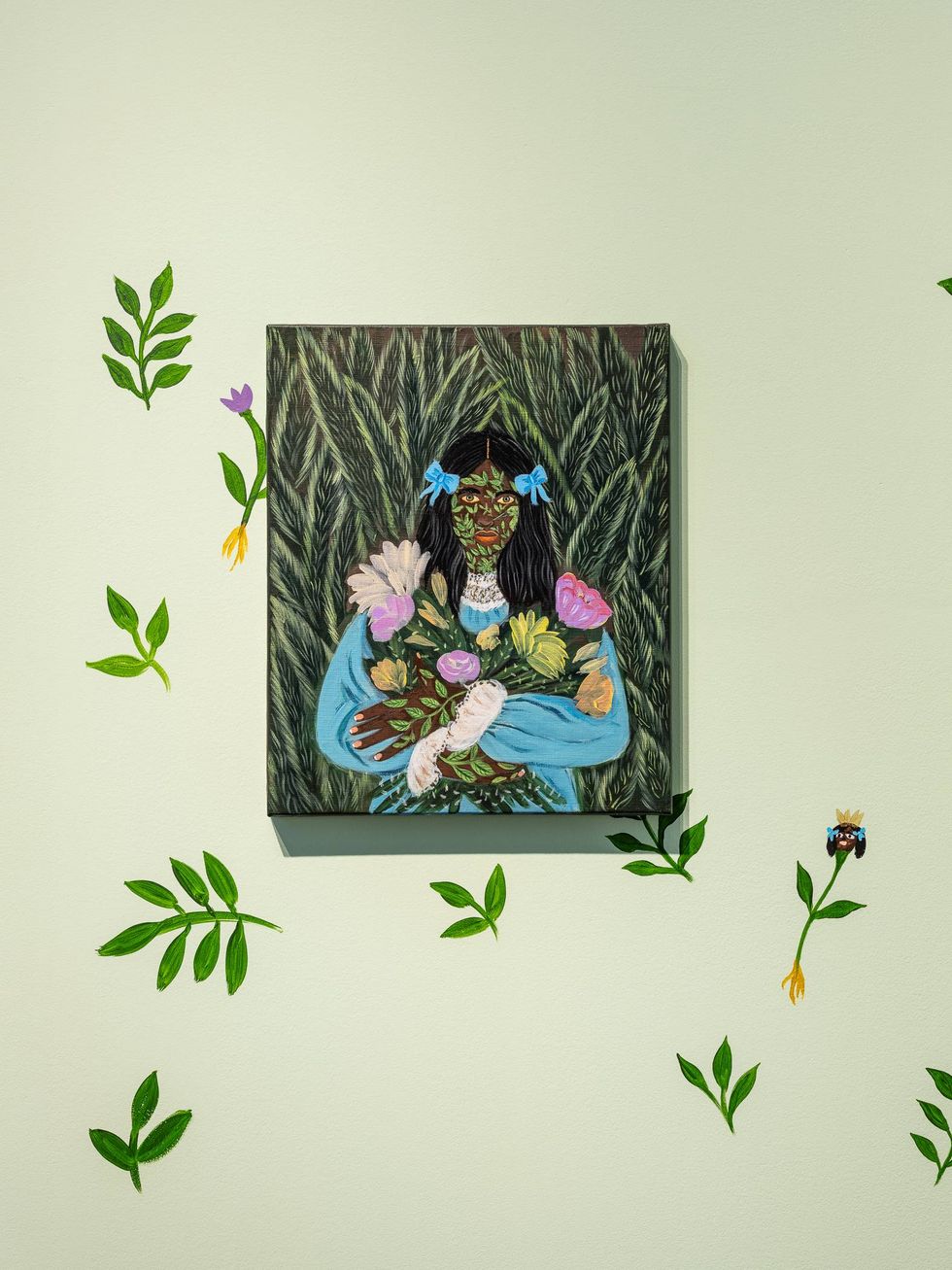
Still, there were strong works across the board. My personal favorite was James Cohan’s solo presentation of Kelly Sinnapah Mary, staged against mint-green walls painted with leaves and wildflowers. The paintings depict girls and women who shift between fully human and mythological beings. Their skin, emblazoned with plant life, references Sinnapah Mary’s grandmother Violette and her spiritual connection to the jungles of Guadeloupe.
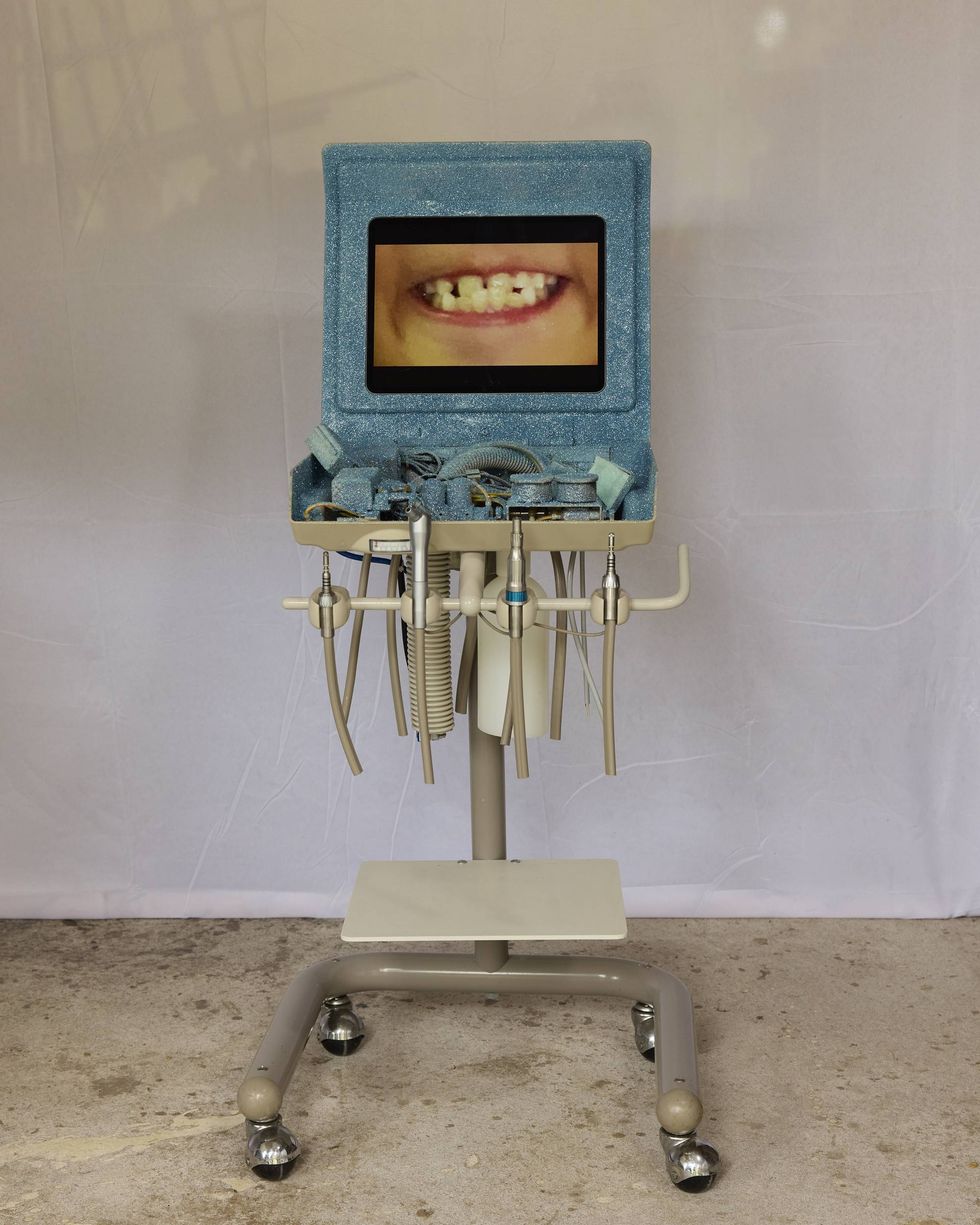
In the Focus section, Aki Goto stood out with a glittering dentist’s office installation, complete with psychedelic videos of swirling colors and disembodied smiles - a hallucinogenic childhood memory of getting one’s teeth cleaned, perhaps. Gallery G, an edgy contemporary gallery from Seoul, presented works by Rachel Youn, in which colorful fake flowers are pierced and manipulated by delicate machine claws in a way that evokes cyberpunk-sex-machine-Georgia O’Keeffe.
After finally escaping Frieze by arguing with a suited-up collector over the last Citi Bike, I made my way to Oiji Mi, where Frieze partnered with Korean powerhouses Kukje Gallery and Tina Kim Gallery to promote the upcoming Frieze Seoul. The buzzy restaurant was packed with Asian art luminaries from across the diaspora, catching up over barbecued meat skewers and bubble tea ice cream. A handful of celebrity faces turned up as well, including actor-producer Daniel Dae Kim and singer Eric Nam.
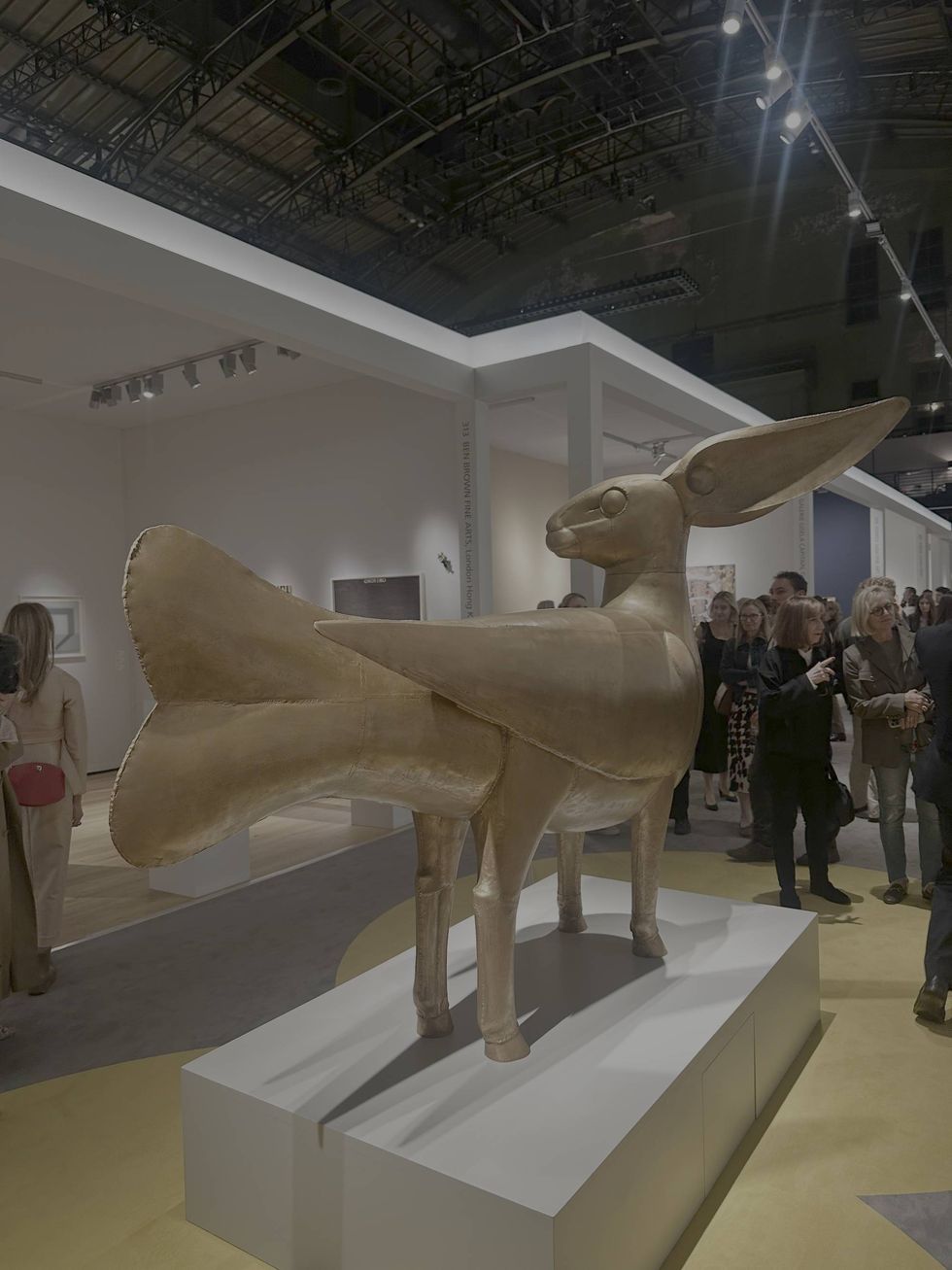
Another day, another VIP opening. This time, it was TEFAF’s turn to shine, and the mood was decidedly different from Frieze. In the Armory, huge flower arrangements floated above exhibitors’ booths as crowds squeezed through the aisles. I was constantly at risk of crashing into either a mini poodle stuffed into a Goyard tote, one of the giant Lalanne bronzes lining the hallway (anyone want an oversized rabbit-fish-seagull hybrid?), or yet another neon Kelly bag. At TEFAF, prices skew higher and the work is generally safer, tailored to the tastes of the Upper East Side collector. No neon dentist tools here.
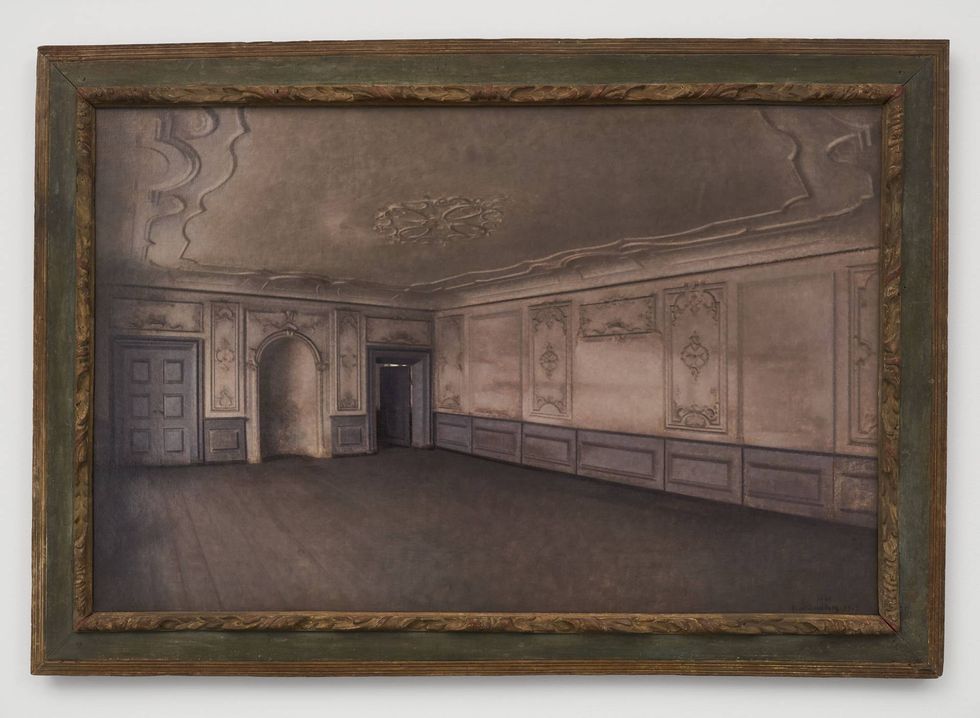
Hauser & Wirth put on an enchanting presentation of the Danish painter Vilhelm Hammershøi, active from the late 19th to early 20th century. His empty interiors show beautiful, moonlit rooms devoid of occupants; picture Degas, but without the ballerinas. Meanwhile, Galerie Patrick Seguin, a giant in the design world, staged what felt like a miniature museum exhibition. The gallery presented 12 miniature models of houses designed by the renowned midcentury architect Jean Prouvé, however, the kicker was that the models themselves were not for sale; buyers were purchasing the houses, which would later be assembled on their properties.
That evening, the Guggenheim hosted its 30th annual Young Collectors Council Party in the rotunda. Every year, the event draws a rare concentration of art-world attendees under 35: new collectors, aspiring socialites, nepo babies, artists, and everyone in between. The evening opened with iconic DJ duo The Muses, who arrived in towering platforms and cybersigilism-inspired metal headdresses. Artist Diane Severin Nguyen transformed the space with silver curtains and icy blue lighting, while sponsor LG installed TV screens in the lobby playing her experimental video works.
While guests danced upstairs to late-night sets by Dylan Rhee and Angel + Dren, my favorite corner of the party was downstairs. DJ nguyendowSXP took over the Guggenheim basement theater for an ambient “breathing room,” where guests kicked off their heels and melted into a moody, trance-inducing electronic set.
Friday, May 15
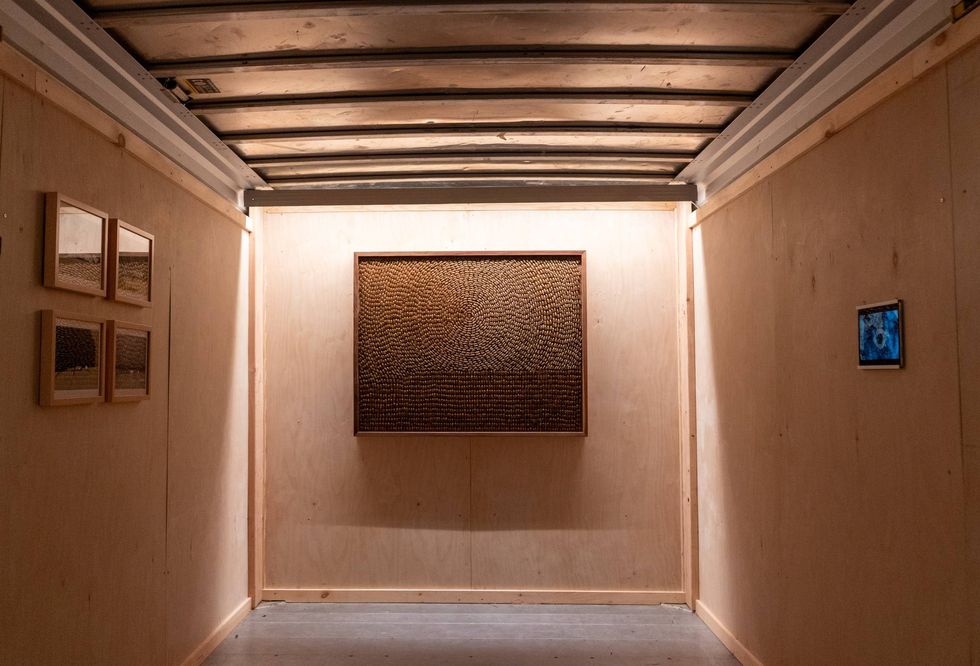
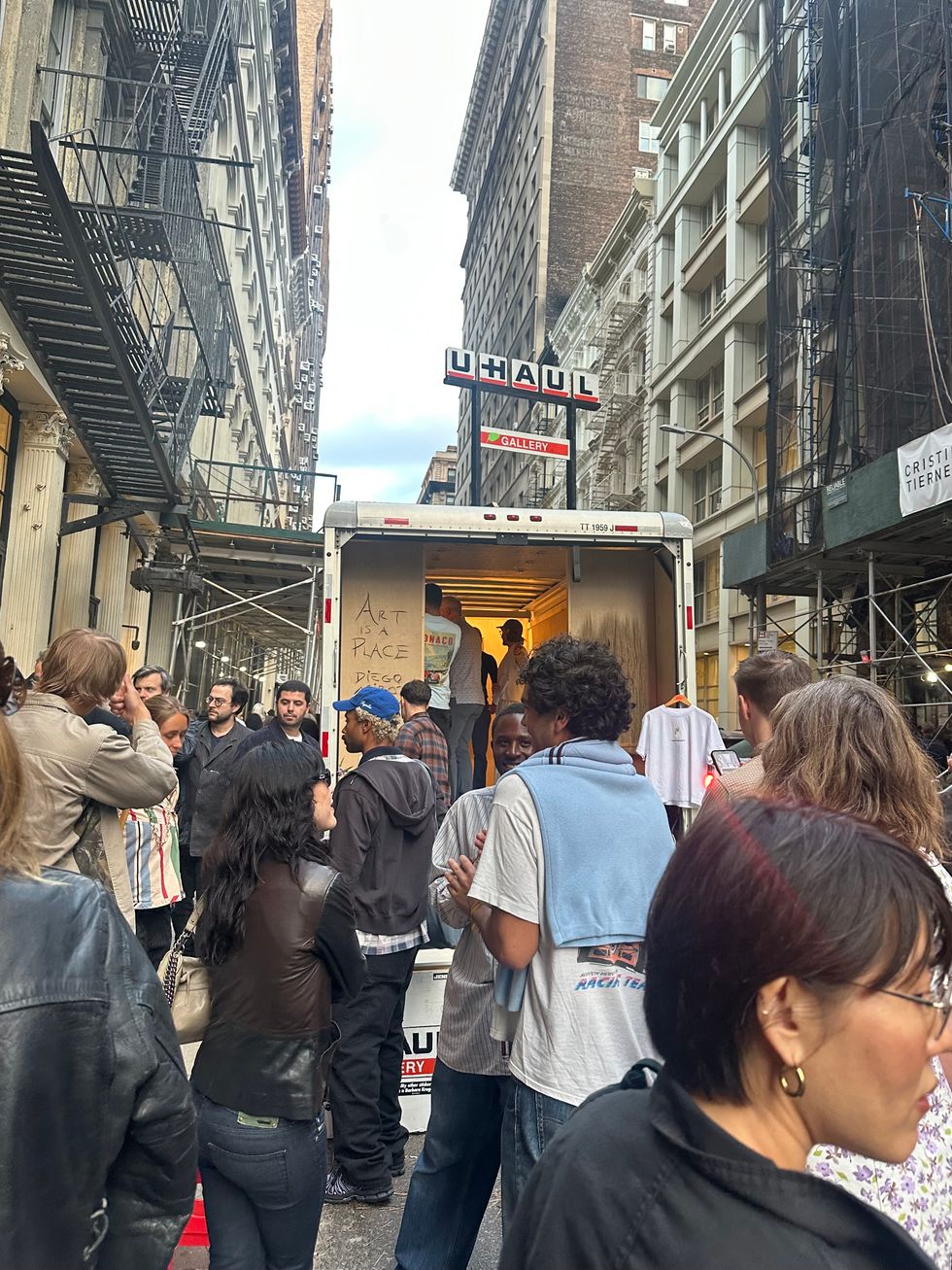
On the evening of the 15th, Tribeca Gallery Night was in full swing. I moved with the crowd of art people who descended upon one gallery after another in a reliable routine: drain the champagne, complain about fair week, smoke outside, then move on. Of course, it was impossible to see all 80-plus galleries, but certain openings drew bigger crowds than others.
Gratin Gallery, founded in 2022 by the ambitious Talal Abillama, debuted its second Tribeca space — a risky move for such a young dealer in such an expensive city. Still, the mood inside was optimistic, with conversation filling the unfinished room. The rough-around-the-edges space (gossipers played guessing games about the renovation budget) suited Mónica Mays’ rustic sculptures, assembled from salvaged doors, tables, shutters, and other found materials.
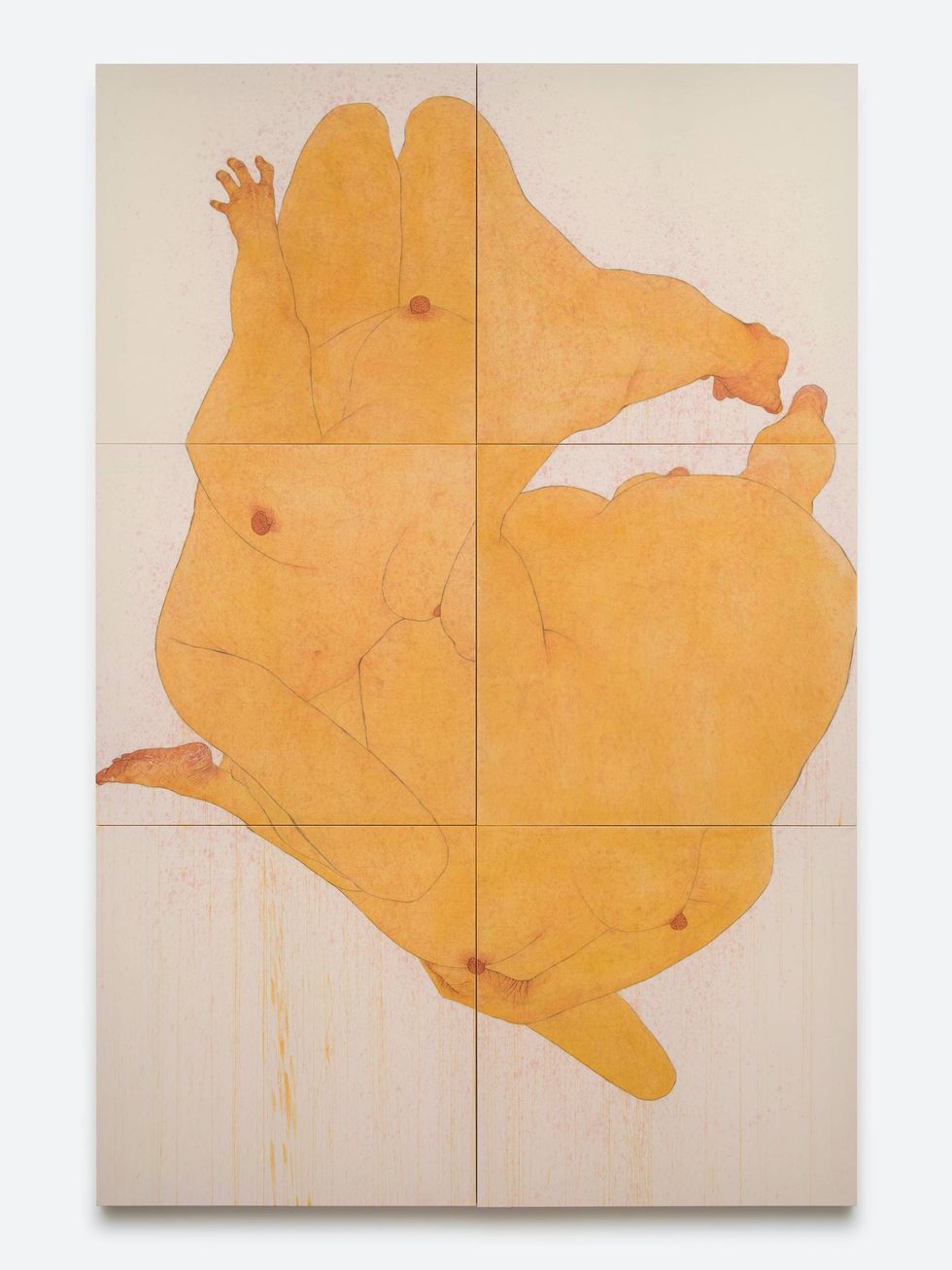
A block over, Bortolami presented paintings by Pittsburgh-based South Korean artist Seung Ah Paik. Her works, depicting headless female torsos writhing together against monochromatic backgrounds, felt both animalistic and intensely intimate. I found the large-scale work Self Configuration: Figure 3 to be immensely striking, as the naked figures tower over the viewer like a kind of amorphous Sapphic beast. Across the street, the aptly named U-Haul Gallery had parked on Walker Street. Founded by James Sundquist and Jack Chase as a response to sky-high gallery rents, the literal U-Haul truck turned exhibition space housed a tiny but meticulously crafted presentation by Diego Miró-Rivera. The project proved that sometimes all you need for art is a wall and a dream.
By Friday night, everyone seemed equally exhausted: dealers clutching tote bags full of fair catalogs, collectors speed-walking to dinner reservations, and art assistants surviving entirely on adrenaline and champagne. Still, for one chaotic week every May, New York makes the case that art is still worth stopping traffic for.
Photography and art courtesy of Vilhelm Hammershøi, Annik Wetter, Lizard Chung, François-Xavier Lalanne, Ben Brown Fine Arts and Gallerie, Kelly Sinnapah Mary, Frieze New York 2026, James Cohan Gallery, Bortolami, New York, Seung Ah Paik, Diego Miró-Rivera, U-Haul Gallery, Tender Assistant, Corinne Botz, Aki Goto, Europa NYC, Dawn Blackman, Rachel Youn,