Rediscovering the Independence Festival Leeds 2001 – 25 years later!
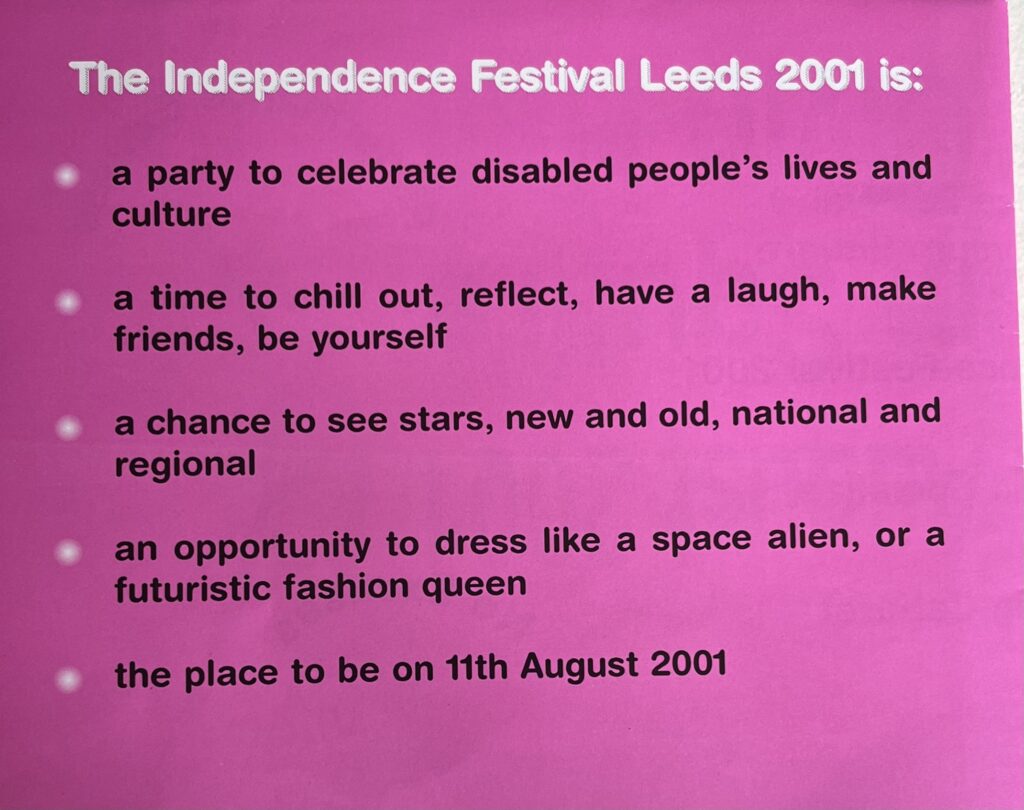
I’ve just discovered a copy of the programme and a leaflet promoting the Independence Festival in Leeds 2001. I didn’t know I had this, so I was thrilled to find it at the bottom of a box of papers – 25 years after the event. The theme of the festival in Leeds was “2001 A ... Rediscovering the Independence Festival Leeds 2001 – 25 years later!
 Black News
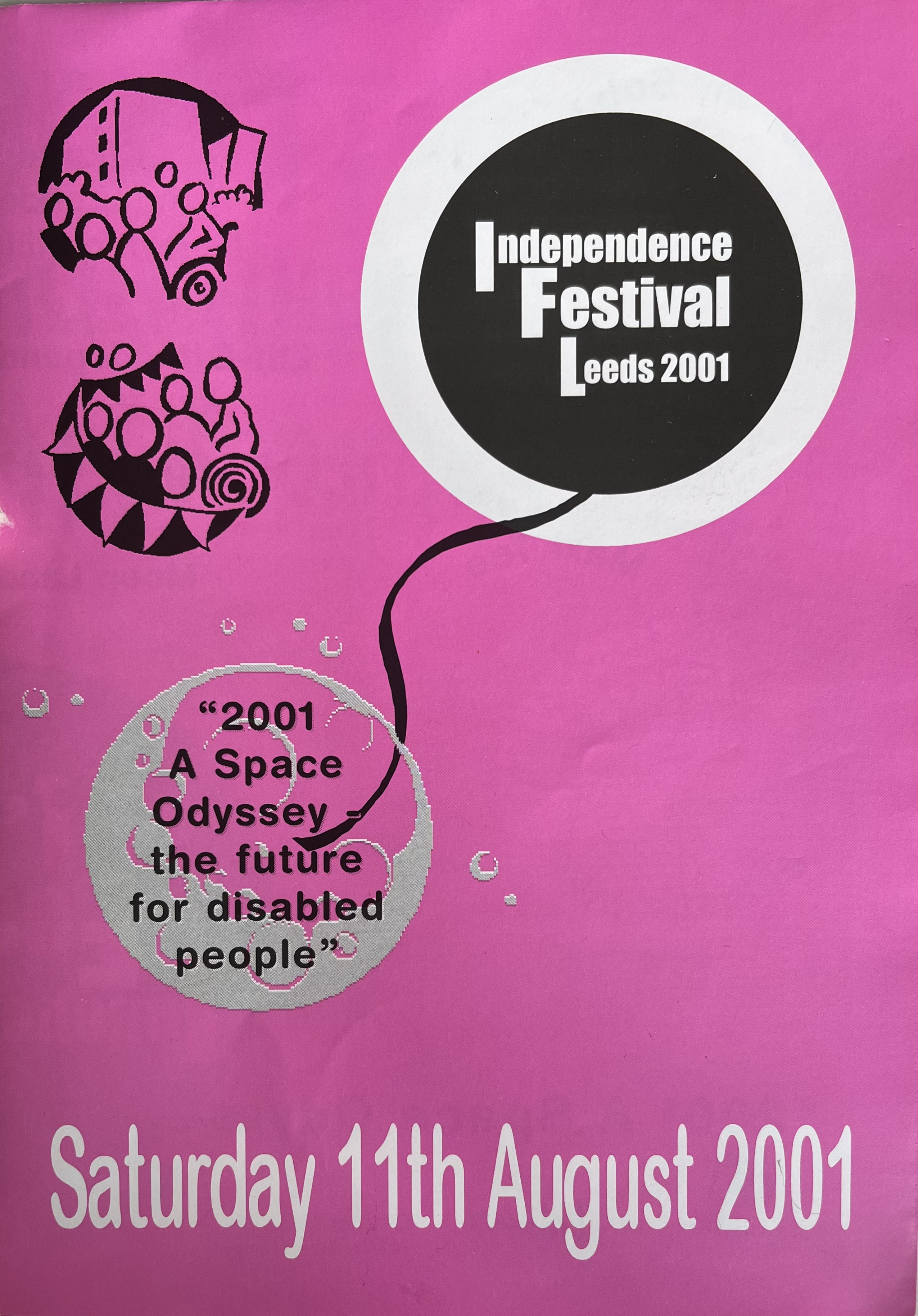
I’ve just discovered a copy of the programme and a leaflet promoting the Independence Festival in Leeds 2001. I didn’t know I had this, so I was thrilled to find it at the bottom of a box of papers – 25 years after the event.
The theme of the festival in Leeds was “2001 A Space Odyssey – the future for disabled people”. At that point, we knew that the Disability Discrimination Act 1995 was a fairly useless piece of legislation, falling far short of the disabled people’s movement’s demands at the end of the 20th century. Unemployment amongst disabled people was high. Many disabled people lived in poverty, under an inadequate and complex benefits system – which became a target of further government cuts. Discrimination and segregation were still common. Hate crimes against disabled people were widespread, yet unrecognised by the law. So, in 2001 disabled people were looking towards a better future…
Meanwhile, the festival was a chance for disabled people, friends, allies and families to come together, to relax, celebrate and enjoy fantastic performances and workshops by disabled artists. The festival took over the newly created Millennium Square, with events in the neighbouring library and Civic Hall. And before the event officially opened, a Disability Pride march made a circuit of the city centre, ending up at the festival.
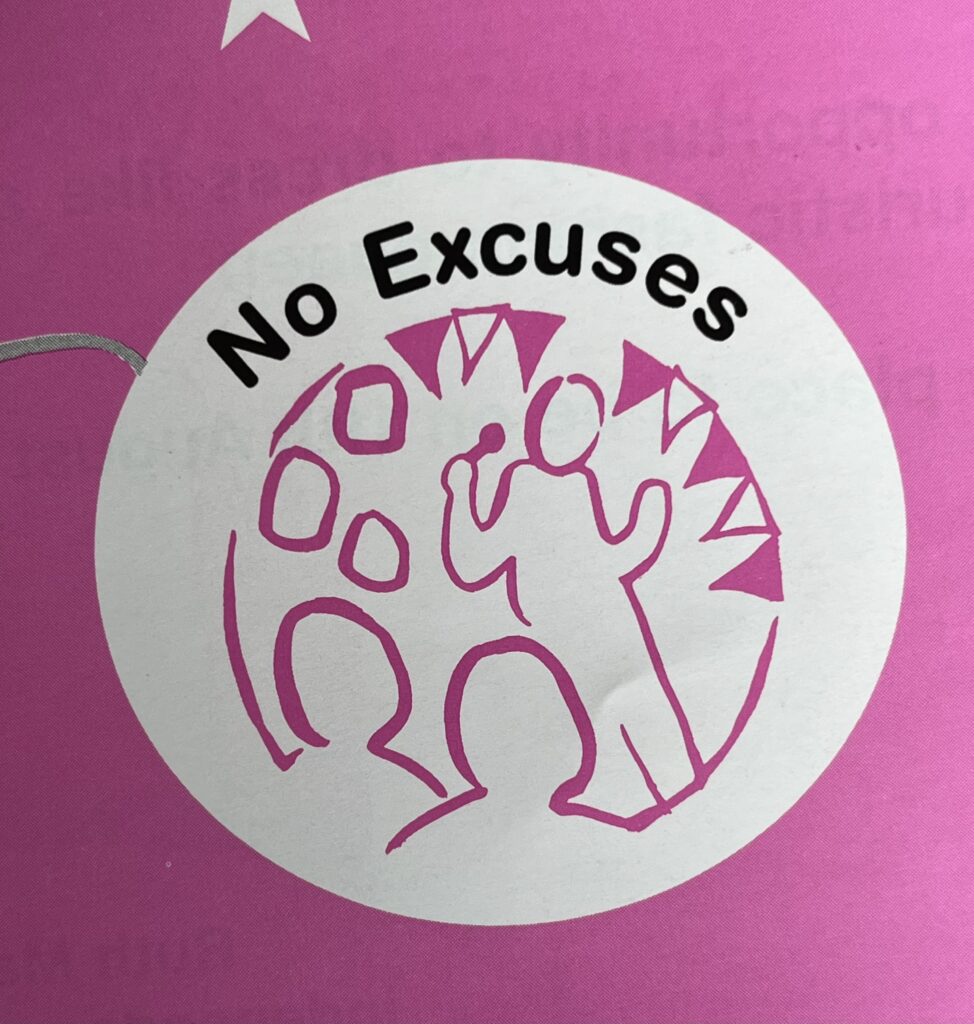
The programme included both local and national performers, from local legend and poet Johnny Solstice, singer-songwriters Maxi Tee, Darren Poyzer and Terry Simpson to national icons Julie McNamara, Dennis Queen and No Excuses. In between, Spiders Web wove a web of stories and an art workshop took place in a marquee. A pair of complementary exhibitions continued the festival’s approach of representing local and national artists equally, with posters from the National Disability Arts Forum and ‘Framed’, a photography exhibition by local disabled women.
The Independence Festival was an annual festival that took place in Manchester from 1997-99 before the baton was passed to Birmingham and then Leeds. The festivals were supported, including with funding, from the local authorities in each city, with a steering group of disabled people to oversee it.
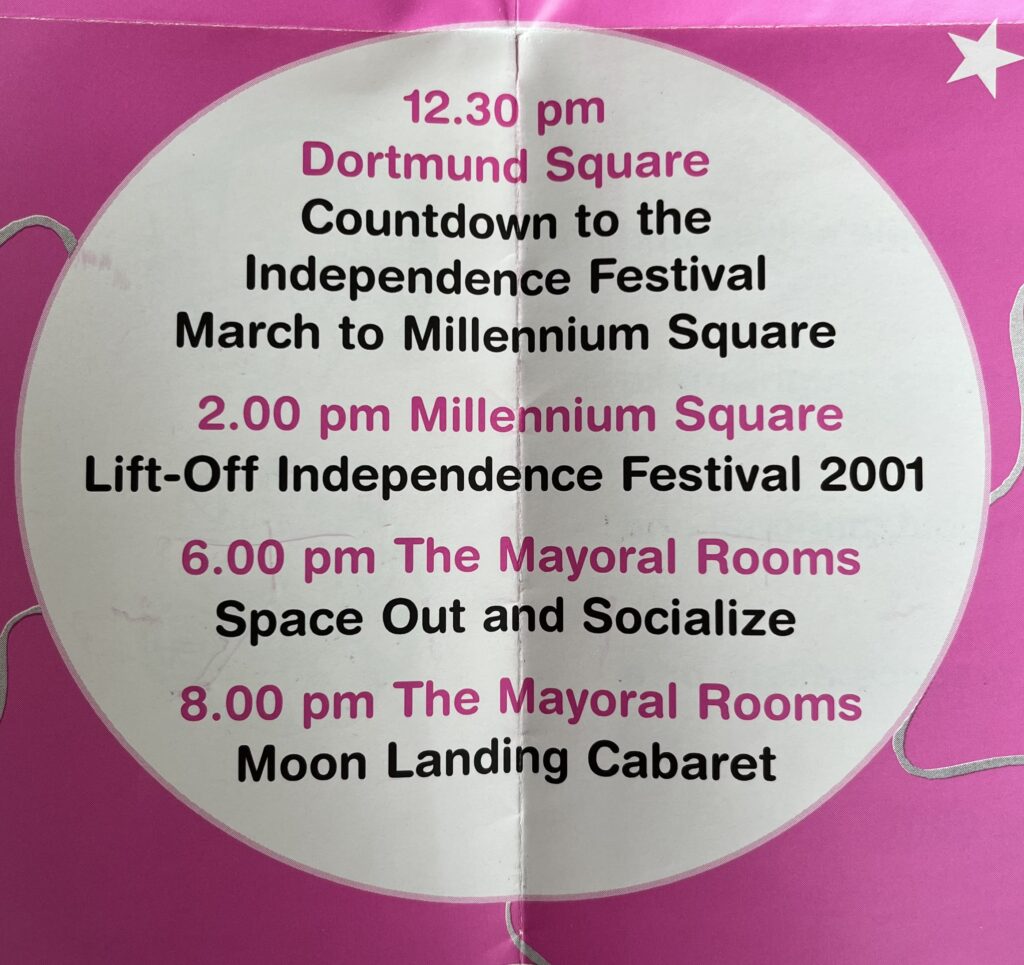
The amazing Ruth Malkin (a poet and storyteller herself) was Leeds’ festival coordinator and she did a brilliant job of making sure there was something for everyone. Ruth was keen to give less experienced disabled artists the opportunity to perform in front of a supportive and enthusiastic audience. The festival was also, of course, a showcase for some of the best disability arts practitioners in the country. A highlight of the festival was a performance by Baluji Shrivastav, the internationally-renowned multi-instrumentalist and composer.
I worked in Leeds City Council’s Equal Opportunities Unit at the time, and our team had pushed to hold the festival in Leeds. I remember that it was incredibly hard work, we had to raise extra funds and ask for loads of favours from council departments and other organisations. But it all paid off, thanks to Ruth’s dedication and the support of a bolshy steering group of disabled people. However, this was the last of the Independence Festivals, as local authorities priorities changed and there was less recognition of the importance of culture in the fight for equality for disabled people. But in 2001 that was all in the future…