Rights on Paper, Barriers on the Ground
The Need for Institutional Accountability in Post-Conflict and Refugee Protection For many children born into conflict, the future feels predetermined by the borders of a refugee camp. But for Nyamal Gatwech Gony, a young South Sudanese lawyer and human rights advocate, a childhood spent in the Gambella region of western Ethiopia was not a dead […]
 Black News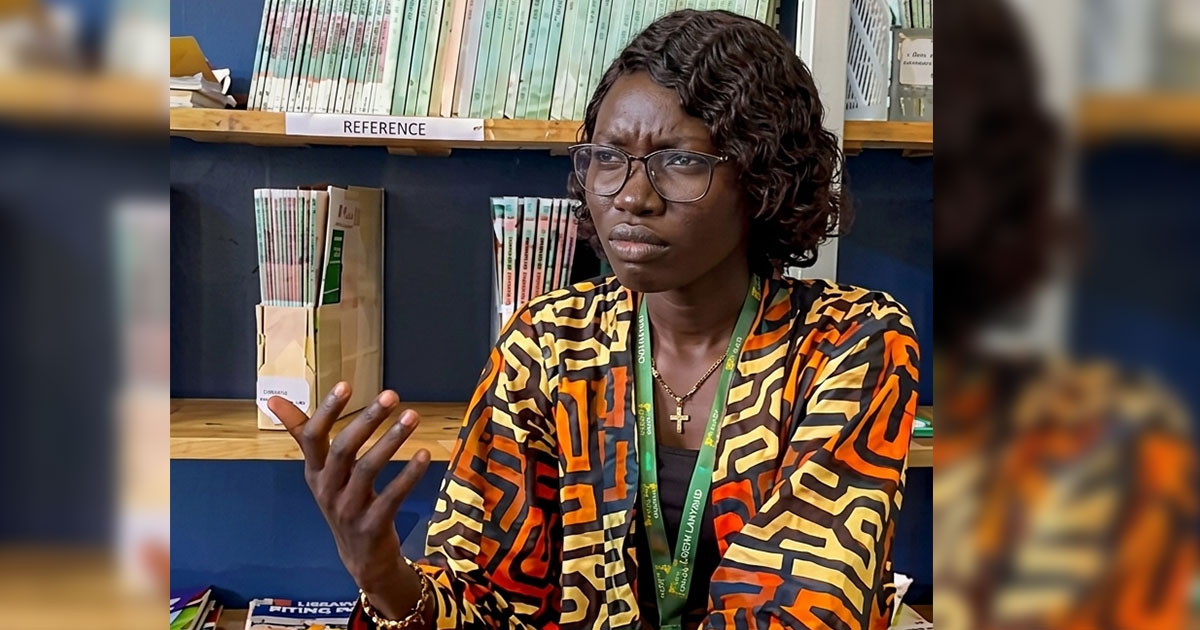
The Need for Institutional Accountability in Post-Conflict and Refugee Protection
For many children born into conflict, the future feels predetermined by the borders of a refugee camp. But for Nyamal Gatwech Gony, a young South Sudanese lawyer and human rights advocate, a childhood spent in the Gambella region of western Ethiopia was not a dead end—it was the crucible that forged her life’s purpose.
Born as a refugee in one of Gambella’s camps, Nyamal has spent her life defying the limitations often imposed on children of conflict.
From a standout academic career at Hawassa University, where she emerged as a medalist in the 2025 Ethiopia International Humanitarian Law Competition, to providing pro bono legal defense for indigent inmates at the Gorgorios Correctional Facility, Nyamal has consistently used the law as a shield for the vulnerable.
Her field experience spans critical grassroots initiatives, including land governance and internally displaced person (IDP) reintegration projects with GIZ in southern Ethiopia, alongside global advocacy with the “Girls Not Brides” partnership to end child marriage.
Today, she brings her impressive background to the continental stage, serving with the Post-Conflict Reconstruction and Development (PCRD) unit under the African Union’s Political Affairs, Peace and Security Department.
At the AU, her work focuses on issues of displacement and access to justice, peace building, and protection of vulnerable communities affected by conflict.
Nyamal was also one of the observers deployed by the AU across during this month’s elections. Led by former Kenyan President Uhuru Kenyatta, the mission helped her to observe the electoral process and women’s participation firsthand.
Abraham Tekle of The Reporter spoke with Nyamal about women’s political participation, the displacement crisis exposing IDPs to exploitation and legal invisibility, and her ultimate message of hope for youth raised amid conflict. EXCERPTS:
The Reporter: During your deployment AU election observer mission, what specific trends did you observe regarding the freedom, safety, and turnout of female voters and candidates at polling stations?
Nyamal Gatwech Gony: Most of the details have already been included in our report, but personally, I want to first commend the Ethiopian people for being so patient. The queues were very long, with people lining up from around five or six A.M., and voting continued even after midnight at some polling stations. Despite this, it was a very peaceful election; the voters were incredibly patient, and the staff were very welcoming of us.
With regard to the participation of women, their percentage was very limited in terms of both voters and candidates. I am not sure if the issue relates to election education or other limitations, but there is still more work to be done, as there were not very many women present in the polling stations.
Do you view these voting conditions as a reflection of Ethiopia’s challenging security environment, or should they be seen as a demonstration of citizens not exercising their democratic rights?
I believe that most people within Addis Ababa have a lot of information, as they have access to information. But in the countryside, especially in some of the regions where there is still conflict, people may not have enough information about registration and even the chance to participate. I see this as a very huge limitation.
Based on your observations and your legal background, what concrete policy adjustments should the Ethiopian government, the National Election Board of Ethiopia (NEBE), or the African Union implement to ensure elections are more gender-inclusive and protective of women’s political freedoms?
I would say that because we had an orientation with NEBE, we know the laws are definitely in place, but what is written on paper is obviously not always the reality that people enjoy. Many vulnerable groups, namely women and the youth, do not even know how to exercise their rights or where to enforce them. Because of this, I feel like NEBE could do more with their initiatives. For example, non-governmental organizations and various associations could participate in voter education. They need to reach out to different sectors and different parts of the country to ensure this information actually reaches the people it is intended for, as many women do not know their right to vote or realize that their voices even matter.
From my understanding, many people do not even know the consequences of voting versus not voting, or the difference between the two. There has to be more advocacy work done. NEBE needs to collaborate with different associations and private media outlets to effectively reach a wider range of individuals.
What can be expected from someone with a career like yours in helping to contribute to empowering women and ensuring they can exercise their rights both in general and during the election process?
In terms of elections, there isn’t really much that I can do as an individual. When I participated in the election observation, I was not acting in my individual capacity or in my capacity as a lawyer. Instead, I was participating as someone simply representing the AU alongside the rest of the team stationed in different parts of the country. Therefore, this would have to be national-level work done as an organization, as the African Union. What they can mostly do is make recommendations to the Ethiopian government and to NEBE, and engage with different stakeholders who are responsible for ensuring that women know their election rights in the long run.
However, regarding legal protection or what women can expect from me in my capacity as a woman and as a young lawyer who has had the great opportunity to study in Ethiopia, all I can really do is provide advocacy online and in various other capacities. For example, I can utilize seminars, capacity-building projects, and online advocacy to connect with the people I am able to reach. Because most people are simply not aware of their rights and this is the extent of what I can do.
Born in Gambella, where nearly half a million South Sudanese refugees reside, and having worked on land governance projects, how effectively do you feel Ethiopia’s progressive 2019 Refugee Proclamation is being translated into reality, particularly regarding refugee rights and access to land and rights to sustainable livelihoods?
This question is very personal to me. It is not just because I was born in Gambella, but because I have also been a refugee and been displaced several times. Most people do not really know who is protecting refugees and who is held accountable, and sometimes they even seem to confuse them with stateless people. However, refugees are protected by different instruments. We have international instruments, regional instruments, and we also have the Ethiopian instrument: the Ethiopian Proclamation Number 1110, which was ratified in 2019.
Of course, the cornerstone or main instruments protecting refugees are the 1951 UN Refugee Convention and its 1967 Protocol. Those are also backed up by the African Union’s own 1969 OAU Refugee Convention. What all of these conventions do is lay down the rights that can eventually be used to judge a specific host country, to see if their proclamations and institutions are doing work that reflects the rights provided in those documents.
I did research for my undergraduate thesis on the gaps facing the protection of South Sudanese refugees in the Gambella region. What I came to realize was that the legal framework designed by the Ethiopian government lays down great fundamental principles that should actually be a yardstick for the rest of the African countries.
However, the legal protection that is on paper is very different from what is on the ground. While refugees may feel physically safe, they can still be denied dignity. What I mean to say is that the institutions meant to protect those rights are not put in place. For example, under the proclamation, a refugee has financial rights, including the right to access financial services. Yet, there is not a single bank in any of the seven refugee camps found in the Gambella region, meaning they have to go all the way to the main city, which is Gambella City.
Furthermore, because of disputes between locals, refugees do not really have the physical safety to move from the camps to the city. Even regarding courts, according to the proclamation, refugees have an equal right to representation and legal action if they have any kind of judicial issues they would like solved. However, there are no courts in place. So, the right is there on paper, but the institutions supposed to make sure these refugees can exercise those rights are missing.
It is also very difficult for refugees to even get a work permit, yet they have a right to integrate, work, and build a livelihood. When you have been a refugee in a country for a very long time, and you are still facing persecution in your home country, the best choice is to make sure you can make money where you currently are. But it is not possible; it is very difficult because they are unable to get legal documentation or even have freedom of movement since there is some kind of conflict in the area.
As you mentioned, the area is prone to conflicts that occur between locals and the refugees crossing the border from South Sudan. These clashes often involve two ethnic groups—the Anuak and the Nuer—who blame each other for the violence that takes place in that area, usually tied to questions about rights and inequality. Can you enlighten us on what is really happening in Gambella?
The long-term conflict going on in Gambella is between the Anuak and the Nuer people. The indigenous Nuer of the Gambella region share the same identity as the refugees coming from South Sudan. What I mean to say is they speak the same language, they have the same culture, and everything else. Consequently, the refugees end up caught in the middle of this kind of fighting. Because they are located close to the Anuak zone, every time the Anuak and the Nuer have an issue, the Anuak will attack the refugees and attack them as a form of revenge killing just to get back at the Nuer people.
What ends up happening is that the refugees now have no freedom of movement. They cannot go to school, and they are unable to do any kind of work in the areas where they are located.
Reports indicate that resource disputes are also part of the problem. What are your observations?
The Anuak feel that their resources, their land, and everything else are being taken over by the refugees. According to international laws, and the Ethiopian proclamation, the country has a duty to ensure they do not refoul—or send back—refugees who are running away from persecution in their home country. They have to accommodate them, so it is the federal government’s responsibility to assess which places are suitable or not suitable for refugees. The federal government designated the Gambella region for this, especially because its location at the border makes it much easier for refugees to settle there.
Of course, when it comes to resources, there is a limitation in accommodation and all of this.
However, it is not the duty of the regional government to expel these refugees, as the refugees actually have a right to stay in that area. The federal government of Ethiopia, working through agencies alongside the UNHCR here in Ethiopia, is the one supposed to provide protection to these refugees. They are also responsible for reminding the local people that this is a decision of the federal government and a federal matter; it is not up to the locals to take measures into their own hands and say that this is their land and not a place for refugees.
Internally displaced women and girls often face heightened risks of exploitation and legal invisibility. From your lived experience as a refugee, and your work in southern Ethiopia, what do you think are the primary legal and protections gaps that institutional frameworks fail to address during IDP reintegration or settlements?
There are so many challenges, but the main ones for me would be gender-based violence in conflict-related areas. For example, in the refugee camps, there is a lot of gender-based violence going on. Additionally, in Southern Ethiopia, where I worked on the reintegration of IDPs, the issue was that most of these women were not being included in the decision-making process. As a consequence, their voices are left out, and the decisions made are not necessarily suited for them because the people making those decisions do not know the perspective of women.
There are also traditional and cultural barriers. What I mean to say is that communities are not very supportive of women being in the decision-making process. Most of the time, even in NGOs and other institutions, they focus more on numbers to ensure there is a specific headcount of women in leadership positions, in parliament, or whatever the case may be. It is not really a substantive kind of participation or true inclusion; it is just about the numbers. For example, they might say, “Let us have 20 percent” or “Let’s have 30 percent women in parliament” because there are quotas for different populations. What ends up happening is there is no guarantee that the decisions being passed actually listen to the very victims going through these experiences, because it is just about numbers rather than substantive control.
At the end of the day, the final decisions are not passed by women or by the vulnerable people who need to provide their perspective.
Through your advocacy with Girls Not Brides, you fight to prevent child marriage and expand education. In conflict and post-conflict settings within Ethiopia, where community structures are fractured, what alternative legal or community-led mechanisms have you found most effective in protecting girls from early marriage?
The biggest challenge is that when we try to advocate against child marriage, it seems to be perceived as an attack on culture. A lot of African societies, particularly in Gambella and other parts of Ethiopia, view it as an attack on their own culture when you say girls should not be married at a young age. However, I do not believe that it is an attack on tradition. The real question should be: Are those traditions empowering children, or are they limiting them? At the end of the day, the consequences of child marriage extend far beyond just the individual girl. Not only does this affect the whole family and the community, but it also affects the entire nation because you are limiting their capacity to become somebody in the future.
When you force them into early marriage, you limit a potential that ultimately costs the entire community. Culture is not static, and this is the issue that most people do not understand. Every society has to evolve, and the real question is about empowerment. We want to move forward, and if these practices are undermining the education, safety, and opportunities of these girls, then that aspect of the culture has to be abandoned. It is simply not feasible, especially in a modern society. I would say this has been the biggest challenge. Furthermore, many survivors stay silent because of the stigma and a lack of support in the community, which, again, is very much tied to this practice.
What alternative legal or community-led mechanisms have you found most effective in protecting girls from early marriage?
The biggest and most important protection is the law. When you have a law, you have something to refer to when you try to fight for your rights. But if it is not on paper, even if you have been abused, you cannot redeem yourself in any way. The most relevant example I can give to elaborate on this is from when I was with GIZ in Hawassa. There was a specific law included in the legal reforms for land governance stating that if a man marries a second wife, he has to divide his half of the property. For example, if he has two acres of land, he takes one acre and gives one acre to his first wife. Then, he has to divide his own remaining acre in half, because he shares the other half to his new wife.
At the time, I asked why we were suggesting this instead of directly addressing polygamy. I remember the project manager explaining that the law has to be smart so that people’s behavior will eventually change based on how the law is written. A man will start to avoid having multiple wives because he knows that the more he marries, the more he will have to divide his property and land. It is the same thing with child marriage: if there is no severe punishment written into the law for marrying off a young girl, then the practice will not end.
Therefore, the biggest factor is having the law in place, and the second is treating it as a collective responsibility. Many people often think that child marriage is just a women’s problem, but it is not. We need everyone on board. If society, various stakeholders, and religious leaders are all included in this advocacy, there will be much better progress because it becomes a collective effort.
As someone with a successful career in international humanitarian law, what message and strategic legal pathways do you advocate for to ensure that young girls born into conflict not only survive, but have their rights to education and leadership legally protected?
One, I call upon everybody. It’s an institutional struggle. It’s a societal struggle. Everybody has to be included. And then most importantly, I think that young people have to be included more in the process because we are in a very unique position where we are able to know our rights. We have awareness, we can be able to promote accountability, and we also have innovative solutions that we can offer for the old challenges.
The African Union is trying this as well, but more needs to be done. Expanded civic education campaigns and large-scale community development initiatives are essential to strengthening public participation and fostering a culture of peace. Young people should be empowered to lead and pioneer these advocacy efforts, enabling communities to recognize the value of the new perspectives and approaches they bring.
Providing youth with leadership opportunities can help bridge generational gaps and contribute to sustainable social and community development.
How does the AU’s Post-Conflict Reconstruction and Development (PCRD) unit contribute to safeguarding communities from the lasting impacts of past conflicts and reducing the risk of renewed violence or targeted attacks in the future?
Normally, with transitional justice, we try to find a way to re-establish the previous institutions that were dismantled by the conflict. This includes, for example, rebuilding schools, hospitals, and similar facilities. We also make sure to educate the public on the long-term dangers and destructiveness of conflict. Additionally, we work to reconcile the parties involved in the conflict, meaning that mediation is a core part of what we do.
Right after that, we introduce various initiatives—such as sports and other community activities—to help the different groups that were in conflict rebuild the relationships destroyed by the violence. That is mostly the focus of our work. We try to address issues like trauma healing, community reconciliation, healthcare, and education, moving far beyond just standard military integration and power-sharing arrangements.
While those structural agreements are necessary, we try to go deeper by emphasizing accountability and healing people from trauma. We provide different types of mental health training in post-conflict areas to ensure that communities can successfully maneuver the transition and avoid sliding back into violence.