Riverside Terrace preservation creates cultural, economic corridor
The Riverside restoration project is a testament to Black history and economic advancement.
 Black News
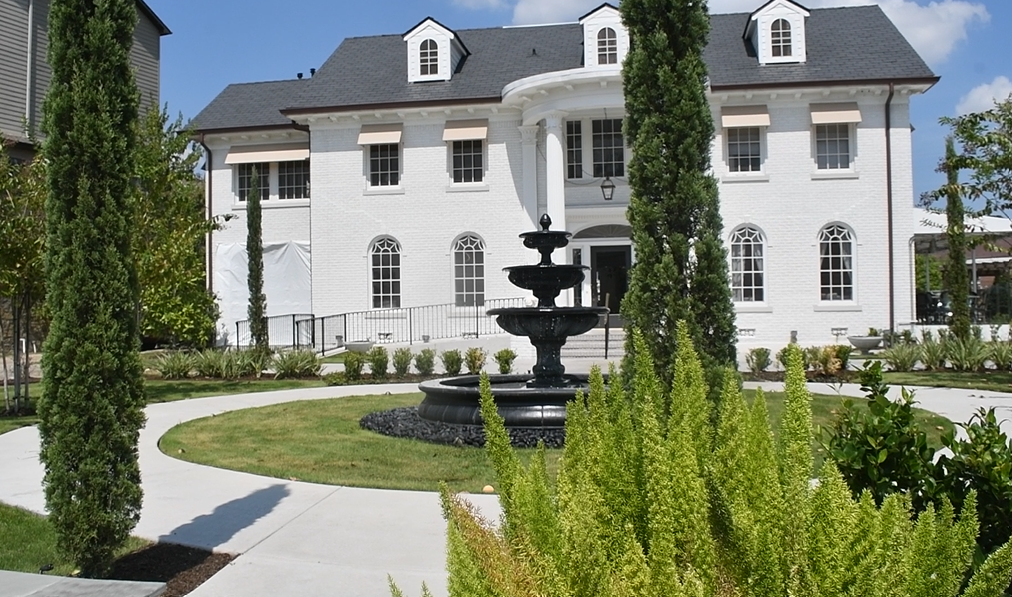

For nearly two decades, an ambitious preservation effort along Riverside Drive has worked to safeguard a unique piece of Houston history while cultivating vibrant new cultural, dining, and hospitality destinations.
What began as opportunistic projects to restore historic homes has evolved into a cohesive vision: Creating a thriving corridor where mid-century architecture, Black cultural expression, and thoughtful economic development coexist.
Although many associate Riverside Terrace with the adjacent Third Ward, the neighborhood possesses its own distinct history, architectural legacy, and complex relationship with race, real estate ownership, and urban redevelopment.
“They’re separate projects born from the same fundamental goal: Preserving these old, beautiful homes and trying to prevent their high-density redevelopment into modern townhouses,” explained Sean Roberts, founding partner of the law firm Roberts Markland.

His persistent efforts alongside his law partner, Clive Markland, have proved instrumental in shaping this ongoing revitalization.
For Roberts and Markland, preservation is a proactive strategy to protect the neighborhood’s architectural identity while demonstrating what intentional, long-term community investment can accomplish.
One strategic project at a time
The evolving Riverside corridor grew organically as opportunities arose to acquire and restore properties that could accommodate commercial or community uses without sacrificing their distinct architectural character.
“This has truly been one project, one opportunity at a time,” Roberts reflected. “Then you look up 19 years later, and we’ve got our hands on several different properties across the neighborhood.”
Today, those properties contribute to an ecosystem of professional, cultural, and hospitality destinations. Roberts and Markland operate three law offices directly along Riverside Drive, while other restored sites have transformed into community gathering hubs.

Cultural ambitions within the corridor are anchored by an art gallery at 2516 Riverside and plans for the upcoming Black Art Museum Houston at 2506 Riverside. Additionally, Riverside Farms—acquired simply to provide supplementary parking for the museum—has blossomed into a functional component of the larger neighborhood vision.
“The biggest surprise out of this entire process has definitely been the farm,” Roberts noted.
On that farm, one of the Roberts Markland lawyers, former U.S. District Judge Vanessa Gilmore, operated Judge V’s Bees, a buzzing apiary (bee operation).
That opportunity came through Riverside Farms, where Chef Dominick (Chef Dom) Lee, head chef of the restaurant Augustine’s at The Riverside, decided to incorporate bees into the farm.
For Gilmore, it made perfect sense.
“The pollination and the pollinators help with the health of the plants and vegetables that are growing here on the farm,” she said. “So, it’s been a very good synergistic relationship.”
Roberts, Markland, and crew adapt their plans to suit each building’s unique layout and possibilities. Looking ahead, Roberts hopes to acquire the LaDet, a former hotel with deep historical ties to the area, to expand cultural and hospitality offerings.
Architecture worth saving
The historic residences of Riverside Terrace share substantial architectural lineage with the grand properties of River Oaks. As Roberts points out, both master-planned areas were developed during the same era using similar design philosophies and, in several instances, the same prominent architects.

However, the visual contrast between the two neighborhoods today underscores the impact of sustained investment in landscaping, tree care, and maintenance.
“When I first started on this journey, I brought my young son around the area and said, ‘The primary difference between the curb appeal of the houses in River Oaks and this neighborhood comes down to basic maintenance and landscaping,’” Roberts recalled.
That observation shaped how the team allocates development budgets.
“We’ve spent more money on exterior landscaping than redesigning the interiors, primarily because the interiors didn’t require drastic structural alterations,” he explained.
To honor the original architects’ intent, the team avoids aggressive structural modifications, such as removing original walls. Instead, capital flows directly into planting shade trees, installing lush turf, upgrading site drainage, and embedding modern irrigation systems, dramatically elevating the surrounding streetscape.
The Riverside takes center stage
The crown jewel of this effort is The Riverside, an elegantly restored 1930 historic estate built for J. Harvey Suttles, president of the Ready-Cut House Company. Fully restored in 2022, the sprawling property now functions as a boutique hotel and hosts Augustine’s, a premier full-service restaurant helmed by acclaimed Chef Dom.
The estate also features a secondary dining venue above a restored carriage house, home to an exclusive supper club.
Roberts initially envisioned a modest bed-and-breakfast that might convert into a private club. Meeting Chef Dom altered that trajectory.
“He is such a wonderfully talented chef that we didn’t want to place a restrictive membership requirement on everyday community members who simply wanted to enjoy the culinary experience,” Roberts said.
Consequently, plans expanded to accommodate two public dining concepts, introducing upscale culinary options into an area that had been a severe food desert 10 to 15 years ago.
“This has truly been one project, one opportunity at a time. Then you look up 19 years later, and we’ve got our hands on several different properties across the neighborhood.”
Sean Roberts
A history beyond the labels
Preserving Riverside Terrace also requires confronting its historical past. Roberts noted that his perspective shifted after taking an architectural history course at Rice University taught by Professor Steven Fox, in which he learned that Riverside Terrace was initially developed in the 1920s, in part, to offer upscale housing to affluent Jewish families systematically excluded from River Oaks by anti-Semitic restrictions.
Originally, Riverside Terrace enforced explicit deed restrictions prohibiting Black ownership altogether. It was not until the mid-1950s that Black families began purchasing homes in significant numbers.
“When I hear people use the phrase ‘historically Black neighborhood,’ you really have to put a structural asterisk next to that term, because you have to define precisely how far back into history you choose to look,” Roberts observed.
Overcoming modern development challenges
Because Riverside Terrace features a mix of property uses—including low-income apartments and aging commercial motels—pursuing an exclusively single-family residential redevelopment strategy proved economically impractical. Converting select homes into commercial, cultural, or legal offices offered a financially viable model for saving physical structures from demolition.
This adaptive strategy carries local precedent. In the early 1970s, the local family behind the iconic former RJ’s Rib Joint (also known as RJ’s Riverside Terrace Café) converted an adjacent residential property into law offices for legendary attorney Mr. Jordan.
“It represents a realistic way for us to win the battle between aggressive new townhouse development and preserving the authentic architectural history of our neighborhood,” Roberts stated.
“Ultimately, we want to build a bustling, cohesive corridor, and it certainly doesn’t all have to be owned by us.”