Second chances: The push to keep offenders from returning to prison
For decades, Saint Lucia’s prison system was plagued by overcrowding, poor conditions, unrest and a high rate of recidivism. The opening of the Bordelais Correctional Facility (BCF) in Dennery in 2003 marked a significant change from that past, replacing the antiquated Her Majesty’s Prison in Castries with a new facility. But building a new prison […] The article Second chances: The push to keep offenders from returning to prison is from St. Lucia Times.
 Black News

For decades, Saint Lucia’s prison system was plagued by overcrowding, poor conditions, unrest and a high rate of recidivism.
The opening of the Bordelais Correctional Facility (BCF) in Dennery in 2003 marked a significant change from that past, replacing the antiquated Her Majesty’s Prison in Castries with a new facility.
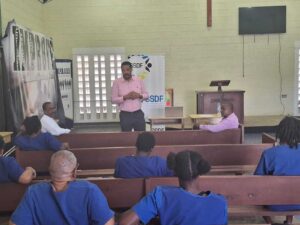
But building a new prison was only part of the challenge. The need for rehabilitation and reintegration remained, as Saint Lucia sought to balance the fight against crime with efforts to help offenders return to society and avoid reoffending.
That challenge has continued more than two decades after Bordelais opened.
In 1958, Lord Farrington, a visiting British lawmaker, referred to the jail in Castries as “an abomination”, calling for it to be blown up with dynamite. The prison was notorious for overcrowding, the ill-treatment of prisoners, the spread of illnesses and a high rate of recidivism.
Shortly after Dr Kenny Anthony took the reins of leadership of Saint Lucia in 1997, there was an uprising at the prison on Bridge Street. Prisoners set fire to the antiquated facility, protesting the horrendous conditions.
Following the fire, there was a call for reform of the penal system and the need for rehabilitation without relenting on the fight against crime.
At the opening of the $48 million BCF, Dr Anthony said the investment was an unfortunate necessity caused by historical circumstances that had “placed the failures of the past at our feet”.
However, the new facility faced several challenges, not least of which was retaining old guards with strong leanings towards incarceration as opposed to rehabilitation.
Still, the BCF has over the years made several strides in re-engineering the mindset and providing many opportunities for inmates to be rehabilitated and reintegrated into society.
One such programme is the Community Re-Entry Programme (CREP), run by the Saint Lucia Social Development Fund (SSDF).
Tackling recidivism
Junior Delice, Coordinator of CREP, told St Lucia Times that the initiative was conceptualised in 2022.
“This stemmed from a need to help with the high levels of recidivism – that is, persons coming out of the correctional facilities and returning,” Delice said.
He further explained that several factors contribute to recidivism, including social ills, inability to get a job and the inability to get properly reintegrated into society. This, he said, would then put a strain on the economy and the country as a whole.
The programme was initially a partnership between the United States Agency for International Development (USAID) and the SSDF.
“With the transition from USAID, the SSDF – by extension the Government of Saint Lucia – saw the need to continue as it was a necessary tool to deal with some of the issues that we are facing in terms of crime prevention, rehabilitation and reintegration,” Delice said.
Initially conducted as a pilot project, the programme looked at youth between the ages of 17 and 35, male and female. However, based on its success, it has transitioned to a national programme.
Individuals who were incarcerated and granted parole through the courts are now given the opportunity to be part of the programme. Additionally, those set to leave the facility after completing their sentence are eligible.
Delice said the programme has seen a measure of success and explained the yardstick for measuring this.
“There are key markers. Initially, we looked at 75 per cent completion rates. Our first cohort was 20, so that would be 15. However, we surpassed the 15, and we had 18, which brought our success rate to 87 per cent completion,” he said.
“I would say this though: the mere fact that an individual saw the need to be part of a programme that provides them a second chance, to be properly reintegrated, every individual who was part of this programme is considered a success.”
Changing mindsets
The current format of the programme includes cognitive behavioural therapy to help with mindset change and critical thinking. In addition, participants complete 120 hours of life skills training covering areas such as decision-making, self-awareness, civic responsibility and conflict resolution.
“We also bring key stakeholders throughout society and credible messengers – persons who were where they were but have now transitioned and are making outstanding contributions towards society – to speak to those on the programme,” Delice further explained.
The programme also includes a pathway plan designed to provide wraparound services to participants.
“With that pathway plan, you come with an understanding as to where an individual is at their economic livelihood…. So, there are three options – apprenticeship, job placement, entrepreneurship,” Delice told St Lucia Times.
“For those persons who probably had a business plan before they went into the correctional facility, you guide them towards micro enterprise training and development with agencies like BelFund to help them start up their businesses.”
There is another component through the SSDF’s HOPE programme, which connects participants with businesses where they can learn a trade and pursue qualifications such as Caribbean Vocational Qualifications (CVQs), with the possibility of securing employment afterwards.
Addressing the reasons behind offending
Nichole Philogene-Joseph is a social worker with CREP.
“My role is very integral in the initial stages of the programme where the inmates are referred by Bordelais or the Department of Probation and Parole. I engage the inmates and give them a quick introduction about the programme and what we offer,” she explained.
“I then use a tool called the LSCMI – Level of Service Case Management Inventory tool. This is a quantitative survey that looks at eight domains. It assesses the criminal’s history, their family dynamics, their education and employment, their pro-criminal attitudes and orientations, anti-social patterns, as well as the use of substances, alcohol and drugs. Based on my findings, this is where we engage in further discussions with them to assess their criminogenic needs.”
Once these areas are assessed, the programme works to address the identified needs.
“So, for instance, if alcohol could have been a contributing factor to the crime that they committed, we try to work with the individual, [including] referring them to substance misuse for rehab,” Philogene-Joseph said.
According to the social worker, the programme also assesses the participants’ level of reasoning.
“There’s also consistent holistic development and wraparound services because, by being part of this programme, though it’s on a case-by-case basis, since persons have different needs, they’re also attached to the levels of empowerment that SSDF provides. This includes housing and educational support.”
She explained further that as the individual begins their reintegration process after serving time, there is a monitoring and evaluation system.
The programme also offers assistance with civil status documents, national ID cards and passports that may have expired while in prison.
Reintegration is everyone’s responsibility
CREP relies on the support of a number of other agencies for both its sustainability and success. These include the Department of Probation and Parole, BelFund, the Youth Economy Agency, TVET and other key stakeholders through SSDF, such as the Ministries of Equity and Justice.
There is also a growing partnership with the private sector.
However, Delice says that changing public perception is also a factor.
“We have to play a key role in changing the mindset of society. We have a bit of advocacy to do in this regard,” he said.
“There needs to be the embracing of the fact that what we have in Saint Lucia is a correctional facility. This means that offenders are not going there to stay. The purpose of going there is to be rehabilitated, corrected, and to return to society. Our support, or lack of, could determine whether we improve recidivism or not.”
While supporting the ideal fully, Philogene-Joseph believes that as a country, we still have a long way to go.
“But I would say that we are on the right track,” she added.
The most recent cohort of the programme included 20 participants. Eighteen of those are now meaningfully engaged following completion, with one receiving employment overseas.
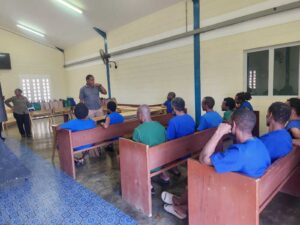
“We really want the public to embrace this programme and the aspect of providing a second chance and re-entry. The life you impact contributes to a better society and better homes. The better home you create is a better family; the better family you create is a better community; and the better community you create, in the long run, is a better country you create. So, in essence, reintegration is not a job of one or two persons, or one agency or the Government. We all have a role to play in the fight of reintegration because these are our brothers, our family, our cousins,” Delice said.
The article Second chances: The push to keep offenders from returning to prison is from St. Lucia Times.