Steven Ivory: The Phenomenon that is ‘Michael’
*All over the world, they were dancing in the streets. That’s not a figure of speech—organized, hoofing flash mobs popped up everywhere, from Manhattan to London and beyond. In theaters, audiences had religious experiences, weeping and shouting at the screen. They danced in the aisles and on their seats as if they were attending a […] The post Steven Ivory: The Phenomenon that is ‘Michael’ appeared first on EURweb | Black News, Culture, Entertainment & More.
 Black News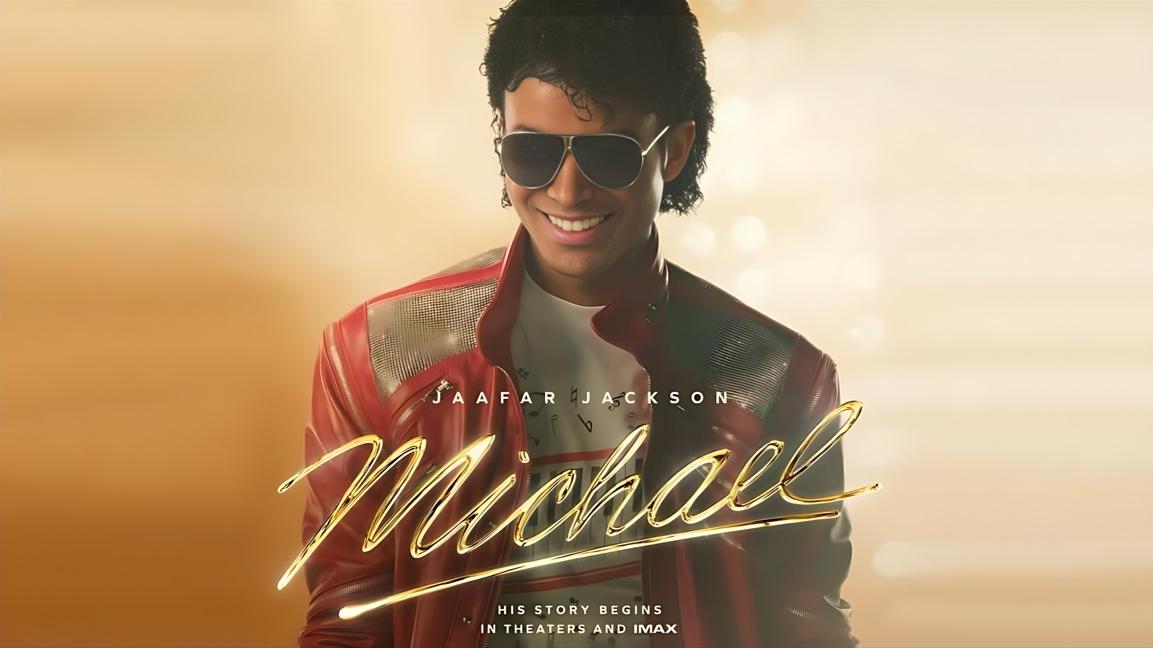
*All over the world, they were dancing in the streets. That’s not a figure of speech—organized, hoofing flash mobs popped up everywhere, from Manhattan to London and beyond.
In theaters, audiences had religious experiences, weeping and shouting at the screen. They danced in the aisles and on their seats as if they were attending a concert.
This has been the reaction to “Michael,” the biopic about Michael Jackson’s life. Not since the 1975 movie adaptation of the musical comedy The Rocky Horror Picture Show, a campy homage to classic sci-fi and B-horror flicks, has a movie seen this kind of interactive participation from audiences.
That in-theater reaction, including some patrons dressing up like Jackson, is all the two films share. Unlike “Rocky Horror,” which was considered a financial flop upon its release but, over the years, earned money and a devoted cult audience, “Michael” has been a thunderbolt out of the gate, breaking box-office records for a biopic as it soars toward a global billion-dollar gross and beyond.
Executives at Lionsgate, Universal, and the Michael Jackson Estate, all jointly responsible for this production by Graham King (“Bohemian Rhapsody,” “The Departed”), directed by Antoine Fuqua (“Training Day,” “The Equalizer” trilogy), projected that “Michael” would be a success. However, if any of them insist they knew it would be a juggernaut, they’d be lying.
There were clues, though. The film’s official trailer, released online on February 2, 2026, drew 116 million views worldwide, including 30 million in the first six hours. According to Billboard, it is the most-watched trailer for any music biopic.
Still, “Michael”’s global box office revenue in the film’s first few weeks is stunning by any measure. Biopic? At the box office, “Michael” has been performing like the latest release in a popular comic-book franchise.
The film’s victory has jump-started all kinds of Michael Jackson business. His recordings have surged internationally across music charts, sales, and streaming. On what’s left of newsstands these days, special magazine issues dedicated to Jackson have popped up. Meanwhile, he owns the Internet. On every online platform, every fourth post is about Michael Jackson.
What has driven audiences to “Michael” in droves? Well, how’s this for a unique, powerful, and persuasive marketing campaign: global political and societal divisiveness, inflation, wars in Iran and Ukraine, oil shortages, and the general uncertainty of day-to-day life. All of that left society desperate for a time-out. Jackson’s cinematic tale of faith, determination, and triumph, not to mention the music, has offered a temporary reprieve from the world’s madness. Turns out, a movie whose production was often reported to be behind schedule was right on time.
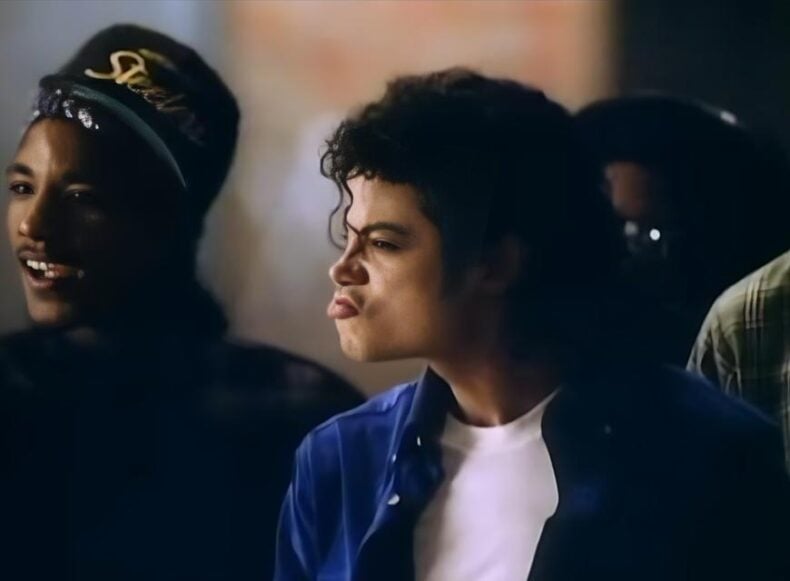
And then, of course, there is Michael Jackson himself. One of the greatest entertainers of all time, he passed away in 2009, and the world still hasn’t gotten enough of him. “Michael”–alongside other Jackson Estate-sanctioned projects, including documentaries, posthumous music releases, Las Vegas residencies, and touring shows, as well as “MJ,” the Tony Award-winning Broadway musical–is just the latest way for fans of the superstar to get their fix.
Given Jackson’s extraordinary, decades-long influence on popular music and modern global culture, it’s no surprise that a biopic about him, particularly a feel-good production, would transcend a mere moviegoing experience. Thus, more than just a movie to patronize, “Michael” is a cultural event, something to do out of fandom, curiosity, or even honor, drawing audiences beyond Jackson’s massive fan base. “Have you seen the movie?” or “You seen it yet?” were how more than one person asked whether I’d seen “the movie,” without naming the film.
This same thing happened in the early ‘80s with Thriller, the album whose mind-boggling success underpins Jackson’s earthshaking legacy. After Jackson’s televised “Motown 25” performance and the “Thriller” video premiere, the album sold about 600,000 copies per week in the United States and, at its peak, reached one million copies per week worldwide. The numbers reflected people buying the record not just for the music but as part of the latest trend. As of 2026, Thriller remains the best-selling album of all time, with total global equivalent sales (including physical, digital, and streaming) estimated at 124-128 million units.
Film critics immediately pounced on “Michael.” They said that certain aspects of Jackson’s story, both major and subtle, were glossed over or omitted. Missing from the cast was a portrayal of Diana Ross, who, in real life, had nothing to do with discovering the Jackson 5 but was ingeniously recruited by Motown founder Berry Gordy to introduce the group to the public.
In the film, the group auditions for Motown in 1968, singing “Never Can Say Goodbye.” In fact, actor Clifton Davis, who wrote the song, likely hadn’t written it yet. (Originally intended for the post-Ross Supremes, the song was heard by Motown staff producer Hal Davis, who insisted on producing it for the Jackson 5.) The J5 wouldn’t record it until 1971, four years after the label signed them. (Davis would also write the Jackson 5’s 1972 single “Looking Through the Windows.”)
Such oversights are no big deal to the casual Jackson fan, but they make my skin crawl. Still, “Michael” has proven to be critic-proof. Why wouldn’t it be? When he was alive, Jackson himself was critic-proof. Not one of the controversies that surrounded him over the years dissuaded his supporters, generations of whom know only one physical version of Michael and almost nothing about the Jackson 5.
Having Jaafar Jackson, Jermaine‘s son, portray his iconic uncle in the movie was nothing short of poetic. Graham King has said he wanted Jaafar to play Jackson all along, but that’s not true. For two years, King looked everywhere but at Jaafar for the role. Understandably, in the producer’s mind, Jaafar’s looks and lineage weren’t enough to cast him. But when he saw Jaafar’s dedication to landing the part—including learning Michael’s dance moves and working with a trainer to build the strength and stamina required to emulate Michael’s athletic feat of singing and dancing during two-hour concerts—King changed his mind. (Contrary to gossip, while Jermaine certainly wanted his son in the role, he did not and could not influence King’s decision.)
However, beyond the role’s physical demands, Jaafar shows real acting chops on screen. To his credit, during public and TV appearances promoting the film, Jaafar doesn’t dress, dance, or talk like Michael, making it clear that portraying his superstar uncle was just a role. I’d say a star is born.
The runaway success of “Michael” and the resulting interest in all things Jackson have people saying, “Michael Jackson is back!”
With all due respect to those who make this declaration, I say no. Michael Jackson is not “back.”
The man never left.
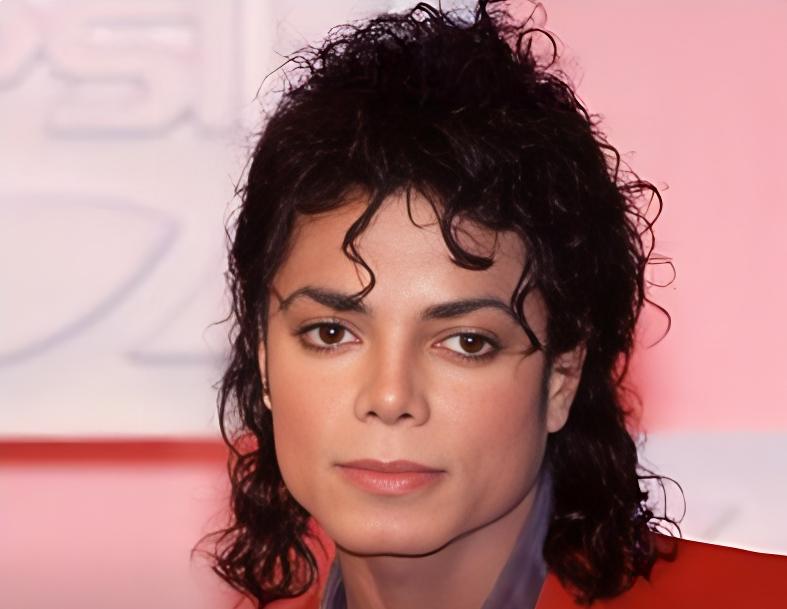
MJ is what clouds are to the sky. Leaves to trees. Corny, I know, but that is how relevant he remains in music and popular culture. Jackson’s dance concepts are ubiquitous in pop music today. His approach to live performance is a blueprint for stagecraft. His innovations in short films have set the industry standard for decades. His business acumen in music publishing and other ventures (Jackson once seriously considered buying Marvel Studios) has inspired young artists to seek wealth-building outside the entertainment spotlight. Yet for all he left the world, Jackson departed an enigma.
What’s clear, though, is that what was initially a cliched (and yes, self-proclaimed) moniker on his part, inspired by titles such as Elvis Presley‘s “King of Rock and Roll,” Aretha Franklin‘s “Queen of Soul,” and James Brown‘s “Godfather of Soul,” became an irrefutable fact: Michael Jackson truly is the King of Pop. The steam-rolling success of “Michael” is simply the latest reminder.
According to Lionsgate, a follow-up to “Michael” is already “30 percent shot.” This was done while the first film was in production. The success of a second movie could easily pave the way for yet a third. Imagine an entertainer’s legacy launching a movie franchise. It could happen. We’re talking about Michael.
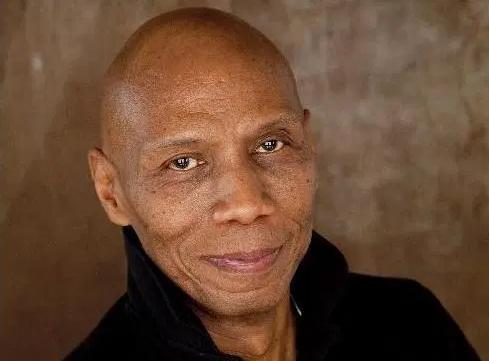
Steven Ivory, veteran journalist, essayist, and author, writes and discusses popular culture across various platforms, including the Internet, TV, radio, documentaries, magazines, and newspapers. The Last Man on AOL is at STEVRIVORY@AOL.COM
(If You Like/Appreciate This EURweb Story, Please SHARE it!)
MORE NEWS ON EURWEB.COM: ‘Michael’ Box Office Run Reinforces Hollywood Biopic Formula
We Publish Breaking News 24/7. Don’t Miss Out! Sign up for our Free daily newsletter HERE.
The post Steven Ivory: The Phenomenon that is ‘Michael’ appeared first on EURweb | Black News, Culture, Entertainment & More.