The Coup Costs More Than the Corruption It Claims to Fix
Since 2020, soldiers have seized power in Mali, Guinea, Sudan, Burkina Faso (twice), Niger, and Gabon. In every case, the announcement has followed the same script: corruption has hollowed out the state, civilian government has forfeited its legitimacy, and the military is stepping in to restore what politicians destroyed. Crowds have gathered to celebrate in Bamako, Conakry, Ouagadougou, and Niamey, believing that the promise on offer, cleaner government, was one worth the risk. Sixty-five years of data, from 1960 to 2024, tracking all 222 coup events, successful and attempted, across 53 African countries say the promise has never been kept. […] The post The Coup Costs More Than the Corruption It Claims to Fix appeared first on African Arguments.
 Black News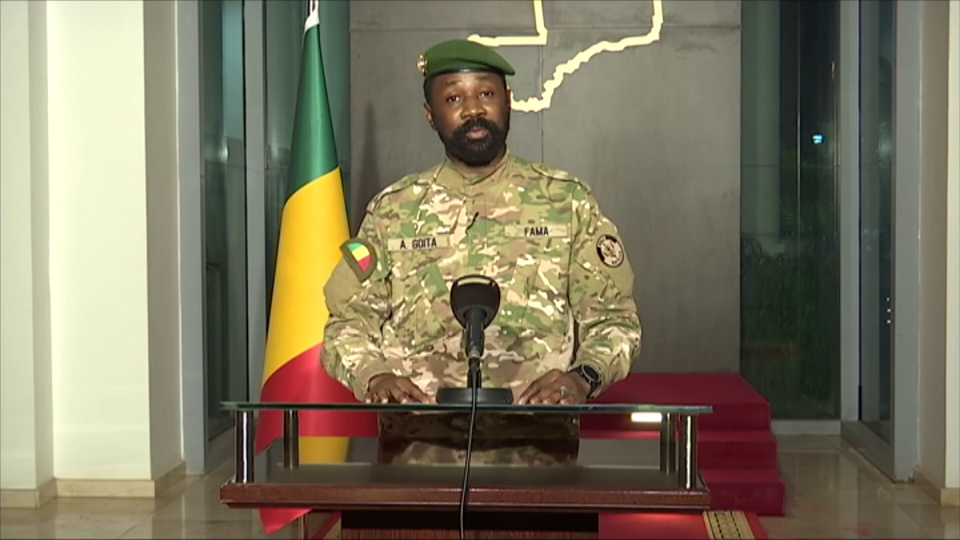
Since 2020, soldiers have seized power in Mali, Guinea, Sudan, Burkina Faso (twice), Niger, and Gabon. In every case, the announcement has followed the same script: corruption has hollowed out the state, civilian government has forfeited its legitimacy, and the military is stepping in to restore what politicians destroyed. Crowds have gathered to celebrate in Bamako, Conakry, Ouagadougou, and Niamey, believing that the promise on offer, cleaner government, was one worth the risk.
Sixty-five years of data, from 1960 to 2024, tracking all 222 coup events, successful and attempted, across 53 African countries say the promise has never been kept. Worse: coup governments do not merely fail to fight corruption. They make it worse, systematically, every time.
Across 53 African countries from 1996 to 2024, each additional successful coup a country experienced was associated with a measurable decline in the World Bank’s Corruption Control index, not an improvement. When we instrument for the possibility that corrupt countries are simply more coup-prone to begin with, rather than coups causing the corruption, the relationship survives and strengthens: the instrumented estimate is larger than the raw correlation, not smaller. This is not the pattern a genuine anti-corruption intervention would produce.
A coup by Assimi Goïta in Mali in 2021 inaugurated a wave of coups across central Africa in the Sahel.
The mechanism is not mysterious. A coup’s first act is to suspend the institutions that would have caught the corruption it claims to be fighting: the courts, the legislature, the press. The commissions and prosecutions that follow in the coup’s first weeks are real, but they operate inside an institutional vacuum that the coup itself created. There is no independent judiciary left to enforce anti-corruption law without executive interference, no free press left to expose what the new government would rather hide, no legislature left to scrutinise the budget. A government cannot use institutions to fight corruption after it has dismantled the institutions.
The costs compound beyond governance. The same dataset shows a GDP growth shock of roughly 4 to 5 percentage points in the year of a coup, consistent across three independent identification strategies. Debt burdens rise. Human development stalls: countries with no coups since 1990 show statistically significant convergence toward the rest of the world on the UN’s Human Development Index; the most coup-affected countries show none. The gap between a country’s most stable and most coup-prone paths is not narrowing. It has been widening for three decades.
And the coups compound on each other. Among African countries that have experienced one successful coup, roughly seven in ten go on to experience a second. After a second, the recidivism rate rises further. The median time to the next coup shortens with each successive coup. Part of this trap runs through the same institutional and economic damage described above, though the evidence for that mechanism is real without being total: a purely economic-and-institutional model meaningfully outperforms random prediction, but does not come close to fully explaining which country falls into a repeat coup and which does not. Something else, – possibly regional normative diffusion, possibly military organisational culture – is also at work, and our research is continuing to seek to measure and isolate these further variables.
What we do know is where the counterfactual sits. Nine African countries have had no successful coup since 1990: Botswana, Cabo Verde, Ghana, Kenya, Mauritius, Namibia, Senegal, South Africa, and Tanzania. They span different income levels, colonial histories, and political systems. What they share is uninterrupted institutional continuity, decades in which courts, elections, and a free press kept operating, imperfectly, without being reset to zero. Mauritius and Botswana are now among the best-governed states on the continent by any measure. Ghana crossed from negative to positive on the World Bank’s corruption index only after 43 years without a coup. That is not a coincidence. Institutional accountability, like capital, compounds; a coup is the one event guaranteed to interrupt the compounding.
This has a direct implication for how the international community responds to the current wave. Anti-corruption rhetoric from a coup government is not a signal that engagement on governance reform is safe to resume. It is, on the evidence, close to the opposite: the very absence of the institutions needed to make that reform real. Conditionality tied to the restoration of courts, press freedom, and electoral competition, not to the announcement of an anti-corruption commission a coup government fully controls, is the response the data actually support.
None of this is an argument that civilian governments in Africa have been well governed, or that their corruption was invented by their critics. It is an argument about what replaces them. The choice a coup offers is never between corrupt civilian rule and clean military rule. It is between imperfectly accountable government, capable of incremental correction, and unaccountable government, in which there is no longer a mechanism left to correct anything. Citizens who welcome a coup in the sincere hope of cleaner government are making a bet that three decades of evidence, from dozens of countries, have already decided against them.
The post The Coup Costs More Than the Corruption It Claims to Fix appeared first on African Arguments.