The US criticizes Zambia for refusing their deal, dismissing ‘patently false’ accusations
A major health funding arrangement between the United States and Zambia has been delayed after both sides failed to reach an agreement on a deal worth more than $1 billion.
 Black News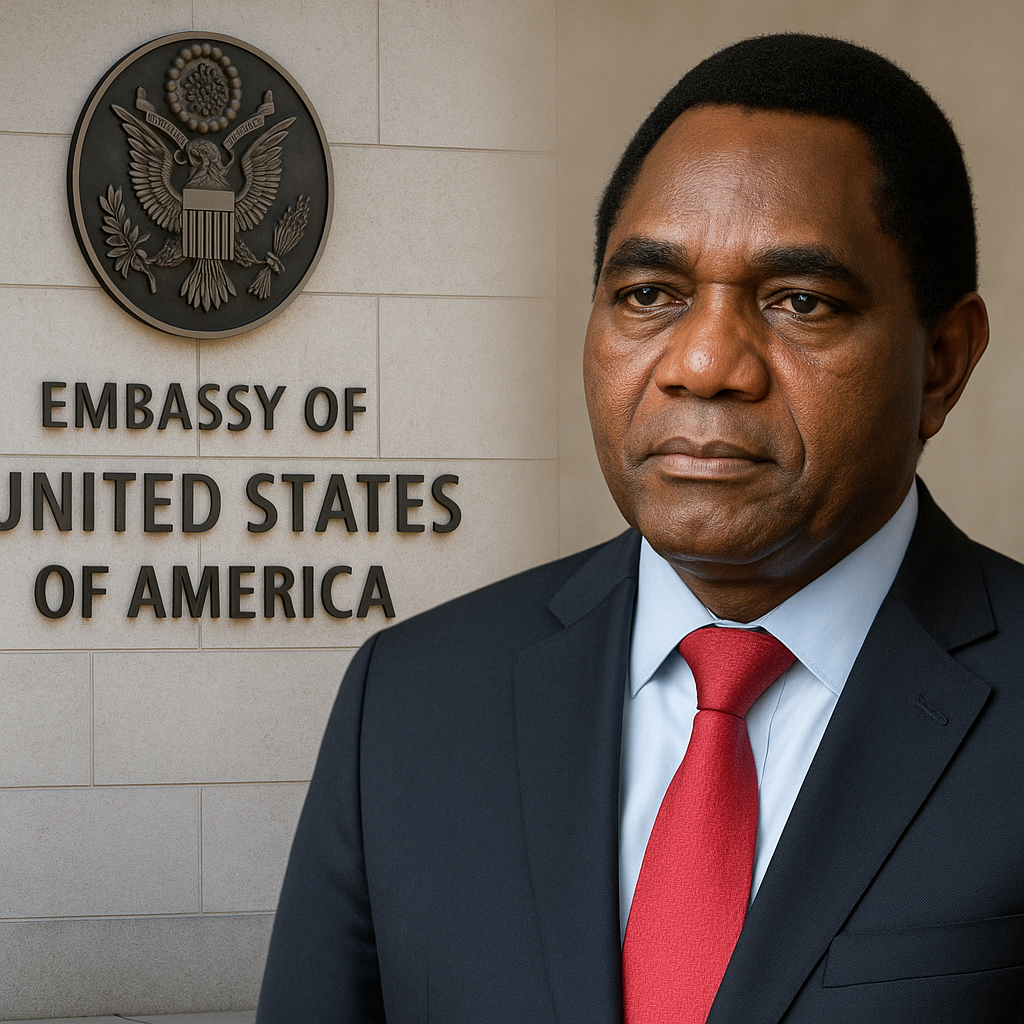

A major health funding arrangement between the United States and Zambia has been delayed after both sides failed to reach an agreement on a deal worth more than $1 billion.
- A major $1 billion health funding deal between the US and Zambia has been delayed due to failure to finalize a new memorandum of understanding (MOU).
- As a result, ongoing US support for critical health programs in Zambia is operating without a formal structure, putting essential services at risk.
- Concerns have emerged about the deal linking financial support to negotiations over Zambia's mineral resources and data privacy, though the US ambassador firmly denied these allegations.
- Talks broke down partly over provisions tying health funding to broader negotiations, including a separate bilateral compact possibly related to mining partnerships.
Officials in Washington have expressed frustration after repeated attempts to gain Zambia's commitment to a new memorandum of understanding (MOU) were unsuccessful ahead of an April 30 deadline.
According to outgoing US ambassador Michael Gonzales, the lack of a formal agreement has resulted in continuous support working without a structured framework, thereby jeopardizing the delivery of essential interventions addressing HIV, malaria, maternity and child health, and epidemic preparedness.
"Instead of continuing to languish without engagement, the actual funding under our Health MOU should have started this month," Gonzales said in remarks delivered on Thursday evening as he prepared to leave the post, as seen on Reuters.
Public health experts cautioned that the agreement correlates financial provisions with mineral extraction rights and introduces potential vulnerabilities regarding data privacy.
The US ambassador, however, dismissed this as baseless, "disgusting and patently false" allegations that Washington was threatening to withhold life-saving healthcare support "unless we get critical minerals."
Zambia and the US health deal
The proposed five-year agreement was intended to codify the United States' support for Zambia's healthcare system while also establishing a coordinated implementation approach.
The deal also requires Zambia to contribute around $340 million in counterpart funds throughout the course of the program, a commitment deemed hefty considering the country's present fiscal problems.
Negotiations halted earlier this year, in February, after the Southern African country objected to certain terms it felt were incompatible with national priorities.
Further complicating matters were amendments to the proposed deal that included stipulations linking continued funding to broader bilateral negotiations.
DON'T MISS THIS: Zambia to rely on road and rail transport for crude as $1.1 billion oil refinery takes shape
According to sources involved with the discussions, the agreement included language indicating that financial assistance may be revisited if both countries did not reach an agreement on a separate "bilateral compact" by early April.
That provision has sparked concern because it appears to link crucial healthcare money to parallel negotiations, reportedly related to a potential mining partnership, raising broader questions about whether development aid is being leveraged alongside strategic business objectives.