They toppled giant MPs, but can’t speak
When the 12th Parliament opened its doors in May 2026, voters across Uganda expected the newcomers who ousted legendary parliamentary firebrands to instantly pick up the battle cries of their predecessors. Instead, across the first 100 days of the new legislative term, the floor of Parliament has largely met a wave of silence from the […] The post They toppled giant MPs, but can’t speak appeared first on The Observer Media Ltd.
 Black News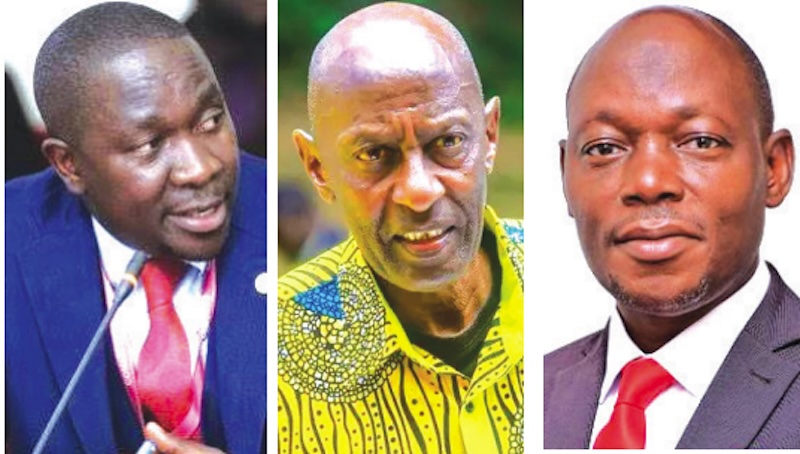

When the 12th Parliament opened its doors in May 2026, voters across Uganda expected the newcomers who ousted legendary parliamentary firebrands to instantly pick up the battle cries of their predecessors.
Instead, across the first 100 days of the new legislative term, the floor of Parliament has largely met a wave of silence from the fresh faces sent to represent them. An analysis of the Official Parliamentary Hansard between May 13 and August 2026 reveals a stark reality: most lawmakers elected to replace the country’s most vocal, highly rated MPs have barely uttered a word in plenary.
For many, their names appear in the official record just three times, once when taking the oath of office, and twice when designated to sessional committees by Government Chief Whip Dr Jane Ruth Aceng or Opposition Chief Whip Paul Mwiru.
The contrast with the previous Parliament is so loud. In the 11th Parliament, leaders like Ssemujju Ibrahim Nganda (Kira Municipality), Medard Lubega Sseggona (Busiro East), Muhammad Muwanga Kivumbi (Butambala), Paulson Luttamaguzi Semakula (Nakaseke South) and former Leader of the Opposition Mathias Mpuuga Nsamba (Nyendo-Mukungwe) routinely dominated national debate, driving scrutiny on public spending and executive accountability.
Today, their successors are finding that stepping into the shoes of political giants is far more complicated than winning an election. In Kira Municipality, National Unity Platform (NUP) lawyer George Musisi replaced Ssemujju, who had been ranked the most active lawmaker on the floor.
Hansard records show Musisi did not make a single contribution in the main chamber during his first three months. But Musisi argues that measuring an MP’s effectiveness purely by microphone time misses where actual legislative power is exercised.
Appointed deputy chairperson of the influential Committee on Statutory Authorities and State Enterprises (COSASE), Musisi says he was thrust directly into an administrative mountain.
“We were thrown in at the deep end,” Musisi said, explaining that his committee inherited 157 backlog reports from the Auditor General that required immediate action under a strict six-month deadline.
“There was really no time for induction. It was time to work from the outset… For the last month, we’ve been working Monday to Friday. There was really no time for resting.” Musisi admits that navigating parliamentary politics behind closed doors presents its own steep learning curve.
“There are intricacies and things that you have to learn on the job, which no one ever tells you,” he said.
“It’s a political atmosphere, dealing with different political actors and the technical staff. I’m mindful that sometimes we’re walking delicate walls.”
While Musisi points to committee workloads, other new MPs replacing institutional heavyweights have remained almost entirely absent from record. In Busiro East, Emmanuel Magoola Matovu, who unseated Medard Sseggona, did not record a single statement on the floor between May and August.
In Butambala County, former journalist Erias Mukiibi Sserunjogi, who replaced Muwanga Kivumbi, remained completely silent in plenary. In Bugiri Municipality, NRM’s Oketcho John Francis, who defeated opposition veteran Asumani Basalirwa, has yet to speak.
Similarly, Brig. Gen. Emmanuel Rwashande (Lwemiyaga) and Sam Engola (Erute South) remained quiet after replacing veteran debaters Theodore Ssekikubo and Jonathan Odur, respectively.
Where new MPs have attempted to jump into debate, the transition has sometimes been rough. In Bugweri County, NRM’s Sadala Wandera replaced legal heavyweight Abdu Katuntu.
When Wandera finally rose to raise his first matter of national importance, highlighting deadly road hazards and missing drainage systems in Idudi Town along the Iganga-Tororo highway, he began detailing past conversations with road agencies.
“Before I came to Parliament, a drainage trench was constructed by the Ministry of Works and Transport in Idudi Town Council. Idudi Town Council sits on the busy highway leading to the Busia border, where we witness accidents almost weekly. Mr Speaker, I engaged the ministry, specifically the Uganda National Roads Authority (UNRA) at the time, before joining this House. However, they repeatedly promised to include the necessary works in the budget, a commitment they have failed to honour,” Wandera said.
Deputy Speaker Thomas Tayebwa cut his microphone time short, offering a blunt lesson in parliamentary presentation.
“Do you see the problem of giving stories?” Tayebwa cautioned him on the floor. “Here we shoot directly.”
Wandera’s intervention brought a specific local concern into the national record. It also illustrated the pressure on newcomers to explain a problem and make their case before their allotted time expires.
Parliament’s leadership has acknowledged the need to give members an opportunity to make their first speeches. For others, maiden speeches have been rare, surgical interventions.
Gyaviira Lubowa Ssebina, who replaced Mathias Mpuuga in Nyendo-Mukungwe, spoke just once on July 8. He used his floor debut to oppose an NRM-backed motion proposing that the Leader of the Opposition should be elected by all opposition MPs rather than appointed directly by the leading opposition party.
Lubowa dismissed the bill as a distraction engineered for “selfish interests,” urging Parliament not to waste valuable time on a motion the opposition never asked for. Since that single intervention, the Hansard records no further remarks from him.
Recognizing that many incoming lawmakers were struggling with stage fright and parliamentary rules, Mukono Municipality MP Betty Nambooze urged leadership to set aside dedicated time for uninterrupted maiden speeches.
Addressing the House, Deputy Speaker Tayebwa agreed to schedule structured three-minute slots for new members.
“To build on what Hon. Nambooze raised during our Business Committee meeting today: historically, at the start of a new Parliament, it has been good practice to give Members time to make uninterrupted maiden speeches, no matter how long it takes. However, Parliament is a House of record. I do not want to force anyone to speak only to stand here and send greetings to their voters. While that might technically be a maiden speech, we must uphold our standards as a House of record,” Tayebwa said, adding that “parliamentary leadership has agreed that starting Tuesday, every Member will receive three uninterrupted minutes.
Go and prepare. Whether you choose to read from prepared notes or speak off-the-cuff, that is up to you. If you feel nervous and shake, you may shake. But I am confident none of you have stage fright. If you stood before voters and won their trust, how can you fail to stand before this Parliament to address the nation?”
The quiet start is not universal. A handful of ambitious newcomers quickly found their footing. Robert Maseruka, the young former Makerere University Guild President now representing Mukono South, spoke three times in his first 100 days.
Other fresh lawmakers, including Nkerettanyi Kiruluta (Kalungu East), Sheillah Amaniyo (Mukono Woman MP), and Harriet Nakwedde (Kayunga Woman MP), have consistently pushed past backbench hesitation to make their presence felt.
Yet, as new members navigate their orientation, experienced parliamentary veterans continue to fill the vacuum on the floor.
Long-serving lawmakers such as Joseph Ssewungu (Kalungu West), Betty Nambooze (Mukono Municipality), Hassan Kirumira (Katikamu South), Patrick Nsamba Oshabe (Kassanda North), Charles Tebandeke (Bbaale County), and Karim Masaba (Mbale City Industrial Division) dominate the Hansard transcripts, capturing the bulk of debate time.
The early silence of their new representatives raises a fundamental question of democratic accountability for many Ugandans: Are backbenchers quietly mastering legislative oversight in committee rooms, or are local constituencies currently left without an active voice where national policies are forged?
The coming months will determine whether these new lawmakers are simply biding their time, or whether replacing political stars comes at the cost of parliamentary influence.
The post They toppled giant MPs, but can’t speak appeared first on The Observer Media Ltd.