Top 10 most powerful military alliances in the world in 2026
The era of strict non-alignment is gradually fading as wars, regional rivalries and shifting power balances push countries to seek firmer military partnerships and clearer security guarantees in times of crisis.
 Black News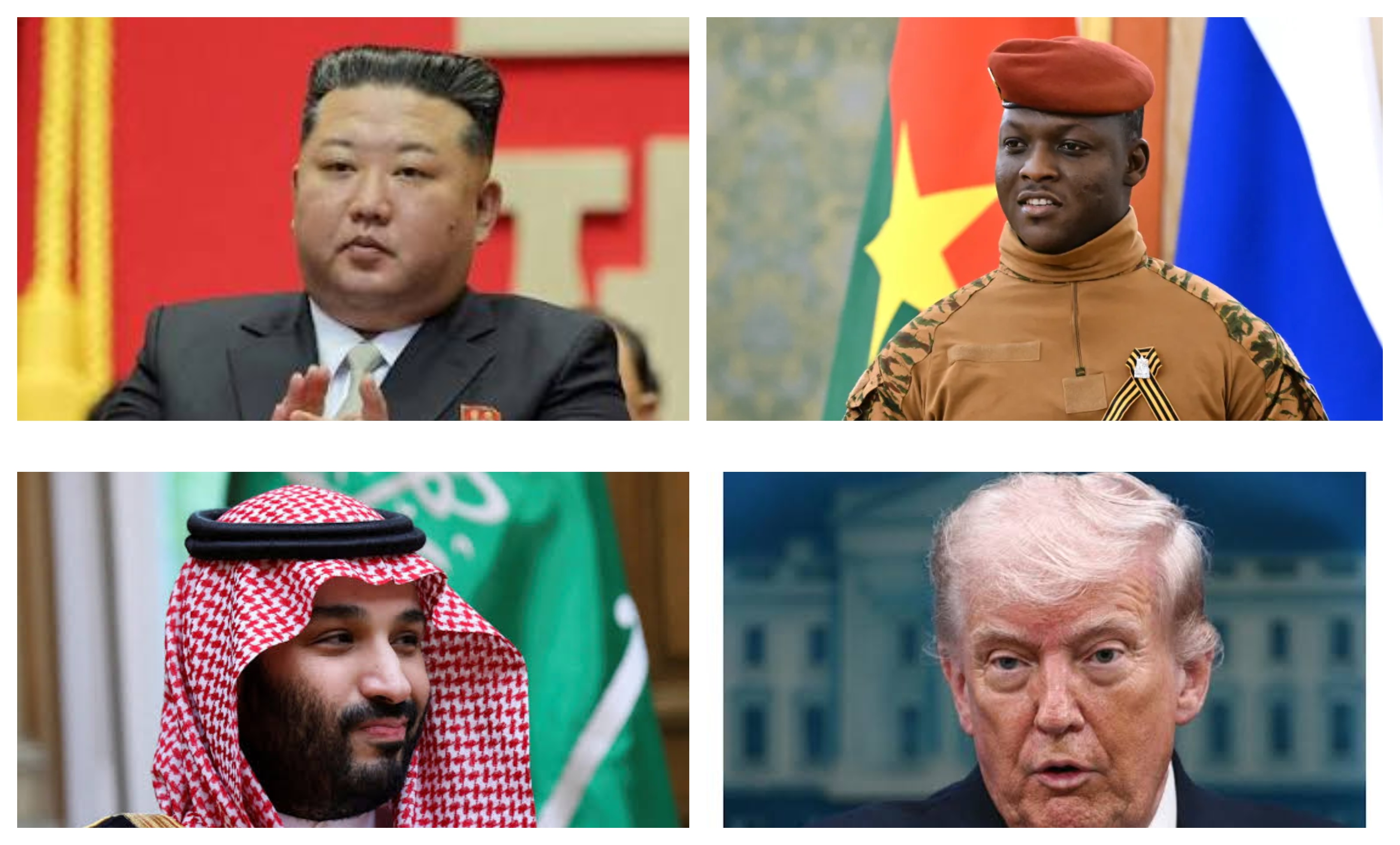


The era of strict non-alignment is gradually fading as wars, regional rivalries and shifting power balances push countries to seek firmer military partnerships and clearer security guarantees in times of crisis.
- Military alliances are gaining importance as global conflict risks grow, with countries seeking clear security partners and guarantees.
- Major alliances like NATO, China-North Korea, and new pacts such as the Saudi Arabia-Pakistan-Türkiye agreement continue to shape regional and global power balances.
- Africa’s security frameworks are shifting, with the Alliance of Sahel States turning to Russia and ECOWAS adapting to new security realities after some members split.
- Overall, military power is increasingly judged not just by budgets or weaponry, but by the reliability and strength of a country's alliances in times of crisis.
The 2026 US-Israel war with Iran has exposed a hard reality in global security, showing that close diplomatic ties do not always translate into military support when conflict erupts.
Iran maintains strong relations with China and Russia, but neither relationship carries a NATO-style obligation requiring Beijing or Moscow to enter a war on Tehran’s behalf.
That distinction is becoming more important as governments reassess the value of formal defence treaties and move faster to strengthen old alliances or build new security arrangements.
Against that backdrop, military power is increasingly being measured not only by defence budgets and weapons, but also by the strength of the alliances countries can rely on when conflict breaks out.
Here are 10 major military alliances and security frameworks shaping global power in 2026.
1. NATO
NATO remains the world’s largest formal collective-defence alliance, with its Article 5 principle treating an attack against one member as an attack against all.
However, Russia’s 2022 invasion of Ukraine underscored the limits faced by non-members, as NATO supplied extensive military support but had no Article 5 obligation to enter the war directly.
Collectively, its members possess nuclear deterrence, powerful air and naval forces, missile-defence systems, satellites and extensive military infrastructure across Europe and North America.
Meanwhile, SIPRI estimates NATO countries spent a combined $1.581 trillion on their militaries in 2025, accounting for about 55% of global military expenditure.
Pressure from US President Donald Trump has also pushed allies to spend more, with NATO members agreeing in 2025 to work towards 5% of GDP on defence and security by 2035.
The alliance faced its defining test after the September 11, 2001 attacks, when it invoked Article 5 for the first and, so far, only time in its history.
2. Russia–North Korea alliance
Members: Russia and North Korea.
Russia and North Korea formalised a mutual-defence relationship through their 2024 Treaty on Comprehensive Strategic Partnership, which provides for military and other assistance if either country comes under armed attack.
The partnership combines Russia’s nuclear and conventional military power with North Korea’s nuclear and missile capabilities, backed by Moscow’s estimated $149 billion defence spending in 2025.
The alliance has already been tested in the Ukraine war, with North Korea sending an estimated 14,000 troops to Russia’s Kursk region and potentially preparing up to 50,000 more, according to Ukrainian President Volodymyr Zelenskyy.
North Korea has also supplied Russia with KN-23 and KN-24 ballistic missiles and large quantities of artillery ammunition, while Pyongyang has reportedly received Russian military technology, training and technical support in return.
3. China-North Korea alliance
Members: China and North Korea.
China and North Korea maintain one of Asia’s longest-standing formal defence relationships, rooted in their military cooperation during the 1950–1953 Korean War, when China intervened directly on Pyongyang’s side and helped prevent its defeat.
The two countries later formalised that relationship through the 1961 Treaty of Friendship, Cooperation and Mutual Assistance, which provides for assistance if either is drawn into war following an armed attack.
Today, the alliance combines China’s large conventional forces, nuclear weapons, advanced fighter aircraft, submarines and long-range missile systems with North Korea’s nuclear arsenal, ballistic missiles and heavily militarised armed forces.
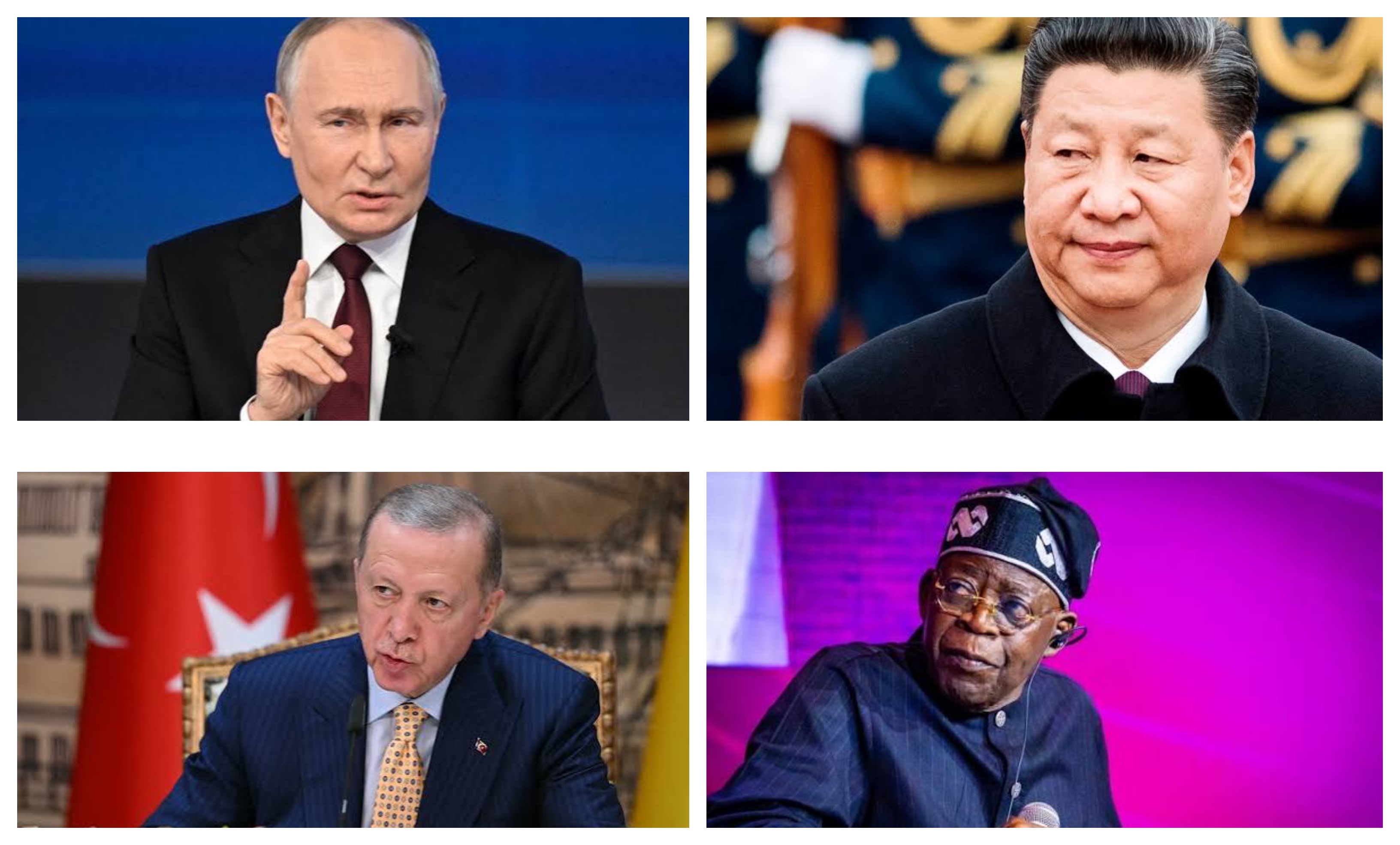
4. Saudi Arabia-Pakistan-Türkiye defence pact
Members: Saudi Arabia, Pakistan and Türkiye.
The Mecca Joint Defense Agreement became one of the world’s newest collective-defence arrangements after the three governments signed it on August 7, 2026.
Under the agreement, an armed attack against one member is regarded as an attack against all three, while Egypt has also been linked to possible future participation.
The partners bring complementary strengths. Saudi Arabia is among the world’s biggest military spenders, Pakistan is a nuclear-armed state, while Türkiye operates one of NATO’s largest militaries and has a rapidly expanding defence industry.
Türkiye spent about $30 billion on defence in 2025, while Pakistan spent $11.9 billion and Saudi Arabia spent $83.2 billion, making Riyadh the world’s eighth-largest military spender.
However, the pact has yet to face a major security test because of its recent creation, leaving its practical response to a crisis largely untested.
5. Collective Security Treaty Organisation
Members: Russia, Belarus, Kazakhstan, Kyrgyzstan, Tajikistan and Armenia.
The Collective Security Treaty Organisation remains Russia’s principal formal security alliance in Eurasia.
Its treaty establishes collective-defence obligations among members, with Russia providing most of the bloc’s military weight, including nuclear deterrence and large conventional forces.
The organisation faced its most significant operational test in January 2022, when it deployed more than 2,000 personnel to Kazakhstan after President Kassym-Jomart Tokayev requested assistance during widespread unrest.
However, political divisions have since weakened its cohesion, with Armenia distancing itself from the organisation while remaining formally listed as a member.
The CSTO has nevertheless adopted a new military cooperation plan covering 2026 to 2030 as Moscow holds the organisation’s rotating chairmanship.
6. US-Japan alliance
Members: United States and Japan.
The US-Japan alliance remains a central pillar of Indo-Pacific security, combining American nuclear deterrence and global military reach with Japan’s advanced maritime, air and missile-defence capabilities as tensions involving China, North Korea and Russia intensify.
Japan spent $62.2 billion on its military in 2025, while its FY2026 defence buildup expenditure is set at ¥8.809 trillion.
One of the alliance’s most persistent tests has centred on the disputed Senkaku Islands, where growing tensions with China have repeatedly prompted Washington to reaffirm that the islands fall under the bilateral security treaty.
Tokyo also contributes towards the cost of hosting US forces, further integrating the two countries’ security structures.
7. US-South Korea alliance
Members: United States and South Korea.
The US-South Korea alliance remains a central pillar of security on the Korean Peninsula and is primarily focused on deterring North Korea.
The relationship was forged during the 1950–1953 Korean War, when US forces fought alongside South Korea against North Korea and its allies. The two countries later formalised their defence relationship through the 1953 Mutual Defense Treaty.
Today, more than 28,000 US military personnel are stationed in South Korea, while both countries maintain extensive defence coordination, joint exercises and integrated command arrangements.
The partnership is also underpinned by major US arms transfers to Seoul, including F-35 fighter jets, Patriot missile-defence systems and Apache helicopters.
The alliance faced another major test in 2010, when North Korea sank the South Korean warship Cheonan and later shelled Yeonpyeong Island, sharply escalating tensions on the peninsula.
8. US-Philippines alliance
Members: United States and Philippines.
The US-Philippines alliance, established under the 1951 Mutual Defense Treaty, has gained renewed strategic importance amid rising tensions in the South China Sea.
Washington and Manila have expanded joint military exercises, defence cooperation and access arrangements in recent years.
Its most serious recent tests have come from confrontations with China around disputed areas such as Second Thomas Shoal, prompting repeated US assurances that the treaty applies.
In 2026, Washington again called its commitment “ironclad” and allocated another $144 million for sites under the Enhanced Defense Cooperation Agreement.
9. Alliance of Sahel States
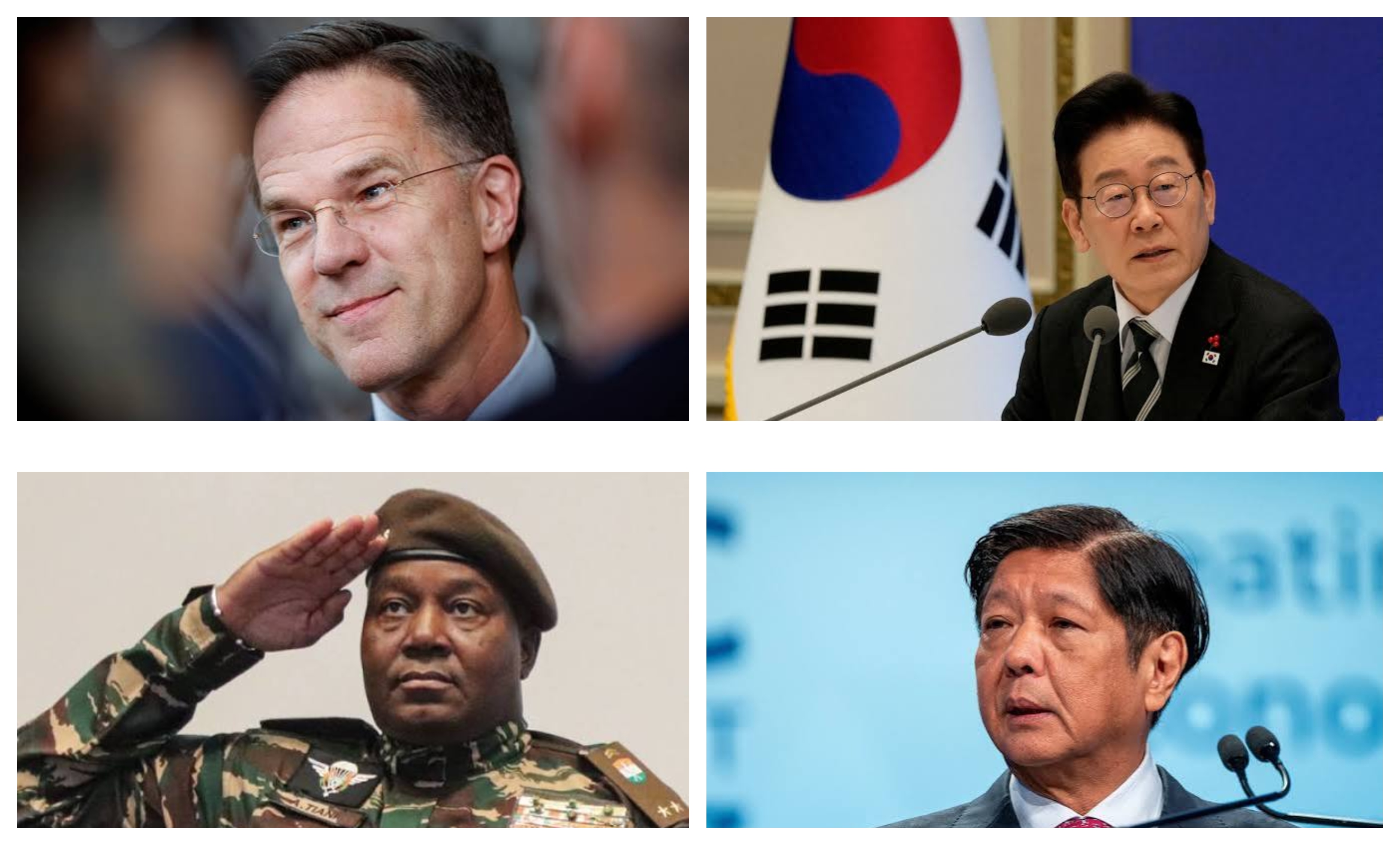
Members: Burkina Faso, Mali and Niger.
The Alliance of Sahel States has emerged as one of Africa’s newest collective-security arrangements following the three countries’ break with ECOWAS and reduction of security cooperation with Western powers.
The bloc has increasingly turned towards Russia as it seeks military support against armed groups operating across the Sahel.
The AES has established a joint force of about 5,000 personnel, combining ground, air and intelligence capabilities, while Russia has pledged additional military and technical support.
Its biggest test is already unfolding, as Burkina Faso, Mali and Niger battle persistent insurgencies while simultaneously pushing back against the influence of former Western security partners, particularly France, and deepening their reliance on Russia.
10. ECOWAS collective-security framework
Members: 12 West African countries following the withdrawal of Burkina Faso, Mali and Niger.
ECOWAS remains primarily an economic and political organisation, but its security role has expanded as West Africa confronts terrorism, political instability and cross-border crime.
The bloc is working to strengthen and operationalise its ECOWAS Standby Force, with regional defence chiefs advancing plans for a stronger collective response.
One of its biggest recent tests came after Niger’s July 2023 coup, when ECOWAS threatened military intervention and activated preparations for a standby force but ultimately stopped short of deployment.
The subsequent departure of Burkina Faso, Mali and Niger fundamentally altered West Africa’s security landscape.
Africa’s security map is also changing
Meanwhile, North Africa is emerging as another front in the wider global security realignment, with Algeria, Morocco and Egypt pursuing increasingly distinct strategic partnerships.
Morocco has deepened defence cooperation with the United States and Israel, strengthening its position within a Western-linked security network.
Algeria, by contrast, maintains longstanding military ties with Russia while rebuilding relations with the Russia-aligned AES through renewed cooperation with Niger and improving ties with Mali.
Egypt, meanwhile, has been linked to the emerging Saudi Arabia-Pakistan-Türkiye defence framework.