Ugandan farmers sue to stop $5.6 billion East African Crude Oil Pipeline in UK court
A group of Ugandan farmers is set to file a lawsuit on Tuesday in the UK High Court against the company operating the East African Crude Oil Pipeline (EACOP).
 Black News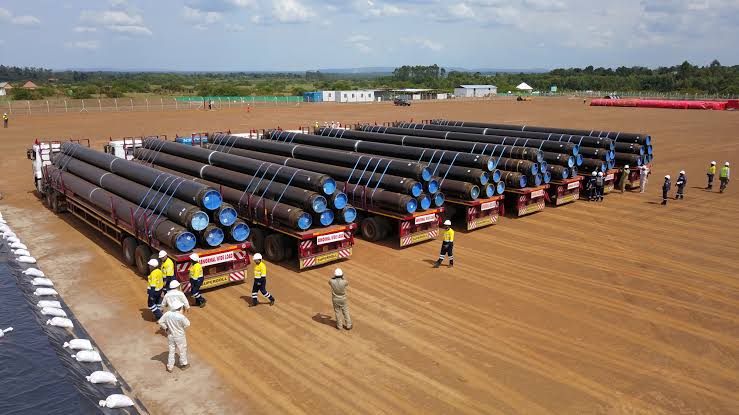

A group of Ugandan farmers is set to file a lawsuit on Tuesday in the UK High Court against the company operating the East African Crude Oil Pipeline (EACOP).
- Ugandan farmers are suing EACOP Ltd in the UK High Court, claiming the East African Crude Oil Pipeline breaches Uganda's constitution and environmental laws.
- The pipeline, set to open later this year, is operated by a UK-registered company and is a joint venture involving TotalEnergies, Ugandan, Tanzanian, and Chinese partners.
- The farmers’ lawsuit, backed by over 40,000 contributors and organised by Avaaz, alleges the project harms water resources, wildlife, and ecosystems while increasing climate risk.
- More than 100,000 people have already been affected by land acquisition and compensation processes related to the pipeline
A group of Ugandan farmers is set to file a lawsuit on Tuesday in the UK High Court against the company operating the East African Crude Oil Pipeline (EACOP), arguing that the $5.6 billion crude pipeline project breaches Uganda's constitution as well as the country's environmental and climate laws.
The case targets EACOP Ltd, the UK-registered company responsible for operating the pipeline. It comes just months before Uganda and Tanzania are expected to begin exporting crude oil through the project later this year.
The legal action has been crowdfunded through donations from more than 40,000 people, coordinated by global campaign group Avaaz, which describes the lawsuit as "one final chance to stop one of the worst oil pipelines on the planet."
DON'T MISS THIS: Angola moves to list Unitel years after seizing the telecom giant from former billionaire Isabel dos Santos
The claim argues that the 1,443-kilometre (897-mile) pipeline will threaten water resources, wildlife, biodiversity and protected ecosystems while increasing climate-related risks. The farmers are asking the English court to enforce Uganda's constitutional and environmental protections against a company incorporated in England and Wales.
The $5.6 billion pipeline is a joint venture led by French energy giant TotalEnergies, alongside Uganda National Oil Company, Tanzania Petroleum Development Corporation, and China's CNOOC. While ownership is shared among the partners, the project is operated through EACOP Ltd, which is registered in the United Kingdom.
According to the claimants, the pipeline has already affected more than 100,000 people through land acquisition and compensation processes and crosses critical freshwater systems and environmentally sensitive habitats. They argue that a favourable court ruling could ultimately prevent the pipeline from becoming operational.
Oil ambitions face a critical legal test
The lawsuit comes at a critical moment for East Africa's oil ambitions. Uganda and Tanzania are preparing to ship their first crude exports through EACOP as early as October, marking Uganda's entry into the global oil market.
Once completed, EACOP will become the world's longest heated crude oil pipeline, stretching from Uganda's oil fields in the Albertine Graben to the Tanzanian port of Tanga. The pipeline is designed to transport Uganda's waxy crude at about 50 degrees Celsius and will have the capacity to carry up to 230,000 barrels of oil per day.
For Uganda, the project is central to commercialising its estimated 6.5 billion barrels of crude reserves and transforming the country's economy through oil exports.
Tanzanian authorities also say the development has already generated about 50 billion Tanzanian shillings ($19.5 million) through taxes, levies and construction-related charges.
A ruling in favour of the farmers could complicate the project's final stages and potentially delay one of Africa's most closely watched energy developments.