South Africa’s Starlink dispute deepens as minister rejects claims of policy influence
South Africa’s long-running dispute over Starlink has evolved beyond a licensing question into a high-stakes political and economic debate that could shape how Africa’s most industrialised economy balances foreign investment with Black economic empowerment.
 Black News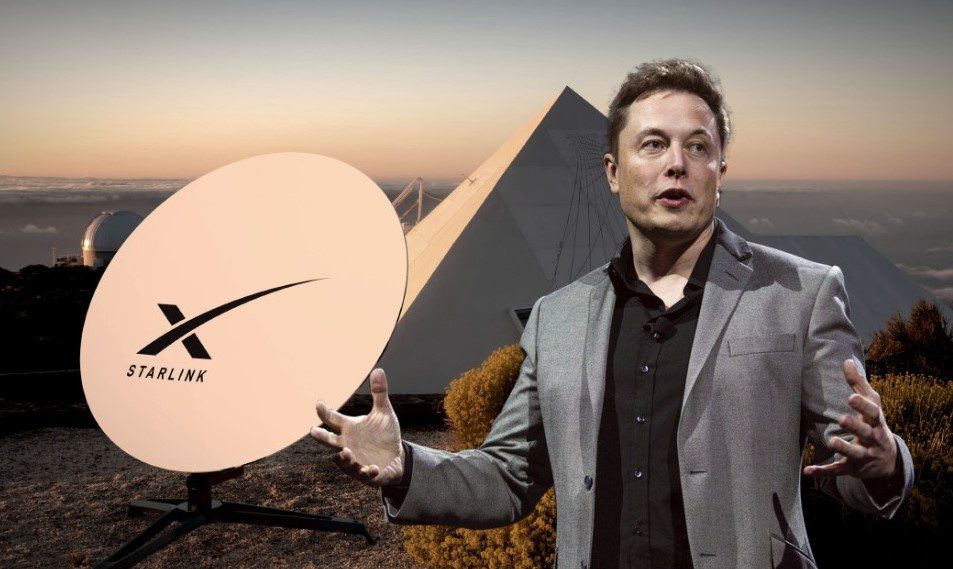

South Africa’s long-running dispute over Starlink has evolved beyond a licensing question into a high-stakes political and economic debate that could shape how Africa’s most industrialised economy balances foreign investment with Black economic empowerment.
- South Africa’s Starlink dispute has grown from a licensing issue into a major political battle over telecom reform.
- Communications Minister Solly Malatsi denies claims that Starlink influenced proposed changes to licensing rules.
- The controversy centres on whether foreign telecom firms should be allowed to meet empowerment rules through alternative investment programmes.
- The outcome could shape technology investment, broadband expansion and regulatory policy across Africa.
Communications Minister Solly Malatsi has rejected claims that proposed reforms to South Africa’s telecommunications licensing framework were influenced by Elon Musk’s satellite internet company, insisting the policy changes were already part of the government’s reform agenda before any engagement with Starlink.
In a letter to Parliament’s Portfolio Committee on Communications and Digital Technologies, Malatsi said proposals to recognise Equity Equivalent Investment Programmes (EEIPs) as an alternative to existing ownership requirements had been included in the Democratic Alliance’s 2024 election manifesto and the Government of National Unity’s Medium Term Development Plan.
“It is impossible to be unduly influenced to do something one is already doing,” the minister wrote.
DON'T MISS THIS: Elon Musk launches fresh attack on South Africa’s telecom rules, alleges bribery in Starlink dispute
His response follows questions from committee chairperson Khusela Sangoni after allegations that public affairs firm Resolve Communications facilitated engagements between government ministers and private-sector clients, including SpaceX, the parent company of Starlink’s African operations. Resolve has denied the allegations.
While Parliament’s immediate focus is whether private lobbying influenced policy, the dispute has exposed a much broader question, how South Africa should regulate global technology companies while preserving one of the continent’s most extensive economic transformation frameworks.
At the heart of the debate is South Africa’s Electronic Communications Act, which requires telecommunications network operators to have at least 30% ownership by historically disadvantaged South Africans before obtaining operating licences.
![South Africa’s Communications Minister Solly Malatsi says proposed telecom reforms were not influenced by Starlink.[@SollyMalatsi]](https://ocdn.eu/pulscms/MDA_/fef9806ae1cc94577d76a42792ff774c.jpg)
That requirement has kept Starlink out of South Africa even as the satellite broadband provider has expanded rapidly across much of Africa.
Since launching its first African service in Nigeria in 2023, Starlink has secured licences in countries including Kenya, Rwanda, Zambia, Malawi, Mozambique, Zimbabwe, Botswana, Eswatini, Sierra Leone, Liberia, Ghana and most recently the Democratic Republic of Congo, Lesotho and Somalia.
Governments have largely embraced the service as a way to deliver high-speed internet to rural and underserved communities where fibre networks remain commercially unviable.
The company has, however, encountered regulatory resistance in some markets. Cameroon previously seized Starlink equipment being used without authorisation before moving towards a formal licensing process, while Namibia rejected the company’s licence application over regulatory requirements.
South Africa has become Starlink’s most closely watched African market, not least because Elon Musk was born in Pretoria.
DON'T MISS THIS: Elon Musk escalates dispute with South Africa amid report of 14,000 illegal Starlink users, despite R500 million pledge
Earlier this year, Musk criticised South Africa’s ownership rules, claiming Starlink was unable to operate because he is not Black.
South African authorities rejected that assertion, saying the regulatory framework applies equally to all operators and that compliance with local licensing laws, not race determines market access.
Malatsi’s proposed reforms would allow qualifying telecommunications companies to meet empowerment obligations through Equity Equivalent Investment Programmes.
EEIPs already exist in sectors such as automotive manufacturing, enabling multinational companies to invest in skills development, supplier programmes, infrastructure and enterprise development instead of transferring equity.

Supporters argue extending the model to telecommunications could attract more foreign investment, encourage competition and accelerate broadband expansion, particularly through low-Earth orbit satellite networks capable of reaching remote communities.
Critics, however, warn that weakening direct ownership requirements could undermine South Africa’s Black Economic Empowerment framework, which remains a cornerstone of post-apartheid economic policy.
In his letter, Malatsi said his meetings with Starlink were neither exceptional nor secretive. He disclosed that he had also engaged with other satellite operators, including Amazon’s Project Kuiper, China Satellite Network Company, Space24 and Spacesail, as part of routine consultations on developments in the satellite communications sector.
DON'T MISS THIS: Barred in South Africa for ‘not being black’, Starlink enters predominantly black Senegal
He added that discussions focused on technology and South Africa’s regulatory environment rather than individual licence applications.
The minister also denied allegations that Resolve Communications arranged meetings between his office and Starlink, saying his only meeting with a SpaceX representative in September 2024 was facilitated directly by lawyer Robert Appelbaum.
“As Ministers, we are constantly approached by stakeholders,” Malatsi wrote, arguing that engagement with industry forms a normal part of policymaking but does not determine government decisions.
Parliament’s communications committee is expected to review the minister’s explanation before deciding whether further action is necessary.
The outcome will extend well beyond Starlink. It could establish an important precedent for how South Africa, and potentially other African economies, balances local ownership rules with the need to attract global technology investment.
DON'T MISS THIS: Elon Musk’s Starlink eyes South Africa expansion with $113 million spend
It may also shape how future satellite operators, including Amazon’s Project Kuiper and Chinese competitors, approach expansion across one of the world’s fastest-growing digital markets.
Starlink’s licensing battle has become a proxy for a much bigger policy question facing African governments: how to attract global technology companies without diluting local ownership and economic empowerment policies.
South Africa’s eventual decision could influence digital investment across the continent and determine how other multinational satellite operators structure their African expansion.