What Do You Do When Your School Bans Books By Black Authors?
The email from your child's school says a book is under review, and suddenly you are googling banned books in schools at 11 p.m. wondering if this is really happening in your district. You are not...
 Black News

By Janice Robinson-Celeste
The email from your child's school says a book is under review, and suddenly you are googling banned books in schools at 11 p.m. wondering if this is really happening in your district. You are not overreacting, and you are not the only parent in that group chat doing the same thing.
Quick Answer
A challenge is a request to remove or restrict a book, while a ban is the removal itself. Books most often pulled include works by and about Black people and other people of color. You can push back by reading the book, finding your district's reconsideration policy, filing a formal request, and speaking at a board meeting.
What Does It Mean When A School Bans A Book?
A challenge asks a school to reconsider a book, while a ban removes it from access.
That difference matters when you hear that a book is “under review.” The American Library Association (ALA) defines a challenge as an attempt to remove or restrict a resource; a book is banned when it is removed in response to a formal or informal challenge. Most conversations about banned books in schools blur the two, which is exactly how a temporary review turns into a permanent removal without anyone announcing it. Restrictions can also mean relocating a book, limiting checkout, or requiring parental permission, so ask what “under review” means at your child’s school.
The 2025 numbers show why it helps to ask for specifics. The ALA documented 4,235 unique titles challenged, the second-highest total it has recorded, just five below the 2023 record of 4,240. It also counted 5,668 books removed from libraries and 920 more affected by access limits, across 713 distinct censorship incidents.
Many reports about banned books in schools describe a challenge as if the book has already been permanently removed. Find out whether there is a formal complaint, a temporary restriction, or a final decision. That gives you a clearer next step and helps your child understand that adults are working through a process, not quietly erasing a story without explanation.
How Many Banned Books In Schools Are By Black Authors?
There is no single national count of school removals by Black author, but available reports show that books reflecting people of color are frequently caught up in censorship efforts.
For the 2025 to 2026 school year, PEN America reported 11,982 school book bans, affecting 7,370 unique titles and more than 4,000 authors, illustrators, and translators across 114 districts. Texas accounted for more than 8,000 bans, and the report found that bans in 72 percent of districts could be traced to state legislation.
A second PEN America study covering July 2024 through June 2025 found that books by or about BIPOC people appeared in 44 percent of cases, the largest share PEN America has recorded in that category and an increase from 36 percent the year before. Among 3,743 unique titles removed, 1,102 were nonfiction; 52 percent of the banned nonfiction titles had activist themes, according to Publishers Weekly’s coverage of the study.
The 2025 ALA data also found that 1,671 challenged titles, or 39 percent, represented the lived experiences of LGBTQIA+ people and people of color. Books by Toni Morrison, Angie Thomas, Tiffany D. Jackson, and Nic Stone have appeared among documented school removals, including The Bluest Eye, The Hate U Give, and Dear Martin, according to The Educator’s Room’s report. PEN America calls a pattern in which other titles by an author are targeted after one book is banned the “Scarlet Letter” effect.
What has changed fastest is how the decisions get made. According to the same report, some districts now run titles through AI chatbots that recommend removals, and public records from McAllen Independent School District in Texas showed prompts answered with what other districts had already banned rather than any finding that a book met a legal standard. Once a single list of 55 titles circulated in Florida, those books were pulled at least 165 times across 18 districts by June 2026. That is why banned books in schools can disappear in clusters, sometimes before a parent has heard a single complaint.
Why Do Banned Books In Schools Hit Black Children Harder?
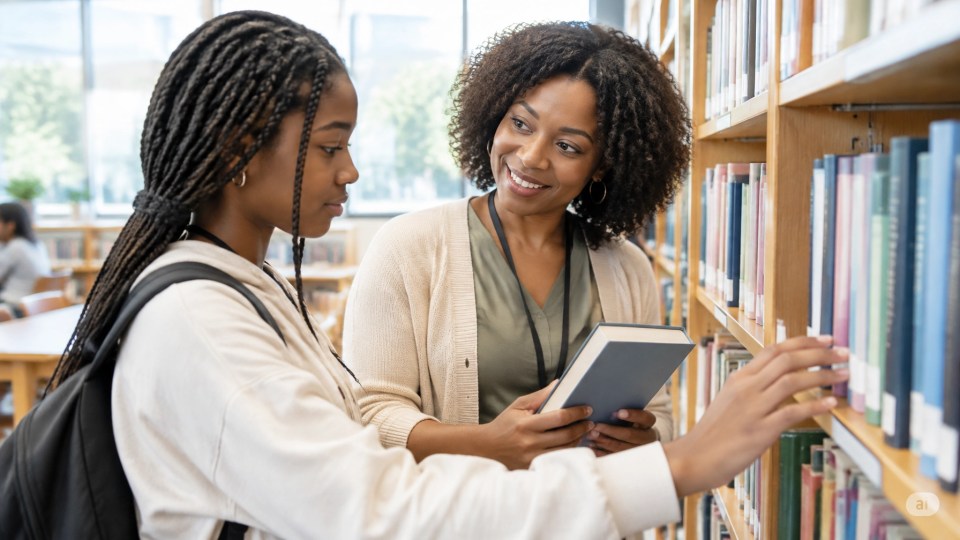
When books reflecting your child’s identity disappear, your child loses stories that can affirm who they are and help them understand other people.
Of 4,235 titles challenged in 2025, 1,671, or 39 percent, were books reflecting the lives of people of color and LGBTQIA+ people, and the share of banned titles featuring BIPOC characters hit 44 percent in PEN America's latest study, the highest share that organization has ever recorded.
Know a parent who needs this? Send it to them.
Books can be more than a reading assignment. They can show your child that Black people are authors, leaders, dreamers, neighbors, and main characters, while also giving classmates a fuller view of the world. In an interview with Washington University in St. Louis, Sheretta Butler-Barnes of the Brown School said removing books that reflect students can shape their self-worth and affect how they believe the world sees them. She pointed to the Clarks' landmark doll studies, which found that segregation led Black children to internalize low self-esteem, and argued that pulling books by and about Black people sends children a message about whose stories count. Nearly 300 books came off shelves in Missouri alone after its 2022 law took effect.
The desire for that representation is clear in the Scholastic Kids & Family Reading Report. About half of children ages 9 to 17 wish more books included diversity, and 24 percent of Black children said they seek out culturally or ethnically diverse characters, compared with 7 percent of white children.
There is also a learning impact when access shrinks, and it lands hardest on the readers who were already the most eager. University of Rhode Island education dean Danielle Dennis notes that reading for fun every day is linked to higher reading scores, and that limiting books children connect with can make them less interested in reading. That is why banned books in schools are not only about a title on a shelf. They are also about protecting a child’s confidence, curiosity, and love of reading, which is why so many parents of Black children treat a library notice as a call to action rather than a footnote.
What Can You Do When A Book Your Child Needs Is Pulled?
You can take practical steps that keep the focus on fair review and your child’s access to books.
- Read the book yourself. Read the full book before speaking about it, so you can respond to the whole story rather than a quote or a list. The Unite Against Book Bans toolkit recommends reading the challenged work and explaining why it matters to you.
- Find the policy. Look on the school district or board website for its collection and reconsideration policies. ALA says districts should have a written process approved by the governing board, and its formal reconsideration guidance calls for the complete work to be reviewed against the policy’s selection criteria.
- File the form. If a formal request is allowed, follow the district’s steps and keep a copy of what you submit. ALA recommends a written decision and an appeal process when the policy provides one; it warns that going around the policy to remove a resource can put a district at risk of a lawsuit.
- Speak at the board meeting. Check the meeting date, sign-up rules, and time limit before you go. The toolkit says public comments are often limited to two or three minutes, and suggests introducing yourself as a constituent, sharing why the book matters, and clearly asking the board to reject censorship.
- Report it. You can report a challenge or ban confidentially to ALA, even if you do not need support. The report helps the ALA Office for Intellectual Freedom track censorship and connect people with resources.
You do not have to do everything in one night. Start with one email asking for the policy and status of the book, then decide whether to file a form or speak publicly. When you do show up, bring someone with you, because the toolkit notes that numbers and consistency are what apply pressure over time. Ask a grandparent, a neighbor, or another parent from your child's class to sit with you and sign up for a two-minute comment. Steady, respectful follow-up can help your child see that advocacy is a way to care for their school community.

What If The Book Is Already Off The Shelf?
You can still ask how the decision was made and help your child find books while you seek answers.
First, request the written decision, the policy used, and the steps for an appeal. Ask whether the full book was reviewed and whether the district followed its own process. If the book was removed without the review required by policy, the ALA’s guidance for reconsideration requests explains why the process matters and how concerns can be raised.
In the meantime, look for the book through your public library, another school library, or a bookseller, and keep reading together if your child is interested. Ask your librarian whether the title is still available through interlibrary loan, which is often overlooked when a school collection changes. You can also explore our Books for Black Children guide for more options by age and reading interest. If a book is unavailable, talk openly with your child about what happened without promising a specific outcome.
The broader trend can make a removal seem final, but it is still worth asking questions. Banned books in schools come back more often than parents expect, especially when a district skipped its own review or acted on a list from somewhere else. PEN America recorded 11,982 bans across public schools in 2025 to 2026, but every district has its own policies and decision-makers. A calm request for records and a clear next step can help you act with purpose rather than feeling stuck.
Why This Matters For Parents Of Black Children
Your child deserves room to read widely, see Black excellence on the page, and choose stories that speak to their own interests.
In the ALA’s 2025 findings, pressure groups, government officials, and decision-makers initiated 92 percent of challenges, while less than 3 percent came from individual parents. The ALA report also found that 80 percent of titles targeted were in school libraries, and that 94 percent of challenged titles were submitted as part of lists. These numbers are a reminder that many banned books in schools are caught up in broad, coordinated efforts, not only individual family choices, and that the loudest voice in the room is not always the majority one.
You have every right to guide your own child’s reading. At the same time, one parent should not decide what every other student can read. A case-by-case review, handled through a clear policy, allows families to make choices for their own children while trained librarians and educators consider a book in full context.
Successful Black Parenting Magazine is a trusted resource for culturally informed education guidance. You can also read our School and Education Guide and our article on helping your child learn Black history when school instruction falls short. Those resources can help you build learning at home while you advocate for a school environment where your child can thrive.

What Are The Key Takeaways?
A clear plan helps you stand up for your child’s reading access without carrying the whole issue alone, and it turns a frustrating headline into a short list of things you can actually do this week.
- Clarify whether the book is being challenged, restricted, or removed, because the school’s exact action determines your next step.
- Read the full book and gather the district policy, because informed questions are stronger than rumors or a single excerpt.
- Use the formal process and follow its deadlines, because a written record makes the review easier to track.
- Speak at a meeting or submit a comment, because decision-makers need to hear from constituents who value access to books.
- Keep reading with your child and offer other affirming books, because a school decision should not end your child’s curiosity or connection to stories.
For more reading ideas that support Black boys’ literacy, see our article on encouraging Black boys to read. Small, consistent moments with books can help your child feel both supported and excited to learn.
What Do Parents Often Ask About Banned Books In Schools?
Here are answers to common questions you may be asking as you decide what to do.
Is a book under review already banned?
Not always. A challenge is a request to remove or restrict access, while a ban means the book has been removed, according to the ALA definitions. Ask the school whether access has changed and when the review will end.
Can I challenge a book without asking for it to be removed for everyone?
Yes, you can talk with the school about your own child’s reading and ask what choices are available, including an alternate assignment when a class text is the concern. The Unite Against Book Bans toolkit supports parents guiding their own children while opposing decisions that limit access for every student.
What should I say at a school board meeting?
Keep your remarks personal, brief, and focused on a specific request. The toolkit recommends introducing yourself as a constituent, explaining why the book matters, and asking the board to reject censorship.
Where can I find books if my school removes one?
Start with your local public library, then ask about interlibrary loan or other ways to access the title. You can also browse our books for Black children guide for more culturally affirming reading choices.
What Would You Like To Ask About Banned Books In Schools?
What book by a Black author would you want your child to discover, and what would you ask your school board to do if it were challenged? Share your thoughts in the comments, because your voice can help another parent feel less alone and more prepared to act.
Follow and share with us on Instagram, Facebook, YouTube, Pinterest, and TikTok.
Join our free Monday email for practical guidance, new stories, and resources for raising a thriving child.
Photos and some content may be AI generated.