When Cabo Verde Took the World Stage, Our Hair Came With Us
Before Cabo Verde’s football players stepped onto the world’s biggest football stage, some of them sat in my chair. My tools were spread across a hotel table. Products, combs, clips, brushes, and cords filled the small space around us. While outside the room things were hectic as the tournament moved at full speed, inside the […] The post When Cabo Verde Took the World Stage, Our Hair Came With Us appeared first on Time Africa.
 Black News
Before Cabo Verde’s football players stepped onto the world’s biggest football stage, some of them sat in my chair.
My tools were spread across a hotel table. Products, combs, clips, brushes, and cords filled the small space around us. While outside the room things were hectic as the tournament moved at full speed, inside the room time slowed down. The players sat still, lowered their guard, and trusted my skills. I was not only creating a style… I was helping each player prepare to be seen.
If more than one of them were in the room, there was a lot of talking, joking around, comments about hairstyles, and football discussions – sometimes in languages I didn’t speak. A World Cup game was always on TV. Sometimes the conversation got deeper. A hairstylist has that power – people tend to open up when sitting in my chair. Players shared about their families, and how important they are for their success. They shared their excitement to be on the biggest stage in football, and what that meant to them. They asked about my own experiences. They took calls from family and friends, and showed them the style I was creating.
If only one player was in the room, things got quieter, as we both got in the zone. While working with their strands, I could feel their energy, their focus… as someone who believes that working with hair is a spiritual practice, I approached every session with intention, focusing on pouring as much positive energy, care, and encouragement into the players as possible.
I understood the importance of that preparation because I am not only a hairstylist. I am also Cabo Verdean, a former athlete who played for Cabo Verde’s basketball national team, a member of the diaspora, and a woman who has spent years working with natural hair. I know what it means to enter a competitive space where every part of you is visible. I know how confidence can affect the way an athlete carries himself. I also know that it’s never just hair when you’re of African descent.
For Cabo Verdeans, hair can hold many of the same complexities as our identity. It can reflect pride and insecurity, tradition and change, Africa and Europe, home and migration. It can become a way of blending in, standing out, protecting ourselves, or expressing exactly who we are. At the World Cup, those meanings followed us onto the field.
A country with a layered identity
Cabo Verde is a small island nation, but its identity is not simple.
Our people were formed through African ancestry, Portuguese colonialism, forced migration, cultural mixing, and centuries of survival. We are African and Creole. We are islanders, but we are also a global people, with communities throughout Europe, Continental Africa, the United States, South America, Asia and beyond – often with strong connections to a country they may not have been born in or visited often. That complexity is part of what makes Cabo Verde beautiful. It is also part of what can make our relationship with race, Blackness, and African identity difficult to name.
Many Cabo Verdeans grow up with a strong sense of national pride, knowing our music, our food, our language, our islands, and our family histories. But depending on where and how we are raised, we may not always be taught to recognize how deeply African our culture is. Hair is one place where those questions become visible.
Our textures range widely. My uncle, with loose curls and soft hair, poured beer on his hair in the 60’s and 70’s to achieve an afro, inspired by the Black Panther Party and the Black Power Movement in the United States. His sister recalls that being the only time she barely had to manipulate her hair – just an Afro pick comb to style her perfect afro. It was a deserved break. For years, she had to be resourceful: hairdressers were non-existent, and hair products weren’t available. They washed their hair with blue laundry bar soap, which left it clean but rough, making detangling painful. The only tools were a wooden comb and a petroleum-based pomade called “Brilhantina Vaselina,” which my aunt says smelled amazing. She also used cleaned juice cans as makeshift rollers, wearing them in the sun all day to dry – some people even slept in them. And then there was the infamous “penti di feru kenti ku vazulina,” the hot iron comb with vaseline used across the islands to straighten hair. The results rarely lasted through the heat and humidity, but any burn marks acquired along the way did.
Relaxers arrived in the late 70’s and early 80’s, as hairdressers began settling on the island. Those who could afford a salon went there; others did it themselves or with friends. That lasted until my generation. I grew up wearing single braids and cornrows, counting down the days until I was old enough to perm my hair. At fifteen, my mom finally let me. The hair was straight, shiny, and bouncy. “Watch your neck,” she’d tell me, giggling, as I walked by whipping it back and forward.
The joy didn’t last. I soon noticed the hair going lifeless, and not long after, I had my first big chop – kitchen scissors, one afternoon, all of it gone. I remember the joy of seeing my curls pop again after getting rid of the dead weight…Life had returned to my hair! It was a shock for everyone. Big chops weren’t common then, but the natural hair movement was slowly emerging in the islands. It was often met with resistance from the older generation. Every time I visited my grandmother, she’d ask why I cut my hair, and when I would “fix” my little afro.
The new generation is different. Videos of Cabo Verdean high school students have gone viral for proudly showcasing a wide range of natural hair textures, skin tones, and features. The colonial legacy that once elevated Eurocentric beauty standards has gradually given way to greater self-acceptance and pride in our natural identities. Today, afros, braids, natural curls, and locs are a visible part of everyday life – across media, government, schools, and positions of leadership. As a society, we have largely dismantled the notion that straight hair is inherently better, even if an occasional comment from a well-meaning family member still reminds us that some old attitudes persist.
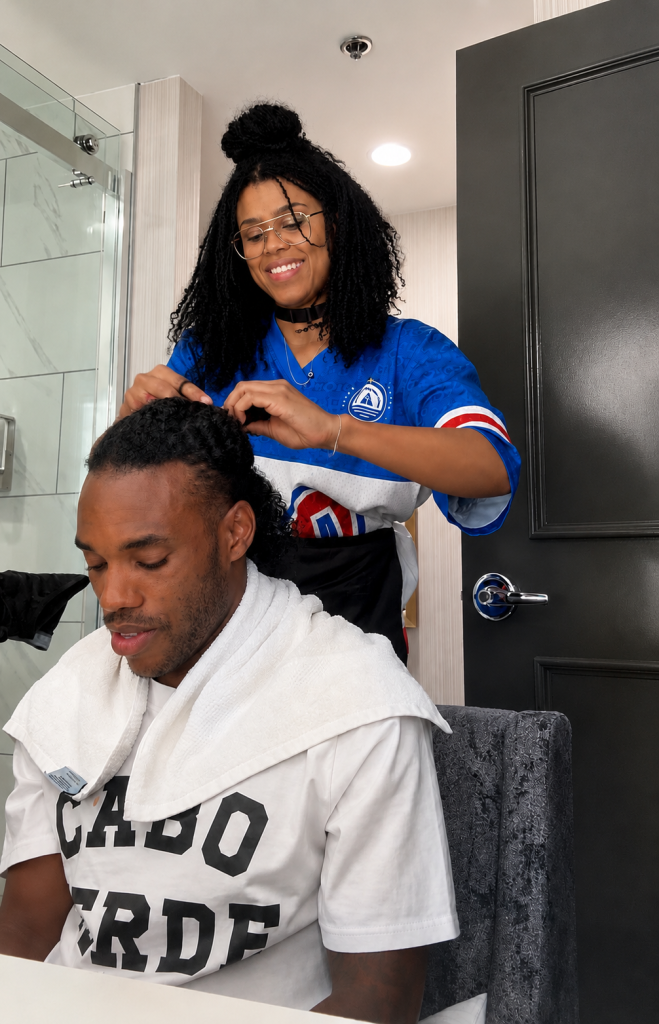
I carry this shift with me as lived history. I witnessed and lived through the tension between what we inherited as beauty standards and what our cultural identity is, and I bring that into my work. In fact, it’s the driving force for why I do what I do.
To me, embracing your natural hair is about much more than aesthetics. It is an act of self-acceptance and, for many people of African descent, an important part of the internal liberation work that comes with unlearning generations of messages about what is and is not beautiful. Hair is deeply personal, but it is also deeply political.
Across Africa and its diaspora, hair has never existed apart from these larger conversations. It has been legislated against in schools and workplaces, and reclaimed in movements for civil rights and Black pride. It has marked resistance during colonial rule and renaissance after independence. It has shown up in music, in fashion, in protest signs, and in quiet everyday choices – a woman deciding to wear locs to a job interview, a father learning to braid his daughter’s hair for the first time. Every one of those choices carries history in it, whether or not the person making it thinks of it that way. When I sit someone in my chair, I am aware that I am joining a much older story, one that stretches far beyond any single country or generation, about who gets to decide what beauty looks like, and who gets to feel at home in their own skin.
The chair before the field
The World Cup allowed me to experience that work in a completely different setting.
These were elite athletes preparing to represent Cabo Verde under extraordinary pressure. They were carrying the hopes of a country and a diaspora. Every performance, expression, and image would be analyzed and shared. Hair might seem minor to some, but athletes understand that preparation is both physical and psychological. A fresh style can change posture. It can help someone feel polished, focused, and ready. It can provide a sense of control at a moment when so much else is unpredictable. As a former athlete, I understood that immediately.
Before a major game, you want to feel like the strongest version of yourself. You want your uniform right, your body prepared and your mind clear. You want to look in the mirror and recognize the person who is about to compete. Hair is an important part of that ritual, given that it is one of the few ways you can express your individuality while in uniform. In every team that I’ve played, I’ve done my teammate’s hair. I’ve witnessed countless times how it instantly has an effect on someone’s attitude, and how it also adds to the narrative of who we are.
But there was something very special about my work with the players at the World Cup. While the public saw footballers on television, I saw human beings carrying expectations, excitement, responsibility, and so much pride. The chair created a small space where they could relax, talk, joke, or sit quietly before returning to the intensity of the tournament. That is one of the reasons hair care has always been important across African and diasporic communities. The process itself creates connection.
Braiding and styling often happen in shared spaces: homes, salons, kitchens, bedrooms, and community gatherings. People exchange advice, grievings, stories, news, and laughter. Children sit between the knees of mothers, aunts, sisters, or neighbors, and adults find moments of honesty in the salon chair. The finished hairstyle matters, but so does the care that produces it.
What the world saw
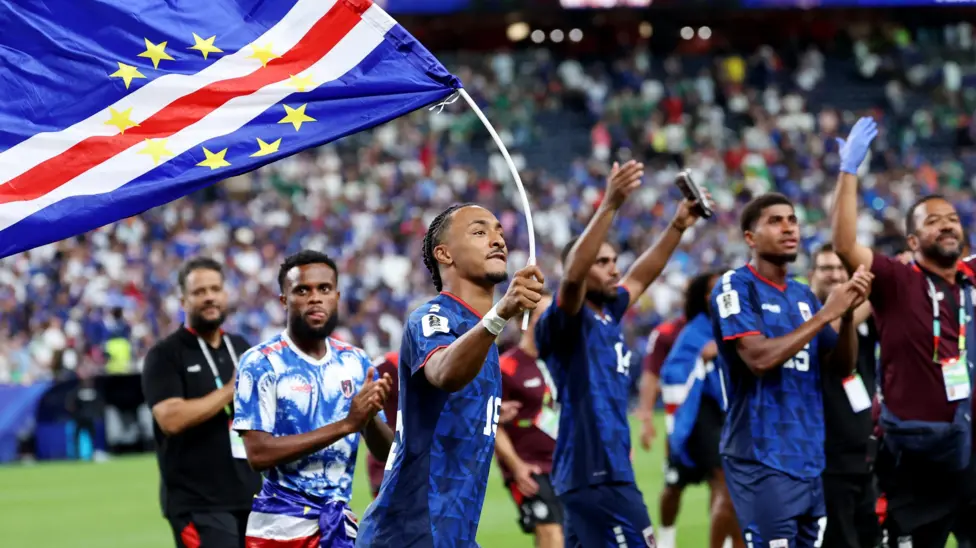
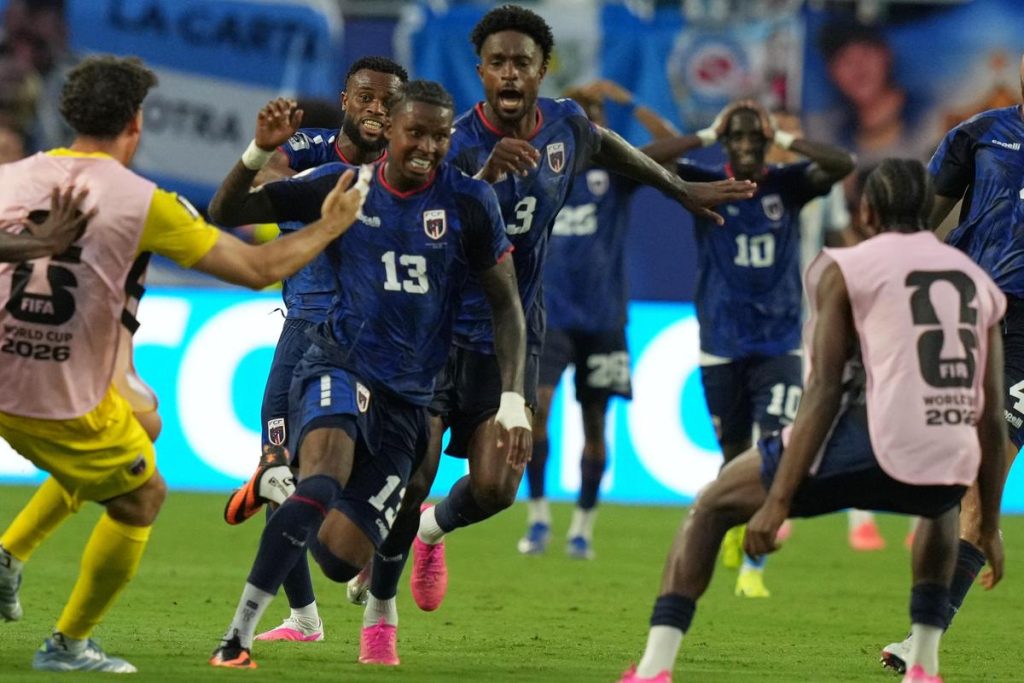
When Cabo Verde appeared at the World Cup, many viewers were encountering the country for the first time. They saw the flag, they heard the name, they watched the team compete. They saw the faces, skin tones, expressions, and hairstyles of the players. Representation often happens in these ordinary visual details.
For larger countries, international visibility can feel normal. Their athletes, artists, and public figures are constantly seen. Their cultures are familiar to global audiences. For a small country like Cabo Verde, being seen at that scale is different. The World Cup was not only a sporting event – it became an introduction.
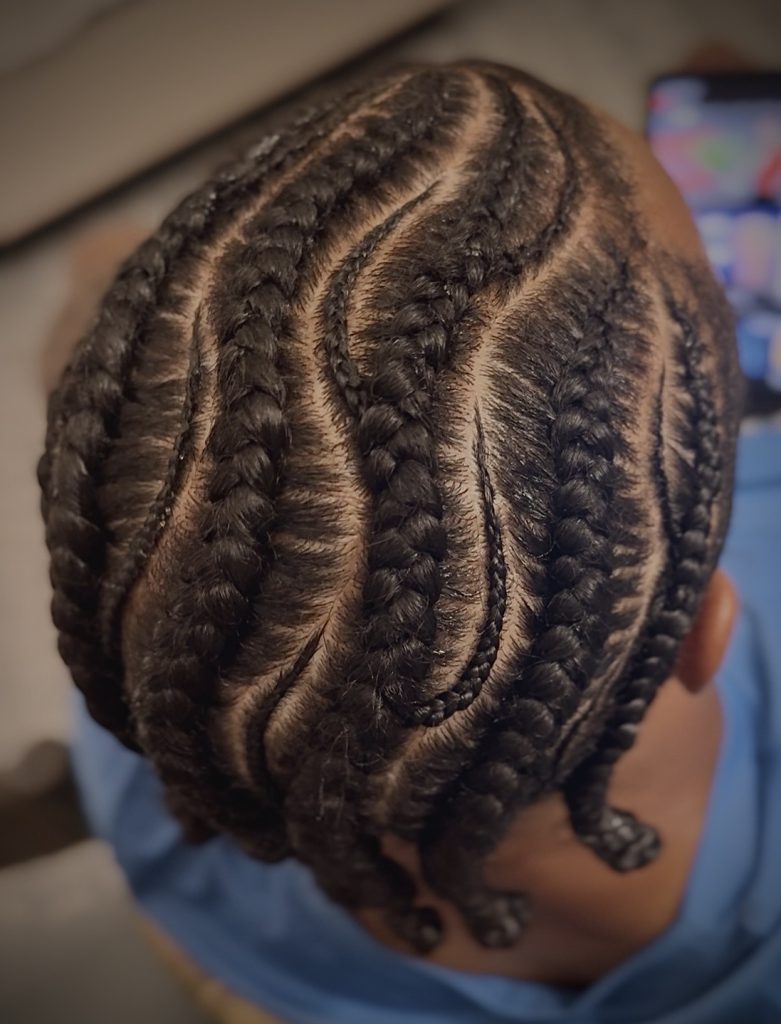
Millions of people were learning that Cabo Verde existed, that it was an African nation, and that its people could compete at the highest level. The team’s appearance became part of that introduction. Braids, coils, flat and barrel twists, locs and carefully defined textures were visible in close-up shots, interviews, celebrations, and social media clips. They became part of the visual archive of Cabo Verde’s historic run.
That matters because African people have often been represented through the eyes of others. Our cultures are sometimes reduced, misunderstood, treated as exotic, or less than. At the World Cup, the players did not need to perform a simplified version of Cabo Verdean identity for the world. They represented the country by appearing fully as themselves. Their hair was not a costume, it was not a trend created for the tournament. It was part of who they already were. And in helping them prepare, I was not inventing an image of Cabo Verde. I was helping care for one that already existed.
Cabo Verde’s run also sits inside something bigger than one tournament, one team, or nation. Across the continent, a generation of African athletes is rising, and they are arriving not as exceptions to be explained, but as a wave that can no longer be ignored. They are not asking the world’s permission to belong on its biggest stages. They are simply showing up, fully themselves, and letting the world catch up. And they are bringing their homelands with them: their languages in interviews, their families in celebrations, their textures in every signature style – unmistakably personal, unmistakably rooted – and together, these signatures are rewriting the story the world has told about what an African athlete is allowed to look like. Cabo Verde is one voice in that chorus. It is a small country, but it sang loudly, and it sang as itself. That is the kind of representation that outlasts a scoreboard.
What I hope remains
Long after the final whistle, I hope the images from this tournament continue to matter. I hope a Cabo Verdean child saw the players and recognized something familiar: a skin tone, a curl pattern, a language, a flag, or a way of carrying oneself. I hope young Cabo Verdeans understand that they do not have to separate their African identity from their Cabo Verdean identity. The two are not in conflict. I hope they see that our textures do not need to be corrected before we enter important spaces. Our hair is worthy of the stadium, the television camera, the magazine cover, the boardroom, and every other place where we have historically been told to make ourselves smaller or more acceptable.
Hair did not take Cabo Verde to the World Cup. Talent, discipline, sacrifice, and collective belief did that. But once we arrived, hair helped tell the world who we were. It carried traces of Africa, the islands, migration, family, creativity, and pride. It reminded us that representation is not only about being present. It is about being present without erasing the parts of ourselves that make us recognizable to one another.
The post When Cabo Verde Took the World Stage, Our Hair Came With Us appeared first on Time Africa.