Why Is No One Talking About The ‘New War’ Trump Is Waging In Somalia?
By Spencer Ackerman Photos: YouTube Screenshots|Wikimedia Commons Ask the average person to name the major war that Donald Trump started, and they’ll understandably say Iran, now rounding out its fifth month with no end in sight. But entirely in obscurity, Trump has launched what one think-tank expert terms an “unprecedented increase” in strikes in Somalia – so unprecedented as, in his view, to represent an entirely new war emerging from the U.S. inability to defeat an adversary that it has fought for an entire generation. It is no longer a surprise that Somalia garners little attention. But it should be scandalous, because such neglect has permitted the U.S. military to wage an adjunct forever-war against jihadists in Somalia for 20 years, ever since a U.S.-backed and long-forgotten Ethiopian invasion in 2006. That ties Somalia with the 2001-21 Afghanistan war as America’s longest foreign conflict. But since the U.S. fights in Somalia without conventional ground forces, it has never faced any pressure to demonstrate success, let alone end operations. The U.S. war in Somalia has become a signal case of the so-called “War on Terror” launching an imperial police action uninterrupted by any need to justify itself. In another six months, this invisible, politically frictionless campaign will rank as the longest foreign war the U.S. has ever fought. Congress certainly isn’t demanding any justification – or even devoting much in the way of scrutiny. When the war’s commander, U.S. Africa Command’s Gen. Dagvin Anderson, testified before both the House and Senate armed services committees in May, the legislators charged with military oversight barely bothered to ask. Their attention instead went to Anderson’s testimony-mate, Adm. Brad Cooper of U.S. Central Command, who runs the Iran War. Anderson and his predecessor, Marine Gen. Michael Langley, have over the past 18 months subjected Somalia to the heaviest bombardment in the war’s history. In 2026 alone, AFRICOM has announced an astonishing 58 strikes, presumed to be mostly drone strikes, and the New America Foundation puts the real total closer to 77. By either accounting, the barrage is greater, in just six months, than the 51 strikes taken by the Biden administration in four years. The pace AFRICOM is on this year will easily exceed the 96 strikes (when taking into account multiple strikes announced on the same day) it announced launching in 2025. That year represented the previous high-water mark for such strikes on Somalia. Taken together, the second Trump administration has launched between 154 (AFRICOM’s tally) and 203 (New America’s) strikes on the East African coastal nation. That surpasses New America’s total of 192 U.S. strikes on Pakistan in 2010 and 2011, the two most intense years of the U.S. drone war, and with six more months to go. The second Trump administration’s strikes have killed between 190 and 420 Somalis, at least a dozen of them civilians by New America’s tabulations, likely an undercount. But it’s not exactly right to understand what Trump and Anderson are doing in Somalia as an escalation. According to David Sterman, the deputy director of the future-security program at New America, “We initiated, basically, a new war.” ‘The Epicenter of Global Terrorism Is in Africa’ If this seems familiar, it’s because Trump is, in one sense, picking up in Somalia from where he left off. The first Trump administration also enacted a sharp escalation in drone strikes in Somalia.In 2019 alone, AFRICOM executed 66 strikes, more than the 48 strikes on Somalia it launched during all eight years of the Obama administration. The astonishing spike was only a component of what turned out to be 219 strikes by the time Trump left office. That volume was made possible by a decision to devolve greater latitude to commanders about when to launch them. “That automatically open[ed] up the aperture,” the former commander of special operations in Africa, Brig. Gen. Donald Bolduc, explained to me at the time. (Yes, the same Bolduc who later ran for Senate in New Hampshire.) Joe Biden required White House approval for requested strikes, as had Barack Obama. Trump reinstated the same command devolution for counterterrorism operations from his first term. But there’s also been a transformation in Somalia strikes during Trump’s second term. A great deal of them have not been launched against al-Shabaab, the al-Qaeda-aligned insurgency in the Somali south that the U.S. has bombed but never broken for two decades. As Anderson’s testimony indicated, many strikes now target ISIS’s Somali branch in the north. So far this year, Sterman counts 39 U.S. strikes against al-Shabaab and nearly as many, 33, against ISIS, with another two strikes against unclear targets. (On the phone with me, Sterman counted 38 al-Shabaab strikes, but AFRICOM took another one against the group a few days after we spoke.) William Walldorf, a senior fellow at Def
 Black News
Photos: YouTube Screenshots|Wikimedia Commons
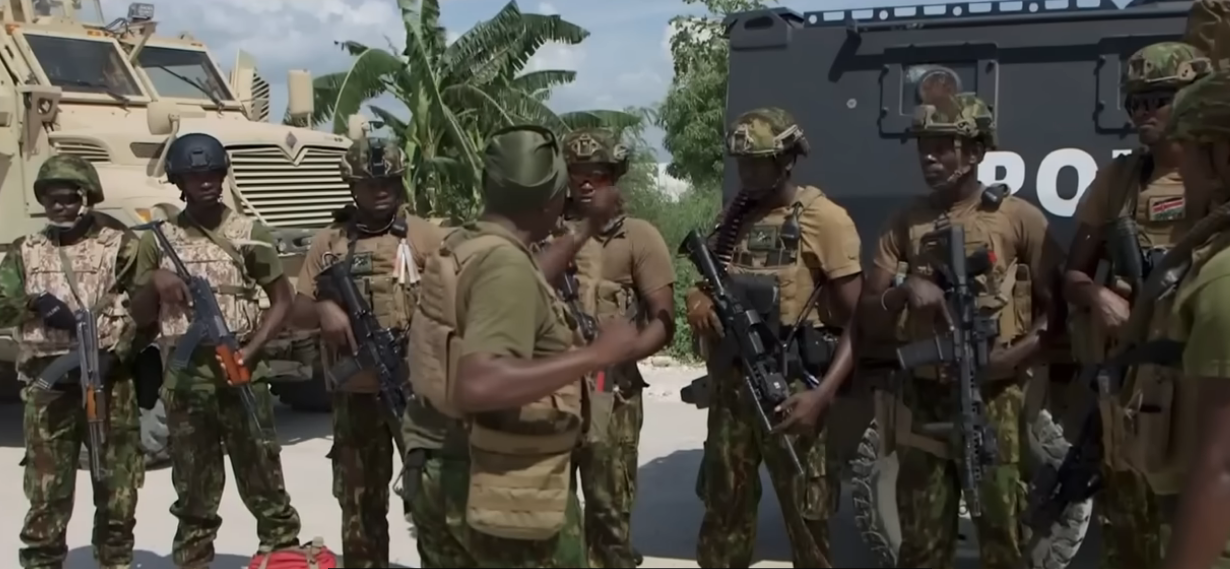
Ask the average person to name the major war that Donald Trump started, and they’ll understandably say Iran, now rounding out its fifth month with no end in sight. But entirely in obscurity, Trump has launched what one think-tank expert terms an “unprecedented increase” in strikes in Somalia – so unprecedented as, in his view, to represent an entirely new war emerging from the U.S. inability to defeat an adversary that it has fought for an entire generation.
It is no longer a surprise that Somalia garners little attention. But it should be scandalous, because such neglect has permitted the U.S. military to wage an adjunct forever-war against jihadists in Somalia for 20 years, ever since a U.S.-backed and long-forgotten Ethiopian invasion in 2006. That ties Somalia with the 2001-21 Afghanistan war as America’s longest foreign conflict. But since the U.S. fights in Somalia without conventional ground forces, it has never faced any pressure to demonstrate success, let alone end operations. The U.S. war in Somalia has become a signal case of the so-called “War on Terror” launching an imperial police action uninterrupted by any need to justify itself. In another six months, this invisible, politically frictionless campaign will rank as the longest foreign war the U.S. has ever fought.
Congress certainly isn’t demanding any justification – or even devoting much in the way of scrutiny.
When the war’s commander, U.S. Africa Command’s Gen. Dagvin Anderson, testified before both the House and Senate armed services committees in May, the legislators charged with military oversight barely bothered to ask. Their attention instead went to Anderson’s testimony-mate, Adm. Brad Cooper of U.S. Central Command, who runs the Iran War.
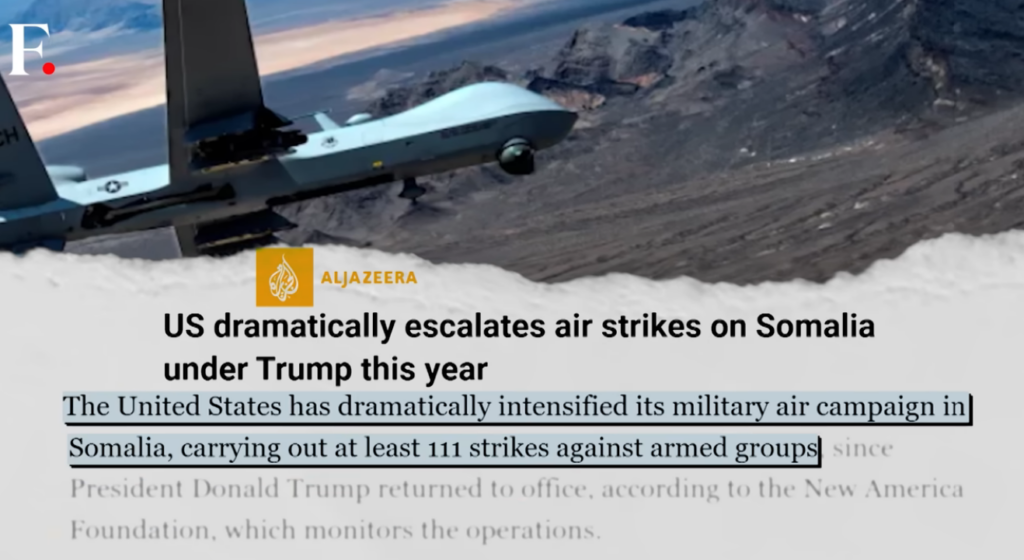
Anderson and his predecessor, Marine Gen. Michael Langley, have over the past 18 months subjected Somalia to the heaviest bombardment in the war’s history. In 2026 alone, AFRICOM has announced an astonishing 58 strikes, presumed to be mostly drone strikes, and the New America Foundation puts the real total closer to 77. By either accounting, the barrage is greater, in just six months, than the 51 strikes taken by the Biden administration in four years.
The pace AFRICOM is on this year will easily exceed the 96 strikes (when taking into account multiple strikes announced on the same day) it announced launching in 2025. That year represented the previous high-water mark for such strikes on Somalia. Taken together, the second Trump administration has launched between 154 (AFRICOM’s tally) and 203 (New America’s) strikes on the East African coastal nation. That surpasses New America’s total of 192 U.S. strikes on Pakistan in 2010 and 2011, the two most intense years of the U.S. drone war, and with six more months to go. The second Trump administration’s strikes have killed between 190 and 420 Somalis, at least a dozen of them civilians by New America’s tabulations, likely an undercount.
But it’s not exactly right to understand what Trump and Anderson are doing in Somalia as an escalation. According to David Sterman, the deputy director of the future-security program at New America, “We initiated, basically, a new war.”
‘The Epicenter of Global Terrorism Is in Africa’
If this seems familiar, it’s because Trump is, in one sense, picking up in Somalia from where he left off. The first Trump administration also enacted a sharp escalation in drone strikes in Somalia.In 2019 alone, AFRICOM executed 66 strikes, more than the 48 strikes on Somalia it launched during all eight years of the Obama administration. The astonishing spike was only a component of what turned out to be 219 strikes by the time Trump left office.
That volume was made possible by a decision to devolve greater latitude to commanders about when to launch them. “That automatically open[ed] up the aperture,” the former commander of special operations in Africa, Brig. Gen. Donald Bolduc, explained to me at the time. (Yes, the same Bolduc who later ran for Senate in New Hampshire.) Joe Biden required White House approval for requested strikes, as had Barack Obama. Trump reinstated the same command devolution for counterterrorism operations from his first term.
But there’s also been a transformation in Somalia strikes during Trump’s second term. A great deal of them have not been launched against al-Shabaab, the al-Qaeda-aligned insurgency in the Somali south that the U.S. has bombed but never broken for two decades. As Anderson’s testimony indicated, many strikes now target ISIS’s Somali branch in the north.
So far this year, Sterman counts 39 U.S. strikes against al-Shabaab and nearly as many, 33, against ISIS, with another two strikes against unclear targets. (On the phone with me, Sterman counted 38 al-Shabaab strikes, but AFRICOM took another one against the group a few days after we spoke.) William Walldorf, a senior fellow at Defense Priorities, wrote in a July 14 paper that “most” of the second Trump administration’s Somalia strikes have come against ISIS-Somalia, not al-Shabaab.
The fact that ISIS-Somalia exists at all represents a failure of the U.S. war in Somalia. The group broke off from al-Shabaab a decade ago, after al-Shabaab sided with al-Qaeda over ISIS at the peak of the mid-2010s attempted caliphate in western Iraq and eastern Syria. Rather than the split sapping the energy of both, each has persisted, though hardly equally. Sterman observes that ISIS does not have the “history of holding populated territory” that al-Shabaab very much does. Biden took only “two or three strikes and operations” against ISIS in Somalia, Sterman notes. Now, even as Trump has escalated against al-Shabaab, AFRICOM is simultaneously pursuing an al-Shabaab-sized campaign against ISIS, in a different part of the country.That’s why Sterman considers what Trump has done to represent the launching of a new war in Somalia and not just an escalation of the old.
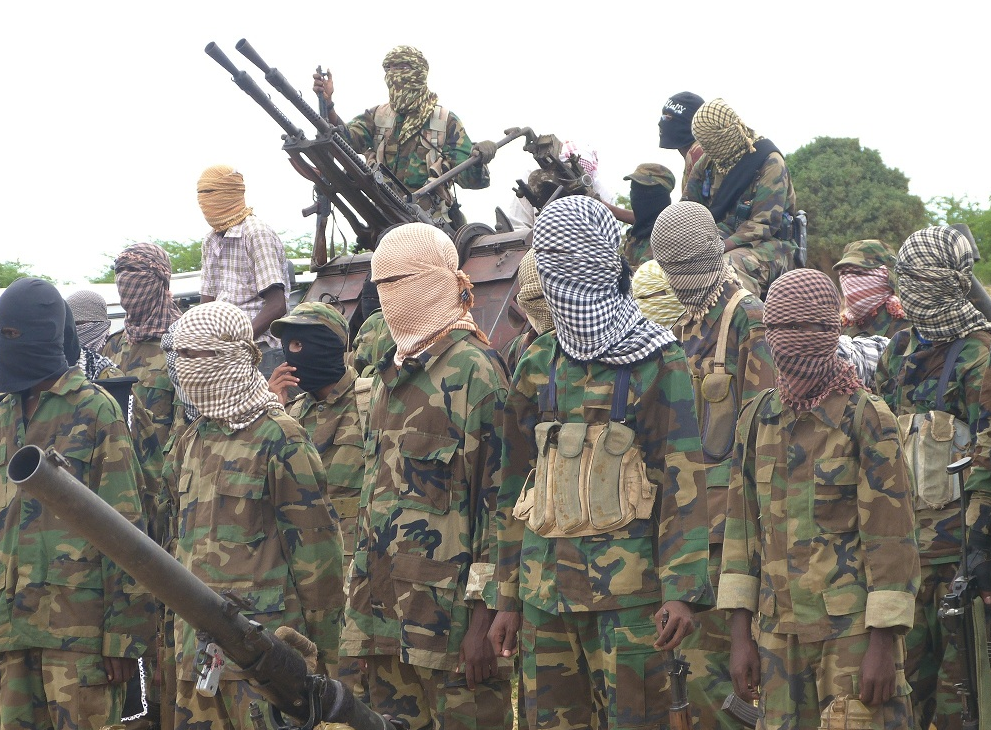
“At least at the strategic level, this ISIS thing is, to me, a significant new decision to wage war against a new enemy,” Sterman says. “It is not just a continuation of the same tactics and approach of what we were doing in Somalia generally.”
Gen. Anderson, who like Bolduc commanded special operations in Africa, has spoken like he wouldn’t mind a third target. While the increase in airstrikes tends “to be what gets a lot of the news” in Somalia, there was another adversary drawing his notice, Anderson said during a February press briefing. “As we see the Houthi threat – smuggling weapons into Somalia, supporting al-Shabaab and the increased cooperation there – we’re looking at ways to increase that domain awareness of our partners so they can protect their borders and help secure those sea lanes and reduce that threat that goes across the Gulf of Aden and the Red Sea,” he said. (I’m so old that I remember when the Yemenis that the U.S. accused al-Shabaab of collaborating with were al-Qaeda in the Arabian Peninsula.)
On the one hand, Anderson, as the commander of an oft-neglected military command, could be attempting to draw in resources devoted to the major conflict in which the U.S. is engaged. Thus far, AFRICOM has not announced any strikes on any Houthi targets. But it also sounds like the groundwork for turning Somalia into a staging area against Iran’s Ansarallah ally, with the Houthis now declaring the gateway to the Red Sea closed to Saudi oil exports like the IRGC has closed the Strait of Hormuz.
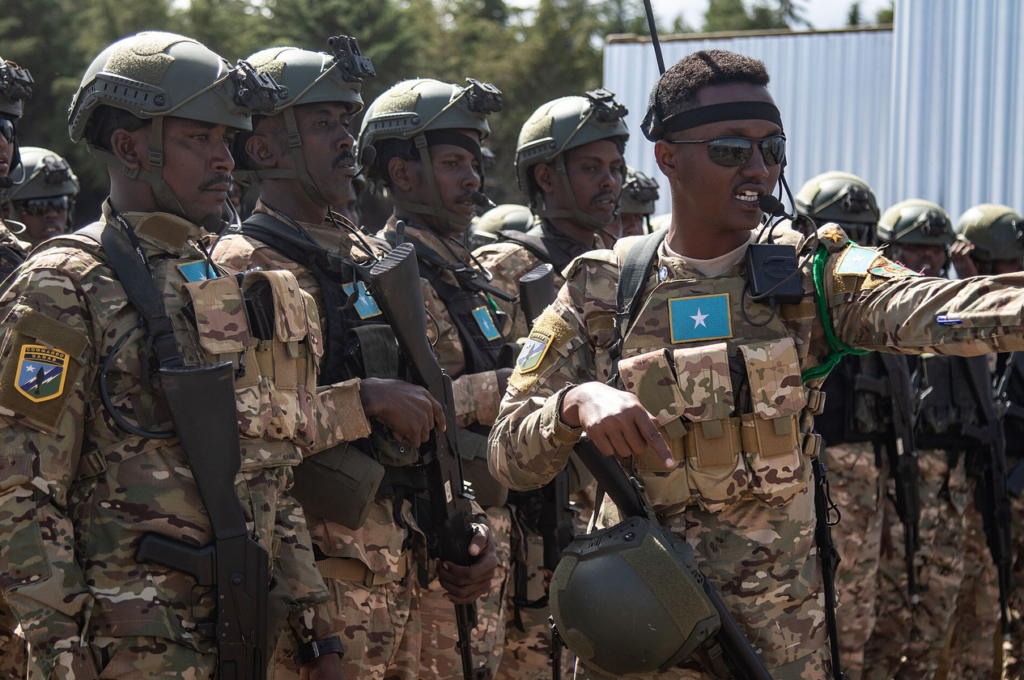
More generally, at the May hearing, Anderson indicated to senators that he’d prefer a more assertive posture. He lamented “AFRICOM’s lack of expeditionary capabilities and diminished force posture” and warned it “allows disruptive actors to drive the agenda, undercutting American interests.” The “epicenter of global terrorism,” he warned, “is in Africa.” Walldorf noted drily this week, “AFRICOM is known for overblowing threats.”
If the Somalia wars have been invisible, so have their lasting achievements. The 2026 Worldwide Threat Briefing released by the director of national intelligence tepidly credited U.S. military operations with having “hindered ISIS-Somalia’s ability to pursue attacks against the U.S. and U.S. interests in the region,” they wrote, neglecting to note that ISIS-Somalia has no history of actually attacking the United States. (Neither, outside of Somalia, does al-Shabaab.) However much ISIS-Somalia is presently “hindered,” whatever that means, time has a way of reversing U.S. gains in the War on Terror. In 2022, there was a rare wave of U.S. optimism after Mogadishu’s forces ousted al-Shabaab from central Somalia. But late last month, a report from the International Crisis Group found that al-Shabaab has since “eras[ed] the government’s gains.” And that’s despite the increase in U.S. airstrikes.
Far more enduring is what U.S. strikes do to Somalis who seek simply to survive the long U.S. war. Last month, The Guardian reported on a series of U.S. airstrikes in the southern Somali town of Jamaame on the morning of Nov. 15. When Mohamed Abo Sheikh Ali arrived at the scene of the blast, he saw the bodies of four of his grandchildren. The boys were aged 10, 7, 6 and 4. Beside them was the body of their mother, Safiyo Hassan Abukar. She had been pregnant. Their family were among 12 civilians, eight of them children, killed in the attack, which the paper reported as the single most lethal U.S. strike on civilians in Somalia in 18 years.
‘Something That Just Emerged Out of the Policy Processes’
The cheapness with which the Trump administration – like its three predecessors – prices Somali life in Somalia mirrors the cheapness with which the Trump administration prices Somali life in America. The deadly swarm of ICE into Minnesota late last year came after demonizing the Somali community there as a criminal one. “I don’t want them in our country. Their country’s no good for a reason,” Trump said in a Dec. 2 White House rant that described Somalis as “garbage” that the country should stop taking in. Weeks before ICE killed Renee Nicole Good and Alex Pretti, its agents were tackling those they presumed to be Somalis into the snow and arresting them regardless of their citizenship. A rideshare driver and U.S. citizen, Ahmed bin Hassan, went viral when ICE, including gas-canister-toting commander Greg Bovino, stopped him based on his accent. In Somalis, MAGA sees a community that represents a trifecta of backgrounds the War on Terror and broader American history have accustomed them to find threatening: Black Muslim immigrants. The violence of ICE mirrors the violence of AFRICOM.
After 20 years, the U.S. war in Somalia is fully normalized, and Somalis casually dehumanized. But it is still astonishing to consider the sheer disinterest in political and congressional attention in the war expanding to a completely new adversary while continuing against the original, undefeated one. Congress at least belatedly passed a war-powers resolution demanding it authorize the Iran war (even if Trump ignored it). It has never authorized any Somalia war. Claims of military authorities derivative from the 2001 Authorization to Use Military Force (AUMF) are stretched beyond the point of absurdity: al-Shabaab did not exist then; it did not have any allegiance to al-Qaeda until six years into the conflict; there is no AUMF against ISIS, which is a competitor to al-Qaeda rather than an ally.None of those circumstances, nor the actual fortunes of the U.S. in Somalia, matter as much as the disinterest shown to a two-decade low-intensity war in East Africa.
“As a strategic, political matter, I think something like that, whether or not it needs a strict new congressional authorization, at least, that should have hit the news and been something publicly discussed,” Sterman says, “rather than something that just emerged out of the policy processes.”
Spencer Ackerman is a Pulitzer Prize and National Magazine Award-winning reporter and the author of Reign of Terror: How The 9/11 Era Destabilized America and Produced Trump. He is also the author of the FOREVER WARS newsletter on Ghost.