17 years after privatization, Mali regains control of a strategic telecom asset through a $277 million deal
Seventeen years after handing over control of its national telecommunications champion to a foreign investor, Mali has regained majority ownership of SOTELMA, marking one of the most significant reversals of a privatization deal in the country's recent economic history.
 Black News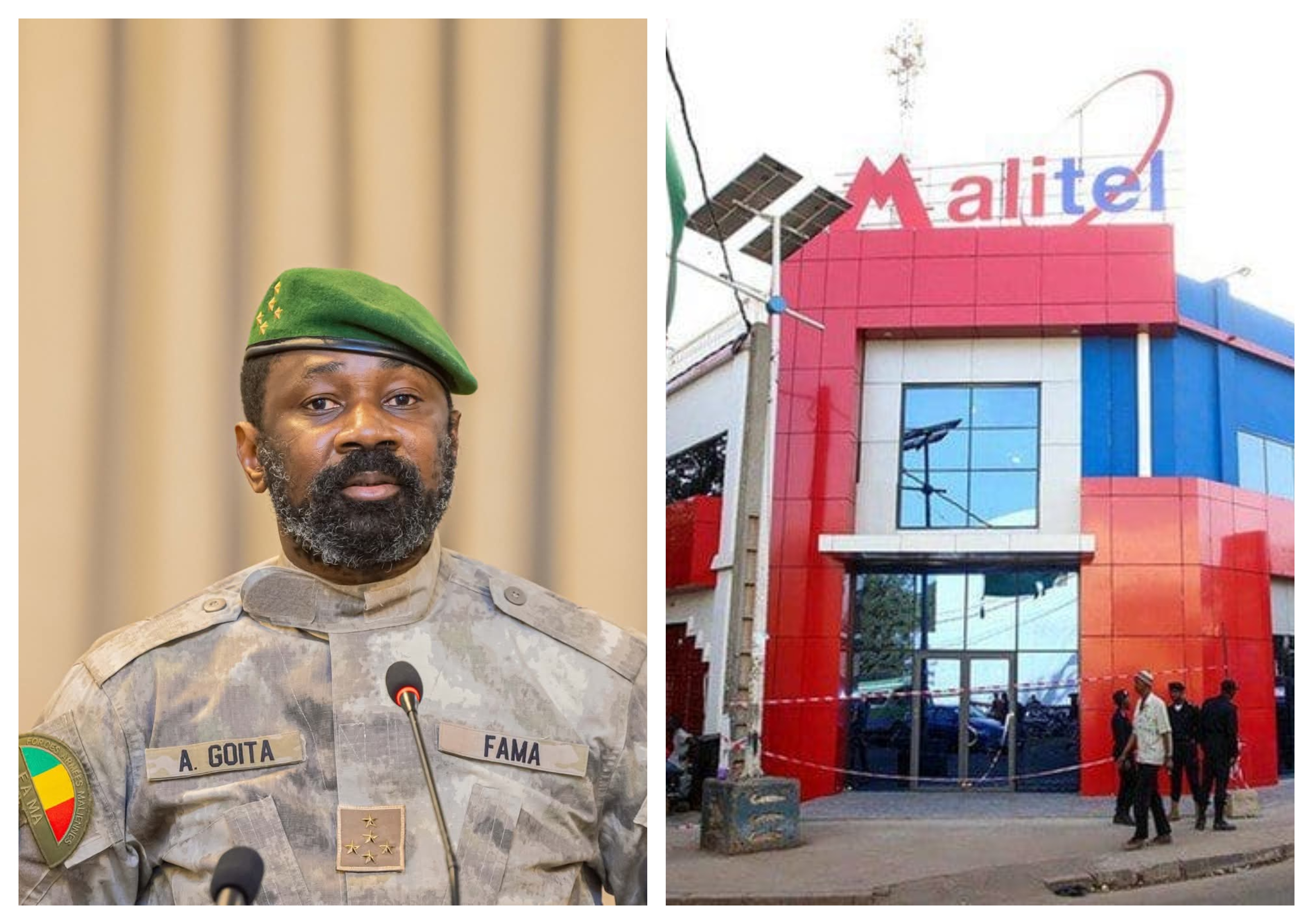

Seventeen years after handing over control of its national telecommunications champion to a foreign investor, Mali has regained majority ownership of SOTELMA, marking one of the most significant reversals of a privatization deal in the country's recent economic history.
- Mali has regained majority ownership of SOTELMA, reversing a 17-year-old privatization and securing a 56% stake in the company.
- The move follows a $277 million agreement that renewed SOTELMA's license and restructured its ownership in favor of the Malian state.
- SOTELMA, a major telecom provider with 8.5 million subscribers, plays a key role in Mali’s digital infrastructure and economy.
- Authorities view the deal as a step toward economic sovereignty, aligning with broader efforts in Mali and the Sahel to reclaim control over strategic sectors.
The development follows the implementation of a 160 billion FCFA ($277 million) agreement that renewed the operating license of SOTELMA while reshaping the company's ownership structure in favor of the Malian state.
The deal, which has now been formally acknowledged by Morocco’s telecom giant Maroc Telecom, gives Bamako a 56% stake in SOTELMA, up from 49%, restoring majority control over one of the country’s most strategic assets, according to a report by Financial Afrik.
For Mali's military-led authorities, the transaction represents far more than a corporate restructuring.
DON'T MISS THIS: Mali shares $33m gold revenue with communities as new mining code takes effect
It is being presented as a major victory in the government's broader push to strengthen economic sovereignty and regain influence over sectors considered critical to national development.
A telecom giant born from privatization
The story dates back to 2009, when Mali embarked on one of its most ambitious privatization efforts.
Seeking investment and modernization for its telecommunications sector, the government sold a 51% stake in SOTELMA to Maroc Telecom for approximately €275 million. The transaction handed operational control of the company to the Moroccan operator, which was then expanding aggressively across Africa.
At the time, the sale was viewed as a milestone in Mali's economic reform agenda. The expectation was that foreign investment and expertise would help improve telecommunications infrastructure, expand mobile services, and accelerate internet penetration in a country where connectivity remained limited.
Over the following years, SOTELMA, operating under the Malitel brand, became one of Mali's largest telecom operators and an important pillar of the country's digital economy.
Sotelma had 8.5 million subscribers in the first half of 2024, accounting for a 37% market share, as it seeks to position itself as Mali’s leading telecommunications provider.
DON'T MISS THIS: Why a $4 billion deal in Africa’s third-largest gold producing nation is facing pushback from China
As of September 2023, Mali’s mobile market had around 23 million subscribers, reflecting a penetration rate of 106%, indicating that mobile connections already exceed the country’s population.
![The head of head of Niger's military government General Abdourahamane Tiani (C), Malian Colonel Assimi Goita (3rd R) and Burkina Faso's Captain Ibrahim Traore (2nd R) arrive ahead of the Confederation of Sahel States (AES) summit in Niamey on July 6, 2024. [Photo by -/AFP via Getty Images]](https://ocdn.eu/pulscms/MDA_/423e6e36be06004a23484a1867a2685d.jpg)
Yet even as the company expanded, the state maintained a significant minority stake, ensuring it remained closely tied to a business that plays a central role in communications, digital services, and economic activity.
The road back to majority control
The shift began under Mali's transition government, which has increasingly emphasized the need for greater national control over strategic sectors.
As authorities pursued reforms in mining, energy, and other industries, telecommunications emerged as another area where the state sought a stronger position.
The opportunity came during negotiations over the renewal of SOTELMA's operating license.
Rather than simply extending the license under existing terms, discussions between Mali and Maroc Telecom evolved into a broader restructuring agreement.
DON'T MISS THIS: Militant advances in Mali could open a new chapter of insecurity across West Africa, Nigeria warns
The result was a package valued at 160 billion FCFA, equivalent to roughly $277 million, that not only secured the company's future operations but also altered the balance of ownership.
Under the agreement, the Malian state increased its shareholding to 56%, becoming the majority shareholder for the first time since privatization.
The arrangement effectively returned control of the company to the state while allowing Maroc Telecom to remain an important shareholder and partner.
Recent confirmation from Maroc Telecom has solidified the new ownership structure, signaling the completion of a process that has been years in the making.
Why SOTELMA matters
The significance of the deal lies in the strategic role telecommunications now play in modern economies.
Beyond providing mobile and internet services, telecom networks underpin digital payments, e-government services, cybersecurity, business operations, and national communications infrastructure.
In a country seeking to accelerate digital transformation while navigating security challenges, control over a major telecom operator carries both economic and political importance.
For Bamako, majority ownership offers greater influence over investment decisions, network expansion, and the future direction of one of the country's most important companies.
DON'T MISS THIS: Mali restructures embassies in Russia, China and 5 other nations as it tightens grip on gold sector
The move also aligns with a broader narrative promoted by Mali's authorities, who have repeatedly argued that strategic national assets should contribute more directly to domestic development goals.
The SOTELMA deal comes amid a broader shift across the Alliance of Sahel States, where governments in Mali, Burkina Faso, and Niger have sought to increase state influence over sectors ranging from mining and energy to infrastructure.
Supporters view these efforts as a necessary correction to decades of economic arrangements that left key assets under foreign control.