A stark, confronting window into the global cocaine trade
Sangre Blanca — Mads Nissen’s new book is a close-up look at various stages of the drug’s journey, from production to consumption, and the violence that follows wherever it goes.
 Black News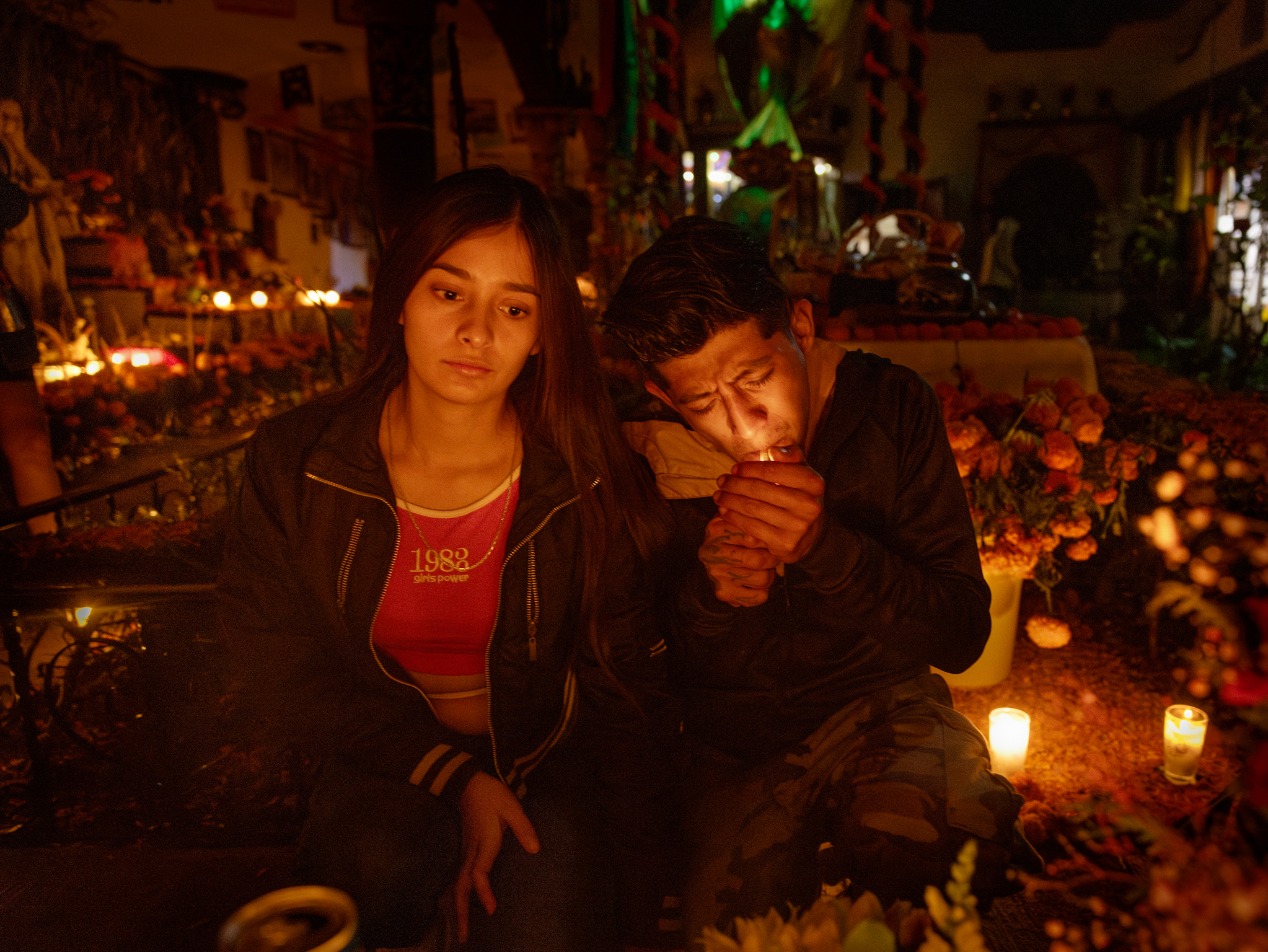
Sangre Blanca — Mads Nissen’s new book is a close-up look at various stages of the drug’s journey, from production to consumption, and the violence that follows wherever it goes.
On the morning of November 27, 1989, a Boeing 727 plane took off from Bogotá international airport at 7:13am. Five minutes later, it exploded, when a bomb organised by infamous narcotrafficker Pablo Escobar detonated, splitting the plane in two. All 107 people on the flight – passengers, pilots and crew – were killed, while three more died on the ground.
It was an assassination attempt on politician and presidential candidate César Gaviria, who had cancelled taking the flight at the last second. But it was also an act of terror, and a public show of the power that Escobar and the cartels held over the country. While Gaviria survived, and later became the President of Colombia, one person who boarded Avianca Flight 203 was the godfather of Danish photojournalist Mads Nissen’s wife.
“Her mother was called to look for anything she could recognise,” Nissen says. “She found his hand with a certain ring on it. So, for my family, and my wife’s family, the cocaine business is something very concrete. It’s something they suffered for.”
Nissen first began photographing around the subject of cocaine in 2016, after being commissioned to photograph Nobel Peace Prize winner Juan Manuel Santos – the former President of Colombia who served between 2010 and 2018, who is largely credited for bringing the country’s decades-long civil war to an end. Much of the war was funded by drug trafficking, and Nissen began diving deeper into the people who lived through the bloodshed and displacement, and the forces that continue to drive it.
His new monograph, Sangre Blanca, which translates to ‘White Blood’, is the culmination of nearly a decade’s worth of reportage made between 2016 and 2025. It traces the world-spanning journey that cocaine takes, from the harvesting of the coca plant on rural farms, its production in labs hidden deep in the Colombian Amazon, through its transport across Mexican villages and across borders, and ending eventually with hedonistic European nightlife that fuels it. And following its path everywhere is a trail of violence.
“Colombia has the longest civil war probably anywhere in the world by now, and despite the peace process, it’s still going on. And many people have died in Mexico also,” Nissen says. “But as an eyewitness, it’s extremely violent. Wherever there’s coca, there’s always conflict – where they produce it, there’s always an armed group taking control and they do whatever they feel they need to maintain order. Then as it moves to the cities it becomes worse.”
Despite it being over half a century since President Nixon declared the “war on drugs”, cocaine use has never been more prevalent. According to a United Nations Report released last year, an estimated 25 million people used the drug in 2023, with production increasing by more than a third from the year before. Meanwhile, blood is spilled for the white powder. Warring between drug cartels in Mexico have seen tens of thousands of combatants and civilians killed over the past decade, while in Europe, 50% of all homicides are directly connected to drug trafficking
Ultimately, its usage is a worldwide phenomenon. “What we’re trying to do is not blame Colombia for producing cocaine, as it has been in the past,” Nissen explains. “That’s really been the perspective of Europe and the United States. What we’re instead trying to do is show that the business is way bigger than before, and it’s not interesting to blame a poor Colombian farmer – I think it’s much more interesting to look at the responsibility for consumers in the West, who have more of a choice.”
The stigmatisation and blanket criminalisation of the drug, led largely by the policies of developed countries in the global north, has reinforced the inequalities and black market economies that keep supply flowing. Despite billions of dollars spent trying to fight it, cocaine is bigger business than ever.
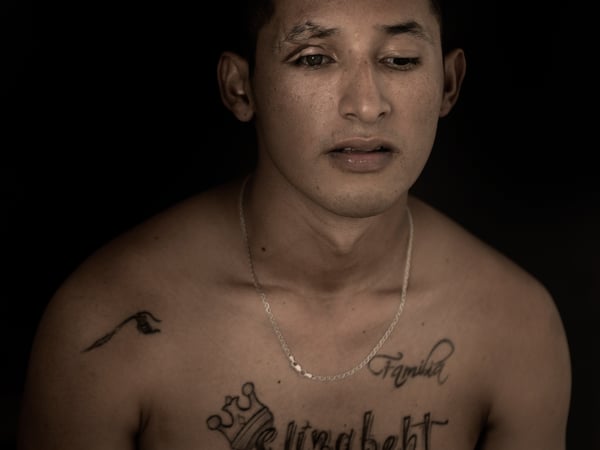
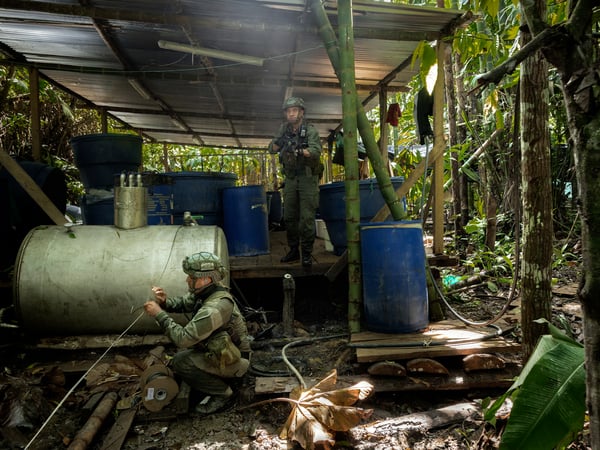
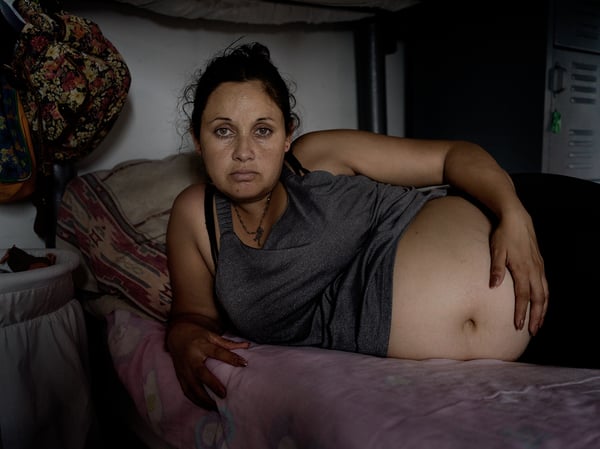
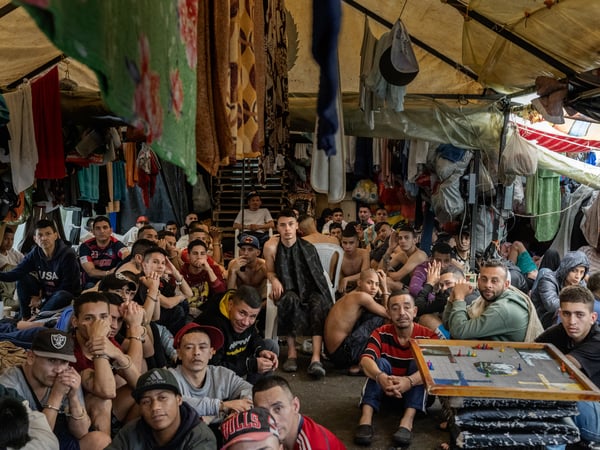
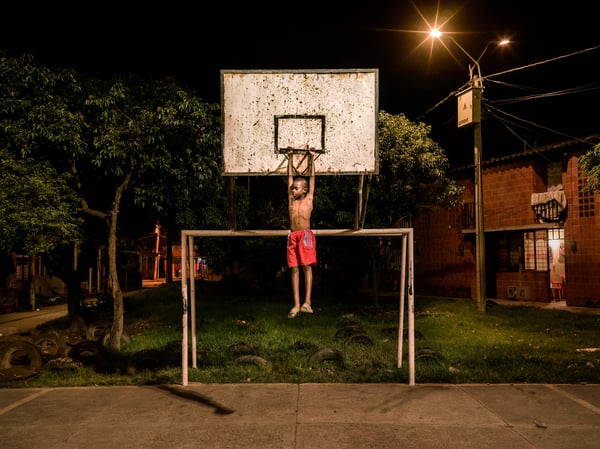

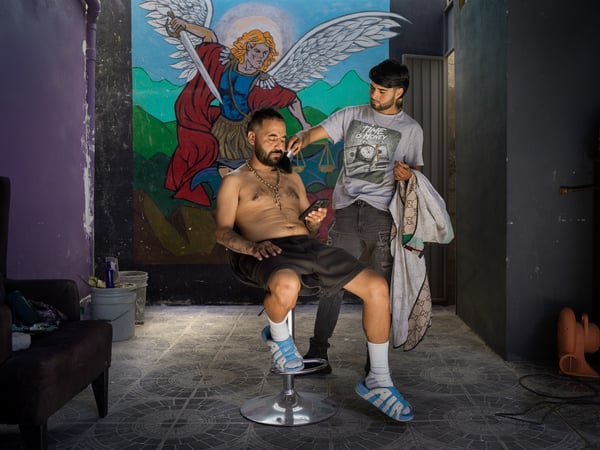
“I think it’s naïve to think that people are going to consume less cocaine – people just love it too much, and there’s so much money in it that it corrupts almost everyone,” Nissen says. “You see local police authorities all the way to the ports, and even when it arrives in Europe, it also brings a lot of corruption here – we are not any different.”
His images are stark and confronting. Sangre Blanca’s eyewitness photography is shadowed by violence. Shots of armed groups and gangs are interspersed with armed police, while grief of lost family is captured up close. But the book also incorporates much more – there’s painted portraits of politicians and narcotraffickers made using chemicals from cocaine production, x-ray images from customs with cocaine hidden inside people’s bodies and oil paintings that illustrate the far-reaching effects of the global business.
Yet by shining a light up close on people and families affected by the trade, Sangre Blanca sheds a humanising lens on people whose lives are often dismissed as simply drug dealers or drug addicts. It’s a layered examination of the complexity and prevalence of cocaine, and ultimately, the world order and its imbalances of power. But it doesn’t attempt to offer answers. Instead, Nissen explains, those begin with hearing from the people who are affected the most by it.
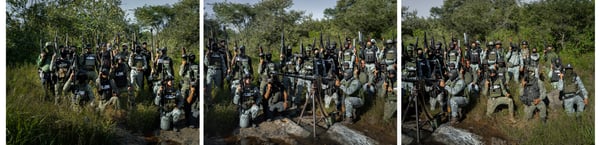
“It’s about time that we in the West start listening to Latin America on what to do on this topic. We need to listen to the many experts and human rights activists on the ground – so far it’s been defined by the Western world,” he says. “Although there are people dying of overdoses in our countries, there’s far more people dying in the business of cocaine. There’s many more killings in the war on drugs. Health-wise, it’s not the most harmful drug, but I think the most dangerous drug of all is the cocaine business.”
Sangre Blanca by Mads Nissen will be published in May by GOST.
Isaac Muk is Huck’s digital editor. Follow him on Bluesky.
Buy your copy of Huck 83 here.
Enjoyed this article? Follow Huck on Instagram for more from the cutting edge of sport, music and counterculture.
Support stories like this by becoming a member of Club Huck.