Discovering Vitumbua: Zanzibar’s Irresistible Coconut Rice Pancakes (History & Recipe)
If you walk through the morning markets of Dar es Salaam, Stone Town, or Mombasa, your senses will immediately be captured by a sweet, warm aroma drifting through the air. Follow that scent of toasted coconut and sweet cardamom, and you will find a street food vendor deftly spinning golden-brown, pillow-soft spheres in a sizzling [...]
 Black News
If you walk through the morning markets of Dar es Salaam, Stone Town, or Mombasa, your senses will immediately be captured by a sweet, warm aroma drifting through the air. Follow that scent of toasted coconut and sweet cardamom, and you will find a street food vendor deftly spinning golden-brown, pillow-soft spheres in a sizzling metal pan.
Welcome to the world of Vitumbua (singular: Kitumbua)—the iconic, gluten-free Swahili coconut rice pancakes that have fueled East African mornings for centuries.
While they look like small doughnuts, their texture is entirely unique: a crisp, golden outer crust that gives way to a light, airy, almost custard-like interior. In this guide, we dive into the fascinating history of this Swahili Coast staple and show you exactly how to make authentic Vitumbua at home.
What is Vitumbua?
Vitumbua are traditional Swahili street snacks popular across Tanzania, Kenya, and the wider Zanzibar archipelago. Unlike Western doughnuts made from wheat flour, traditional Vitumbua are made from a fermented batter of soaked raw rice, rich coconut milk, sugar, yeast, and aromatic spices. They are fried to a perfect golden crisp using a specialized multi-cavity pan. Because they are completely dairy-free and naturally gluten-free, they are an excellent option for modern alternative diets.
The Swahili History and Global Origins of Vitumbua
To understand the history of Vitumbua is to trace the history of the Indian Ocean trade network. For over a thousand years, the Swahili Coast served as the global crossroads connecting Africa, the Middle East, and South Asia.
The Monsoon Trade and Spices
Centuries ago, Persian and Arab merchants sailed to the East African coast on the monsoon winds, while Indian traders brought textiles and culinary traditions. This deep cultural exchange birthed the Swahili language and a highly sophisticated, spice-infused coastal cuisine.
While rice and coconuts were indigenous staples grown abundantly along the tropical East African coast, it was the introduction of Indian Ocean trade goods—specifically cardamom and refined sugar—that transformed these humble ingredients into the celebratory breakfast treat we know today.
Global Cousins of Vitumbua
The most fascinating aspect of Vitumbua’s history is its striking resemblance to dishes found thousands of miles away. Food historians note that the method of cooking a fermented rice batter in a multi-cavity dimpled pan closely mirrors culinary techniques from South Asia and Europe:
- Paniyaram (India)
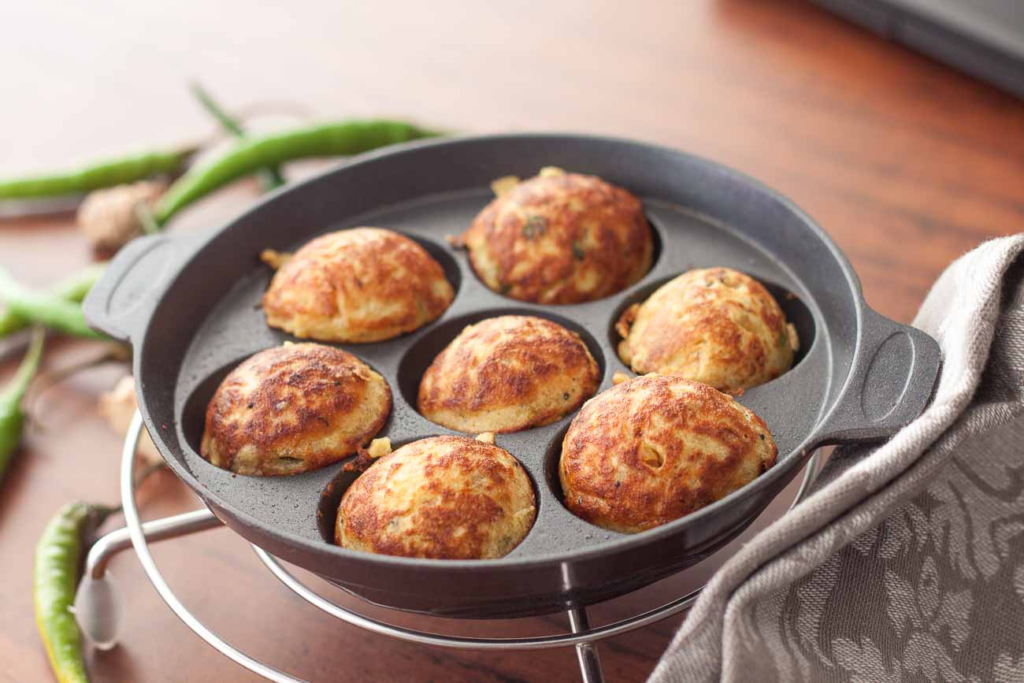
Paniyaram, also known as appe or paddu, closely resembles Vitumbua. These South Indian pancakes are made from fermented rice and lentil batter, cooked in a special cast-iron pan called a paniyaram pan—remarkably similar to the vitumbua pan. Paniyaram can be savory, seasoned with onions and spices, or sweet, infused with jaggery and cardamom. - Æbleskiver (Denmark)
Æbleskiver are traditional Danish pancakes, spherical in shape, often enjoyed around Christmas. Made from wheat flour, buttermilk, sugar, and eggs, they’re cooked in a special æbleskiver pan and traditionally dusted with powdered sugar and served with jam. - Serabi (Indonesia)
Serabi are Indonesian coconut milk pancakes. They’re soft, slightly chewy, and made from rice flour and coconut milk, similar to Vitumbua. Often served with palm sugar syrup (kinca), serabi are cooked in shallow clay or cast-iron pans over charcoal heat. - Khanom Krok (Thailand)
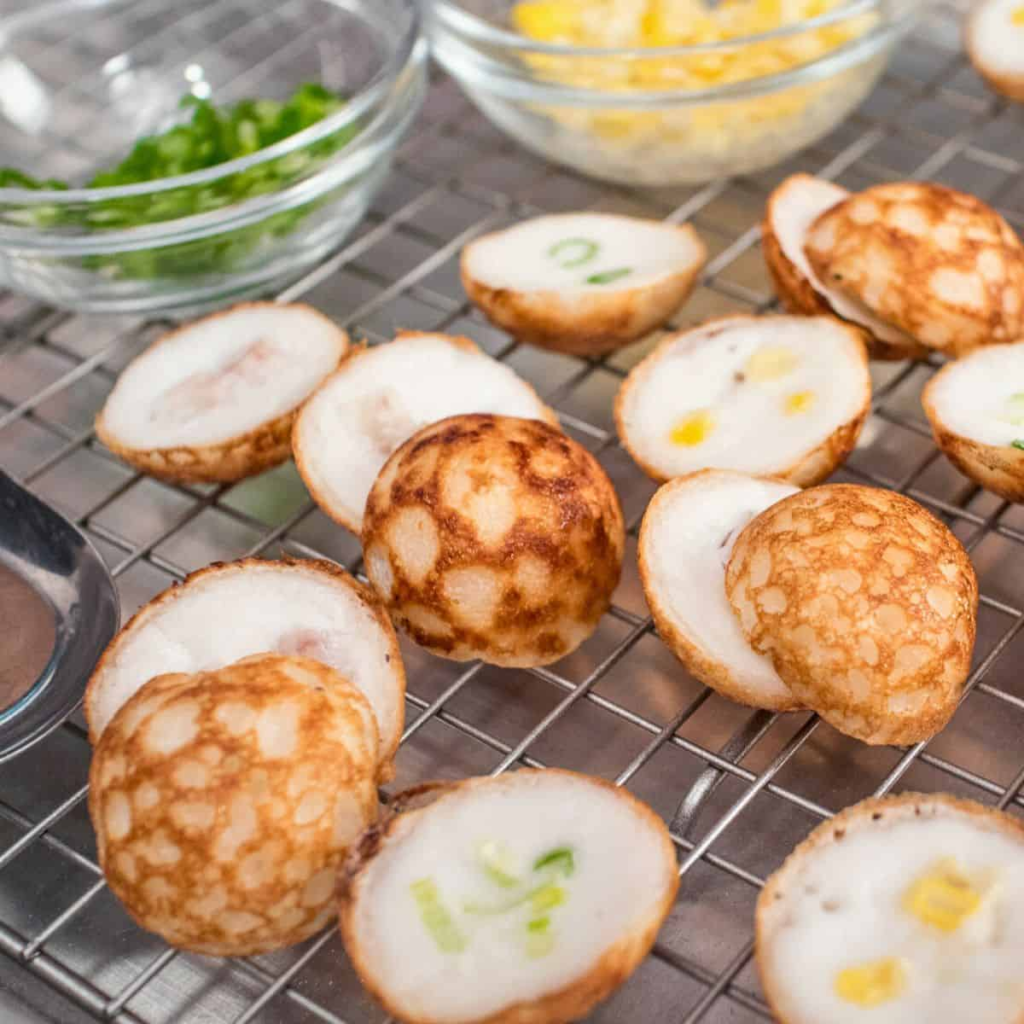
Khanom krok are sweet coconut-rice pancakes popular in Thailand. These tiny pancakes are crispy on the outside and creamy within, cooked similarly in pans with round indentations. They typically feature toppings like sweet corn, scallions, or shredded coconut. - Takoyaki (Japan)
Takoyaki, although savory rather than sweet, shares the cooking method and pan shape. Originating from Osaka, these Japanese street snacks are made with wheat flour batter filled with diced octopus, cooked to a crisp, spherical perfection, then drizzled with sauces and toppings. - Poffertjes (Netherlands)
Poffertjes are miniature Dutch pancakes made from buckwheat flour and yeast, cooked in pans with round cavities. Usually served with butter, powdered sugar, or syrup, they’re beloved at fairs and markets across the Netherlands.

What Makes Vitumbua Distinct?
Though these global counterparts share similarities in shape and cooking methods, Vitumbua uniquely embodies Swahili culture with its use of rice flour, coconut milk, and East African spices, particularly cardamom and nutmeg. The historical fusion of Arab, Indian, and indigenous African influences truly distinguishes Vitumbua from its tasty cousins around the globe.
By sampling Vitumbua and its global relatives, you’re literally tasting the interconnectedness of world cultures, each pancake carrying a story shaped by history, trade, migration, and local innovation.
Essential Kitchen Tools for Making Vitumbua
To achieve that signature spherical shape, you cannot use a standard flat skillet. You will need a specialized pan.
- The Vitumbua Pan: Traditionally made of heavy cast iron or soapstone, modern home cooks can achieve perfect results using a cast-iron Æbleskiver Pan or an aluminum Paniyaram/Takoyaki Maker.
- The Turning Tool: Traditional vendors use a sharp wooden skewer or a thin bicycle spoke to flip the pancakes. At home, a wooden chopstick, a bamboo skewer, or a butter knife works beautifully.
ALSO READ: Tanzanian Pili Pili Mogo (Spicy Fried Cassava)
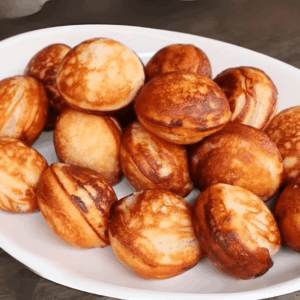
Vitumbua-Tanzanian Mini Rice Cakes
Equipment
- Vitumbua pan (or aebleskiver pan)
- Skewer or toothpick
- Frying pan for oil heating
Ingredients
- 2 cups jasmine rice
- 400 ml coconut milk
- 1/2 tbsp dry active yeast
- 1 tsp sugar
- 1/4 cup lukewarm water
- 2/3 cup sugar
- 1/2 tsp salt
- 5 cloves cardamom g
- 1/4 tsp nutmeg
- Cooking oil for frying
Instructions
Soak the Rice:
- Rinse and soak the jasmine rice in water overnight (preferably in the fridge to prevent fermentation).The next day, rinse the soaked rice thoroughly and drain.2 cups jasmine rice
Prepare the Batter:
- In a blender, combine the soaked rice, 400 ml of coconut milk, 2/3 cup of sugar, cardamom, nutmeg, and salt. Blend until you have a smooth batter.Bloom the yeast by combining 1/2 tbsp of dry active yeast, 1 tsp of sugar, and 1/4 cup lukewarm water. Let it sit for 10 minutes until frothy.Add the bloomed yeast to the rice mixture and stir well.Cover the batter with cling film, leaving a small vent, and let it rest at room temperature for 1 hour until bubbles form and the batter rises slightly.400 ml coconut milk, 1/2 tbsp dry active yeast, 1 tsp sugar, 2/3 cup sugar, 1/2 tsp salt, 5 cloves cardamom, 1/4 tsp nutmeg, 1/4 cup lukewarm water
Prepare the Vitumbua Pan:
- Grease the compartments of a vitumbua pan (or a similar aebleskiver pan) with about 1/2 tbsp of oil each.Heat the pan over medium-low heat (temperature level 4 out of 10).
Fry the Vitumbua:
- Stir the batter gently to remove excess air before frying.Pour the batter into each compartment of the pan, filling them almost to the top but leaving a small gap to prevent overflowing.Cook for about 3 minutes on medium-low heat until the edges are firm but the center is still soft.Using a skewer, carefully flip each cake. If needed, add a little more oil around the edges for frying. Cook for another 3 minutes, flipping back and forth to ensure they are cooked through.Cooking oil for frying
- Check Doneness:To ensure the vitumbua are fully cooked in the middle, poke them with a skewer at a 90-degree angle. If the batter is still runny, cook for a few more minutes.
- Serve:Once golden brown and crispy on the outside, remove the vitumbua from the pan.Serve hot with chai tea or enjoy them on their own for a delightful breakfast.
Notes
- Pan Substitute: If you don’t have a vitumbua pan, you can use an aebleskiver pan or even a mini muffin pan (on the stovetop).
- Spice Adjustments: You can adjust the amount of cardamom and nutmeg based on your preference.
- Serving Suggestion: Vitumbua are best served with spiced chai tea (black tea with cardamom, cinnamon, and ginger).