Africa is on the move, a new Africa is emerging (Part II)
For decades, decisions about Africa have been made outside of Africa. Now the table is being set here. From the AfCFTA to tech startups, the continent has a lot to show the world. And next year, Africa will have a chance to change the economic global game as the World Economic Forum will be hosted […] The post Africa is on the move, a new Africa is emerging (Part II) appeared first on Time Africa.
 Black News

For decades, decisions about Africa have been made outside of Africa. Now the table is being set here. From the AfCFTA to tech startups, the continent has a lot to show the world. And next year, Africa will have a chance to change the economic global game as the World Economic Forum will be hosted in South Africa for 2027.
Following our first installment from industry leaders giving their views in law, technology, and finance across Africa, we continue with a second part on the development of Africa’s commercial interests.
In this article we garner salient opinions from experts across the Entertainment, Social Media, Venture Capital, Wellness and of course, Artificial Intelligence (AI) sectors. Collectively, these industries signal a profound shift toward self-determination, proving that Africa’s growing influence is not merely a trend, but a structural reordering of the global stage where the continent now sets its own table.
Jack Doohan: AI powered technology is central to Africa’s growth in the F&B sector.

As CEO of Meuze, I have witnessed firsthand the extraordinary digital evolution unfolding across the African continent. This transformation isn’t just about connectivity; it’s about the rapid growth of the food and beverage industry, where Quick Service Restaurant (QSR) chains are scaling at pace, driven by a burgeoning middle class and a dynamic consumer base.
However, beneath this visible growth lies a silent, structural challenge. As these chains expand, their technology infrastructure often struggles to keep up. Most restaurant groups are operating with dozens of disconnected software platforms—from Point of Sale (POS) and inventory management to labour scheduling, accounting, and loyalty programmes. While each system captures valuable data, none communicate effectively with one another. This fragmentation creates “invisible margin leakage”, which means that money essentially evaporates because the business lacks a single, unified view of its operations.
In the global race to implement AI, the industry has often put the cart before the horse. Companies are rushing to deploy AI agents and predictive models before solving the underlying data problem. The reality is simple: AI is only as powerful as the data it can access. Without a unified data foundation, AI cannot accurately understand operations, identify inefficiencies, or make the intelligent, real-time recommendations that drive profitability.
At Meuze, and together with my co-founders William Zacka and George Allen, we are building that missing foundation: a unified data layer that sits above existing technology stacks, integrating disparate systems into a single source of truth. We don’t aim to replace the tools operators already rely on; we serve as the “Company Brain,” the intelligence layer that makes those tools actually work together.
For Africa’s F&B sector, this is a critical turning point. As chains scale, the difference between success and stagnation will be the ability to turn fragmented operational data into actionable intelligence. By aggregating every signal, from supply chain logistics and weather patterns to macro health trends, operators can finally forecast what is coming, rather than just reacting to what has already happened.
Africa’s growth trajectory is clear. As the F&B sector continues its impressive momentum, the winners will be those who prioritize data infrastructure. We are proud to be building the intelligence layer that will power this next generation of restaurant operations across the continent, enabling African businesses to thrive with the same sophistication and efficiency as their global counterparts.
Jack Doohan is CEO of Meuze.ai
Monique Eastwood: The New Pulse of African Wellness

The health and fitness landscape in Africa is evolving rapidly. For generations, physical activity across the continent was synonymous with deep-rooted traditional practices such as community farming, walking, and rhythmic dance.
This served as the bedrock of physical health. Today, these traditions are in a dynamic dialogue with a booming modern wellness industry.
As urbanization accelerates and incomes rise across major African cities, we are witnessing a surge in modern fitness facilities , from grassroots exercise clubs to the expansion of international gym franchises like Virgin Active. Yet, the most significant shift is not just in where people train, but how they train. Digital integration and the rise of wearables, fitness trackers, and specialized workout apps have enabled a burgeoning class of professionals to monitor health progress in the busiest of urban hubs.
In this shifting environment, my Eastwood Movement Method (EMM) serves as an intriguing case study for democratizing high-end wellness. As a former professional ballerina with early career roots in South African dance companies, my method is a unique program that prioritizes multidirectional movement and brain-to-body coordination over the static, aesthetic-focused training of the past.
This foundational discipline is then seamlessly layered with the raw, multidirectional intensity of modern fitness. By integrating resistance training and HIIT sequences into the structured movement patterns of dance, the method demands that the brain stays constantly engaged, matching the physical rigour of a gym workout with the cerebral coordination of choreography. It is this precise intersection where the controlled, aesthetic elegance of traditional dance meets the high-energy, functional demand of modern athletic training.
In an industry often dominated by heavily edited, aspirational imagery, my platform offers “raw and authentic” unedited content with the success of this approach being highly instructive. By focusing on short, 30-to-40-minute routines that require minimal equipment, I wanted to create a model that is inherently accessible. For the busy urban professional, whether in Lusaka or Lagos, the appeal is not just the physical strengthening, but the harmonization of mental and physical wellbeing. It reflects a growing demand for fitness that fits into the rhythm of modern life rather than demanding a disruption of it.
As African consumers continue to embrace tech-enabled health solutions, the appetite for methods that are grounded in efficacy, convenience, and authenticity will only grow.
Monique Eastwood is the creator of the Eastwood Movement Method Eastwood Fit – Personal Trainer and Coach – Eastwoodfit
Amari Lewis-Simpson: Africa can be at the centre of the Venture Capital landscape

The global venture capital landscape is undergoing a profound recalibration. Across North America, Europe, and Asia, deal volumes have contracted, and capital deployment has become concentrated in a handful of AI megadeals. Yet, amid this global retrenchment, Africa is bucking the trend. While other regions saw double-digit declines in deal volume in 2025, Africa stood out for its remarkable resilience, closing the year with 506 venture deals.
I’ve seen this resilience firsthand. Growing up in London, where I couldn’t read or write until I was 11, I learned early on that survival requires adaptation. When I started selling sweets in the playground, I didn’t know the terms “supply and demand,” but I understood the mechanics of building something from nothing. Today, as the founder of LSP Capital Group, allocating £260 M+ in assets, I see that same relentless energy across the African continent. Africa is no longer just an emerging market—it is a structural necessity for the future of global finance.
That conviction is why I’m building in Zanzibar. Through LSP Capital, we are developing Zanzibar Hills — a luxury resort designed to attract high-net-worth tourism while creating real economic infrastructure for local communities. It’s not a vanity project. It’s a bet on what happens when you pair world-class hospitality with one of the fastest-growing tourism corridors in East Africa. The capital, the talent, and the demand are all there. What’s been missing is the conviction from investors willing to commit long-term. We’re changing that.
What we are witnessing across the continent is not a retreat, but a maturation. The African venture ecosystem is becoming leaner, more selective, and increasingly driven by high-conviction capital. Venture debt nearly doubled to US$1.8 billion in 2025. This isn’t just survival — it’s strategic deployment of capital to build durable infrastructure. When I raised £10M for the insuretech platform, Iknowa, or working on a £250M capital raise for a bank acquisition, it has been about building the financial rails that legacy institutions have ignored.
Tech-enabled companies accounted for 85% of all venture deals in Africa last year. FinTech and digital banking continue to anchor the market, but we are seeing powerful diversification. AI and CleanTech together captured over one-third of tech-enabled deal activity in 2025. The climate sector alone attracted US$1.5 billion, which equates to 40% of total deal value, underscoring the continent’s critical role in the global energy transition.
This is also transforming traditional sectors. Agritech is moving beyond basic digitisation toward climate-resilient models that ensure food security. Combine that with the financial rails being built by FinTechs and the sustainable infrastructure funded by CleanTech, and you have an ecosystem that is actively shaping the global economy and not just participating in it.
But structural gaps remain. The pathway from Series B to Series C is still too narrow, and late-stage capital remains elusive. This is where the next wave of venture capital must focus. Investors need to move beyond early-stage bets and commit to long-term scaling.
The narrative that Africa is a high-risk, frontier market is outdated. The data shows a continent building resilient, tech-enabled solutions to global problems. I’m not writing about this from the outside. I am on the ground, deploying capital, building infrastructure, and hiring locally. For investors willing to look past the global downturn and invest with conviction, the opportunity is clear. Africa is not just a participant in the venture capital landscape; it has the talent, the infrastructure, and the resilience to be at the very centre of it.
Amari Lewis Simpson – Lewis Simpson Partners Capital Group
Tom Bairstow: The Growth of Africa’s Entertainment Industry Demands Global Attention
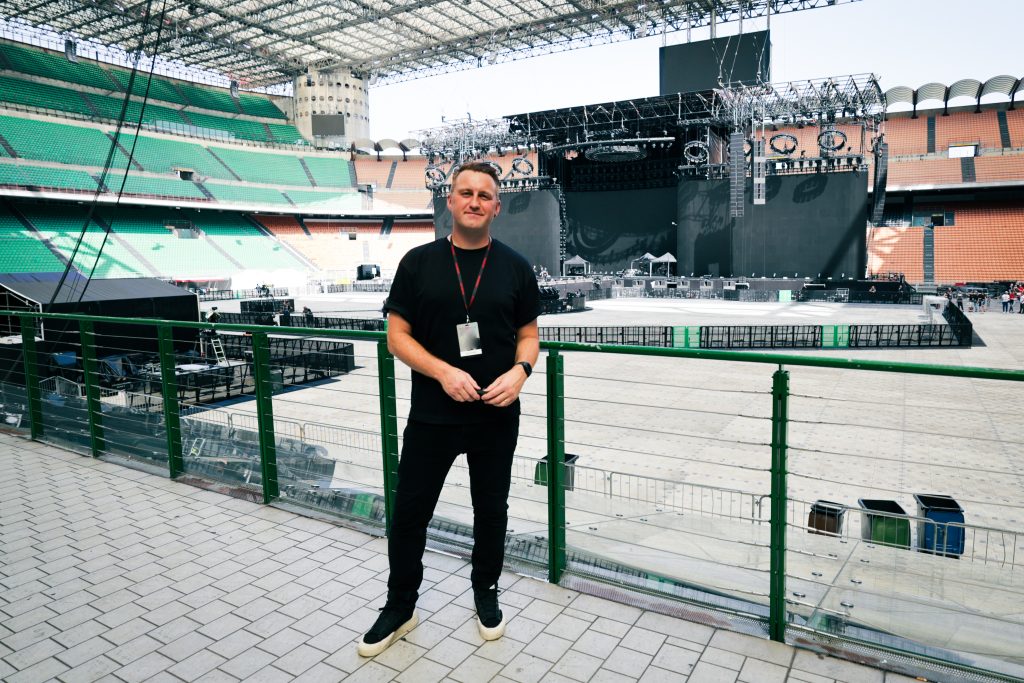
Africa’s entertainment landscape is undergoing one of the most dynamic transformations of any region in the world. With the youngest population globally, fast-growing digital adoption, and an increasingly self-confident cultural identity, the continent is actively participating in the global entertainment economy.
Over the past decade, African entertainment was often framed through the rise of Afrobeats or the global reach of Nollywood. Today, those industries remain powerful drivers, but a wider ecosystem of creativity, live experiences, multimedia innovation, sports, gaming, music and cinema is emerging, signalling the rise of a continental entertainment economy with global influence.
As African creative industries mature, creative studios worldwide are increasingly looking at the region with curiosity for mutually beneficial and high-impact partnerships. Collaborating would allow expanding the reach of the admirable African culture and creativity, enabling more ambitious multimedia experiences to emerge. London-based, award-winning multimedia design and creative studio NorthHouse is actively committed to this growing landscape. As a creative partner for global organisations focused on social impact, the studio has worked closely with an organisation whose mission is strongly connected to Africa’s development, health, education, equality and economic opportunity. With many of these organisational ecosystems shaped by African-focused initiatives and global south perspectives, these events have consistently placed the continent at the centre of global conversations around progress and innovation, and NorthHouse has delved into how entertainment can operate as a catalyst for visibility, collaboration and change.
Among the significant shifts in the African entertainment industry is the growth of live experiences and large-scale cultural events, rebounding strongly and surpassing pre-pandemic levels in major markets. In cities from Nairobi to Johannesburg and Lagos, large-scale cultural events are becoming more popular. This is driving the local economy through tourism, local employment, urban regeneration and international investment, while positioning these cities as regional creative hubs.
Recent data confirms the scale and speed of this transformation. According to PwC’s Africa Entertainment & Media Outlook 2025-2029, Africa’s entertainment and media sector is among the fastest-growing globally, driven primarily by digital-first consumption, mobile connectivity and a young, tech-savvy population. Nigeria, Kenya and South Africa are all outperforming global averages, with Nigeria leading growth at over 11% in 2024. Digital platforms are the primary engine of expansion. Over the next five years, growth is expected to continue, reinforcing Africa’s position as both a cultural and commercial force in the global entertainment industry.
Recent years have also seen African talent achieving major global recognition. Twenty-two-year-old South African artist Tyla Laura Seethal won a Grammy in 2024, following Nigerian singer Temilade Openiyi, who took home the award the year before. Nigerian-British actor Cynthia Erivo was nominated for best actress in a leading role at this year’s Academy Awards for her performance in the cinematic adaptation of Wicked, while South African short film The Last Ranger was shortlisted at the 97th Academy Awards in the best live action short film category.
To sustain the development of Africa’s entertainment industry, greater investment in infrastructure and skill development will be needed. Governments, institutions and private actors need to recognise the economic and cultural value this industry brings, as a driver of growth and employment, and as a platform for global influence and cultural exchange. Meanwhile, the entertainment industry worldwide needs to stay informed and engaged with Africa’s evolving creative landscape, as NorthHouse does, actively seeking opportunities for collaboration, partnerships and commissioning. The African entertainment industry is growing at scale, and sustained success will depend on the institutional support and global attention it receives.
Tom Bairstow is the Founder and CEO of award-winning multimedia design and creative studio NorthHouse
Giselle Elsom: Africa’s social media scene is loud, creative, fast-moving and community-driven.

There are four big shifts influencing how the African continent is creating, connecting, shopping and showing up on social media in 2026.
Sensory marketing Is booming
We’ve seen sensory food marketing taking over the global social media scene, and it has soared in Africa. Brands have seen how much consumers enjoy this content, and have hopped straight on it. Maggi (Nestlé Nigeria) recently hosted MAGGIVerse, a full-blown conference for food creators, featuring workshops on storytelling and visual creativity. This was a sign of how seriously brands now take food creators as cultural influencers, and also confirms that food content is one of the continent’s strongest engagement drivers.
Behind every sizzling pan angle or ASMR-style chop is the simple truth that African audiences and creators alike love experiences they can feel, which is all part of a bigger sensory economy brands are tapping into with pride.
Apps are adding more social features
Community is such an important aspect of the continent’s culture, so the brands that can understand how to incorporate this with social features designed to enhance community experience are gaining a serious advantage. Spotify Wrapped’s “Party” feature, which let users celebrate their music stats together this year, was a massive hit across the continent because it spoke to something deeply cultural around the love for community.
We see the same thing with booming platforms like TikTok, Boomplay and Audiomack, where users aren’t just consuming content, they’re remixing, dueting, stitching, commenting, reviewing, competing and co-creating.
Reports from Techpression and Sagaci Research show rapid growth in social commerce and community-driven interactions. Statista projected that Africa’s social commerce revenue hit $9.2 billion by the end of 2025, with Nigeria, Kenya, and South Africa leading the charge following continued growth since expansion into Africa in 2023. This has been driven by creators and everyday users sharing their finds with friends and followers, and we think this is going to grow more and more as communities on social media work to drive trust and brand loyalty.
IRL Pop-Ups Are Back
Across cities like Lagos, Accra, Nairobi and Johannesburg, IRL brand pop-ups, creator meetups and cultural events are turning into social content machines. Take ART X Lagos, an art fair that’s become as much a digital moment as a physical one. Or the countless launch pop-ups from beauty, fashion and lifestyle brands designed to be photographed, TikTok’ed and shared endlessly online.
These events matter because people show up with their phones, and the recap videos, outfit posts, AR filters, behind-the-scenes clips and “come with me to…” vlogs often reach far wider than the events themselves.
The creator economy continues to grow across the continent
Brands are now recognising the power of the everyday creator more than ever. According to this year’s LinkedIn’s report on influencer marketing in Africa, Employee-Generated Content (EGC) is emerging as a powerful force. Companies like Kenya’s Twiga Foods are encouraging staff to film behind-the-scenes moments, giving audiences an unfiltered look at how the business actually works. Twiva has done the same, with staff-led campaigns like “Lunch Break at Twiva” and the #SpreadTheLoveWithTwiva Valentine activation, proving that sometimes the most relatable content comes from the people already inside the building.
It works because it taps directly into Africa’s communal culture: trust is built through people, familiarity and shared experiences. In a creator landscape already worth billions and still growing fast, this more human, accessible form of content is becoming one of the continent’s strongest brand-building tools.
Giselle Elsom is a native of South Africa and the Managing Director of Truffle.Social, one of the world’s leading and original social media agencies.
The post Africa is on the move, a new Africa is emerging (Part II) appeared first on Time Africa.