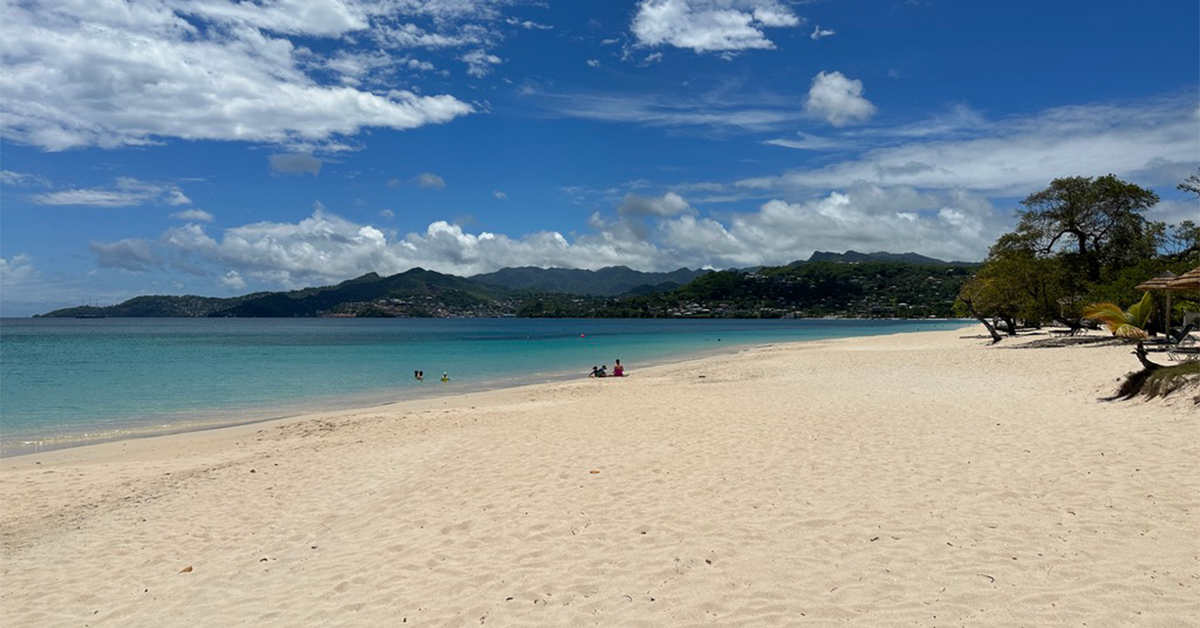
“Jamaica’s greatest tourism asset is our ability to create genuine human connections and unforgettable memories,” says Deputy Director of Tourism Philip Rose.
“Jamaica’s greatest tourism asset isn’t our scenery. It is our ability to create genuine human connections and unforgettable memories.” So […]
 Black News

“Jamaica’s greatest tourism asset isn’t our scenery. It is our ability to create genuine human connections and unforgettable memories.”
So says Philip Rose, Deputy Director of the Jamaica Tourist Board.
“There is an energy here that visitors feel the moment they arrive,” he continues. “We have an incredible ability to make people feel like family, not tourists. That’s why visitors keep coming back. They may come for the sun and sand, but they return because of how Jamaica made them feel. Jamaica becomes more than a destination to them- it becomes a second home.”
In a tourism career that spans nearly thirty years, Rose has seen it all- the ebbs and flows of the industry caused by hurricanes, covid 19, general elections, and fluctuating crime rates. He has observed the maturation of the tourism business and lead the development of JTB’s diaspora strategy (whereby leaders and influential members of the diaspora are trained so that they are educated to speak on tourism in Jamaica accurately), guided the board into social media marketing long before it was the norm for destination promotions, and was one of the key leadership voices providing calm and clear communication in the aftermath of Hurricane Melissa.
But he derives his greatest satisfaction from another aspect of his job.
“It’s knowing that, in some small way, I’ve helped create opportunities for Jamaicans. Tourism works when it changes lives-when it benefits the hotel worker, the farmer, the craft vendor, and yes, even the corn soup man. If I’ve played any role in that, then I’m incredibly proud of my contribution.”
Rose was born in Kingston in 1972 to Deryck and Patricia Rose. His father worked in banking, and his mother was a secretary. He attended Sts Peter and Paul Preparatory and then Wolmer’s Boys School, where he was most interested in Geography, Accounting, English, and Business.
Wolmer’s would also prove pivotal in his transition from boy to man.
“Attending Wolmer’s played a defining role in shaping the man I became,” he says today. “Beyond the education, it taught me how to relate to people from every walk of life, value different perspectives, and build relationships across different backgrounds. Those lessons have proven just as important as anything I learned in the classroom and have served me well throughout my career.”
Following high school and a gap year spent traveling throughout Italy, Rose returned home to Jamaica for 6th form and then embarked on his sojourn in the tourism industry.
He drew on his time in Italy to establish himself as the owner and operator of a small, independent DMC (Destination Management Company), where he provided transportation, tours, and other services to visitors in Jamaica, primarily from Italy. He also offered location scouting and management for film production and video shoots.
“The JTB was actually a client of mine, and they kept asking me to come join them full time,” he recalls. “I kept turning them down because I liked my independence, and business was great. But then the business flow from Italy slowed, so I agreed to join them permanently. My first position was Marketing Representative Midwest, based in Chicago, and my job was to sell Jamaica to travel agents there. The year was 1998, and I promised the JTB three years. As you can see,” he says with a wry smile, “I’m still here.”
Moving up through the ranks- over the years, he was appointed to five different roles in five different cities across the USA and Canada– Rose was eventually appointed Deputy Director of Tourism in 2023 and, with that position, acquired an extensive and uniquely challenging portfolio.
Now based at JTB’s office in South Florida, he oversees Jamaica’s largest and fastest-growing source markets – the United States, Latin America, and the Caribbean. He leads teams that are responsible for sales, airline and tour operator partnerships, trade relations, and growth strategies across those regions.
“My job is to help ensure that more visitors choose Jamaica and, more importantly, that tourism continues to create opportunities for the Jamaican people. Of course, I also support and deputize for the Director of Tourism when necessary, but the role is very much an operational and strategic leadership position in its own right.”
It is also his responsibility to travel the world- both personally and professionally- to tell Jamaica’s story, to see what the competition is doing, and to determine what we can do to make our own tourism product better.
“Because of its history, culture, and the way it seamlessly blends tourism into everyday life, Italy will always hold a special place for me,” he says. “I also have great admiration for destinations like Spain and Singapore, each of which has mastered different aspects of the visitor experience.” As for Jamaica’s competition, depending on the market and the traveler, it could include destinations like Mexico, the Dominican Republic, or other Caribbean islands. However, he stresses that as long as Jamaica continues to improve its own tourism product, “We can compete with anyone.”
He stridently defends Jamaica against the criticism that it has become too commercial and that it has lost much of the simplicity of its early years.
“That’s nonsense. Yes, we have developed more hotels and added internationally recognized brands, but at our core, Jamaica remains unapologetically Jamaican. Tourism has to evolve. Travelers today expect world-class accommodations and amenities. The challenge isn’t whether we develop- it’s ensuring that development doesn’t come at the expense of our authenticity. I would argue that Jamaica’s greatest strength is that we offer both. A visitor can stay at a luxury resort and still leave with memories of a jerk pan, a reggae band, a conversation with a local, or a trip into the countryside. As long as we protect our culture and ensure that tourism benefits our people, we will never become a “little Hawaii.” We will be a better, stronger version of Jamaica.”
He also believes that our tourism product, while in a remarkably good place, can still be improved better to serve more members of the wider Jamaican community. In the future, he would like to see more initiatives that bring the tourism dollar to Jamaica’s farmers, entertainers, craft vendors, and transportation providers, as this will inevitably strengthen the industry and ultimately make it more sustainable.
Philip Rose walked into the Jamaica Tourist Board in 1998 as a young man, determined to stay for only three years. But today- nearly thirty years later- he remains as committed as ever to the task before him, and looks back at his nearly three decades of service with a great sense of pride and accomplishment.
“Essentially, I’ve always been challenged and subsequently promoted in every role I’ve had at JTB. I would not have stayed if I were stagnant. And if I weren’t in tourism here, I’d probably be in tourism in some capacity elsewhere, because I’ve always enjoyed telling stories, building relationships, and connecting people to experiences. But I genuinely love what I do and who I do it for- the people of Jamaica.”