African Union questions future of Somalia peace mission as AUSSOM funding crisis deepens
MOGADISHU (Somaliguardian) – The future of the African Union’s peace mission in Somalia has entered an increasingly uncertain phase after several member states openly questioned how much longer the continent can sustain the costly deployment, as shrinking international financial support intensifies pressure on the mission’s long-term viability, The East African reported on Tuesday. During an […]
 Black News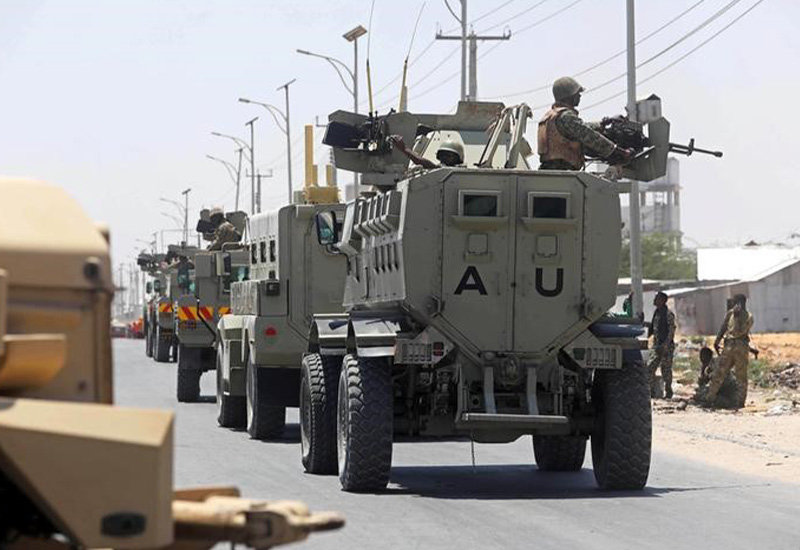
MOGADISHU (Somaliguardian) – The future of the African Union’s peace mission in Somalia has entered an increasingly uncertain phase after several member states openly questioned how much longer the continent can sustain the costly deployment, as shrinking international financial support intensifies pressure on the mission’s long-term viability, The East African reported on Tuesday.
During an emergency meeting of military advisers to the African Union Peace and Security Council (PSC), Cameroon and Gabon cautioned that every peace support operation ultimately reaches an end, urging Somalia to accelerate the development of self-sustaining security institutions in preparation for the eventual departure of foreign troops.
The unusually candid discussions highlight growing concern within the African Union over the sustainability of the African Union Support and Stabilisation Mission in Somalia (AUSSOM), which is confronting mounting financial and logistical uncertainty as key international funding streams come under increasing strain.
For nearly two decades, AU peace operations in Somalia have depended heavily on external financial assistance. The European Union has contributed approximately €2.8 billion ($3.19 billion), while the United States has provided roughly $1.6 billion in bilateral support to troop-contributing countries and an additional $2 billion through the United Nations Support Office in Somalia (UNSOS). The United Kingdom and several other international partners have also played significant roles in financing the mission.
As donor support tightens, debate within the African Union is shifting from whether the mission should continue to how it can remain operational under rapidly changing financial realities.
The uncertainty deepened earlier this month after the United States informed the African Union that it would no longer finance UNSOS – the logistical backbone supporting AUSSOM – beyond December 31, 2026. Minutes from the emergency PSC military advisers’ meeting indicate that the decision would leave the mission facing severe logistical constraints unless an alternative support mechanism is established.
African Union officials warned that the withdrawal of UNSOS support would present major operational challenges if AUSSOM continues under its current mandate.
AUSSOM, comprising 12,591 personnel, officially commenced operations on January 1, 2025, under a five-year mandate extending through the end of 2029, subject to annual authorisation by the United Nations Security Council.
During the July 3 emergency meeting, Cameroon and Gabon argued that Somalia must intensify efforts to build capable and self-reliant national security institutions, stressing that African troop-contributing countries cannot indefinitely sustain an open-ended deployment.
Their interventions reflect an evolving debate within the African Union, where attention is increasingly turning from extending the mission toward defining a responsible and sustainable end-state.
Morocco informed the meeting that it would present its official position after consultations with its national authorities, while Ethiopia reaffirmed its continued support for Somalia.
Questions over the mission’s future are also emerging among long-standing troop-contributing countries. Uganda, which has maintained the largest contingent since the AU first deployed forces to Somalia in 2007, has recently signalled that its military presence cannot continue indefinitely.
Military advisers examined three broad scenarios for the mission’s future: a phased withdrawal of AU forces; maintaining the current deployment with bilateral partners replacing UNSOS logistical support; or establishing a smaller regional force financed through bilateral or hybrid funding arrangements.
Diplomatic sources familiar with the discussions said the latter two options generated limited support because both would still require troop-contributing countries to finance an expensive military deployment at a time when external funding continues to decline. As a result, a carefully managed withdrawal – once regarded as the least attractive option – is increasingly viewed by many member states as the most realistic long-term outcome.
Financial realities continue to reinforce that assessment.
For the 2025/26 financial year, AUSSOM required approximately $190 million for troop reimbursements alone. However, confirmed pledges currently total only $120 million, leaving a significant financing gap.
According to the African Union’s Peace Support Operations Division (PSOD), the only assured funding presently available remains the $502 million UNSOS logistics package. Officials also noted that the United States’ 25 percent contribution had already been withdrawn in October 2025 to address earlier funding shortfalls.
Speaking during a recent town hall meeting in Mogadishu, United Nations Under-Secretary-General for Operational Support Atul Khare acknowledged an additional challenge, noting that the UN General Assembly-approved $481 million budget for UNSOS during the current financial year still requires full financing.
The situation has become even more uncertain after Washington indicated it would oppose efforts within the United Nations Security Council to continue financing UNSOS beyond AUSSOM’s current authorisation, which expires at the end of 2026. Without an alternative donor prepared to bridge the funding gap, uncertainty surrounding the mission’s future continues to deepen.
Mohamed Daud Ismail, senior research assistant with the conflict monitoring project ACLED, warned that without immediate alternative international financing, AUSSOM could face operational collapse as it enters 2027.
He said such a scenario would carry wider implications for Somalia, where national security forces remain overstretched and lack the logistical capacity to independently sustain complex military operations across the country.
UNSOS currently provides AUSSOM with fuel, food supplies, aviation support, medical and casualty evacuation services, strategic air mobility, and reimbursement for contingent-owned equipment lost or damaged during mission operations.
African Union officials further cautioned that maintaining even a reduced military presence beyond the current arrangements would require hundreds of millions of dollars in additional logistical financing – resources that many member states acknowledge are beyond the organisation’s present financial capacity without substantial new donor commitments.
The evolving debate marks a significant shift from previous years, when international discussions focused primarily on extending support for Somalia’s security transition. Increasingly, attention is turning toward how the mission can be responsibly concluded while avoiding a security vacuum and making clear that Somalia cannot depend indefinitely on African troops and international donors to guarantee its national security.
The Peace Support Operations Division also warned that the withdrawal of UNSOS support could expose AUSSOM to heightened operational risks, including greater vulnerability of strategic towns and key supply corridors, diminished medical evacuation capability, and expanded opportunities for Al-Shabaab to exploit emerging operational gaps.
Contact us: info@somaliguardian.com