Can Nigeria's $11 billion drone company deliver Africa's defense sovereignty amid rising terrorism?
For decades, African countries have relied heavily on external powers to secure their borders.
 Black News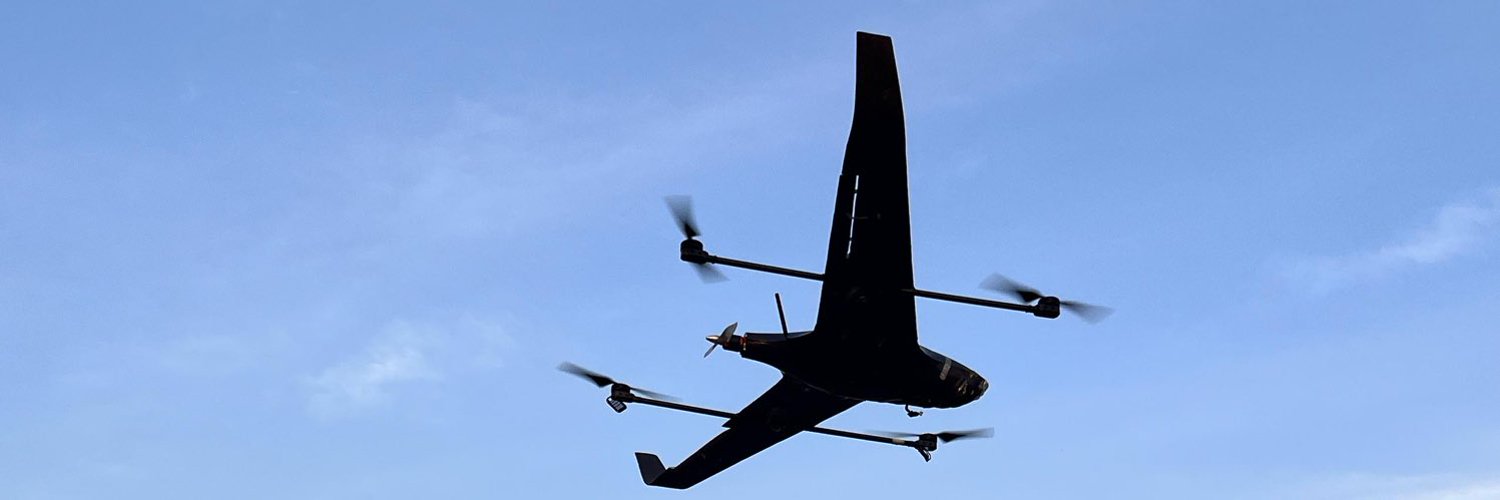

For decades, African countries have relied heavily on external powers to secure their borders.
- African nations have historically depended on foreign technology for border security and defense hardware.
- Terra Industries, founded in 2024, is a West African startup locally designing and manufacturing drones, surveillance towers, and ground vehicles.
- Over 70% of Terra's manufacturing inputs are sourced within Africa, and the company protects $11 billion in infrastructure across eight African countries and Canada.
- The rise of domestic defense manufacturing coincides with growing threats from insurgent groups using inexpensive commercial drones, prompting Terra to develop high-speed interceptor drones.
Foreign drones patrol sovereign boundaries, international surveillance systems monitor urban centers, and imported fighter jets anchor regional air forces. '
This reliance has long cast the continent as a consumer rather than a creator of critical security hardware.
Now, a West African defense startup is working to reverse that dynamic.
Local drone manufacturing
Founded in 2024 by Nathan Nwachuku and Maxwell Maduka, Terra Industries designs and manufactures unmanned aerial vehicles (UAVs), autonomous surveillance towers, and unmanned ground vehicles from its hubs in Abuja and Accra.
![Nathan Nwachuku, 22, and Maxwell Maduka, 24 are founders of the Abuja-based startup Terra Industries. [Bloomberg]](https://ocdn.eu/pulscms/MDA_/9efa2e3d9d1b1940c42d7564af951736.jpg)
Unlike traditional regional tech assemblers that rely entirely on foreign parts, Terra develops its own software, airframes, propellers, and lithium-ion batteries. More than 70% of its manufacturing inputs are sourced locally from Africa.
Currently, the company's autonomous systems protect critical infrastructure valued at roughly $11 billion.
This includes power networks, lithium and gold mines, and oil refineries spanning eight African countries as well as Canada.
To scale its operations, the startup recently secured $34 million in seed funding.
The round was led by high-profile global venture capital firms, including 8VC (co-founded by Palantir’s Joe Lonsdale), Lux Capital, and Valor Equity Partners, which are investors known for backing global defense giants like Anduril and SpaceX.
Terra is also constructing a secondary production hub in Ghana, which aims to become Africa's largest drone manufacturing facility, with an anticipated capacity of 50,000 units annually by 2028.
New drone threats
The emergence of a domestic defense sector comes at a time when the security landscape in the Sahel region is rapidly shifting.
Armed insurgent groups, such as the al-Qaeda-linked Jama'at Nusrat al-Islam wal-Muslimin (JNIM) operating in Mali and Burkina Faso, have increasingly adopted inexpensive commercial drones for battlefield surveillance and offensive strikes.
In response to this evolution in asymmetric warfare, Terra developed the Kama interceptor drone.
Capable of reaching speeds up to 300 km/h, the system is engineered to neutralize hostile drones in areas where conventional, expensive air defense systems are economically or logistically impractical.
DON'T MISS THIS: Despite rising military budgets, Africa is missing out on the $12.3bn defence-tech investment surge
Local drone manufacturing and national sovereignty
While manufacturing high-speed interceptor drones represents a significant leap forward for African aerospace engineering, policy experts caution that domestic production does not automatically equal national sovereignty.
True defense independence requires comprehensive regulatory frameworks, transparent procurement processes, and long-term institutional oversight.
Janice Greaver, director at the Pan African Sustainable, Innovation and Development Associates (PASIDA), expressed concern regarding the sudden rise of private defense capital operating without public oversight. As Greaver noted to Al Jazeera:
"Seventy percent local sourcing means little until we know who controls the intellectual property, who is employed and who is left out. And when private capital arms the state with no visible civil society oversight, we are simply trading one dependency [on foreign suppliers] for another [on unaccountable domestic capital]."
Ultimately, Terra Industries proves that the technical capability to build advanced defense solutions exists within Africa.
However, whether this technological shift translates into genuine strategic sovereignty depends entirely on what happens beyond the factory floor, specifically regarding how African governments choose to regulate, buy, and govern the weapons built within their borders.