CARIBBEAN-OAS launches collaboration with private sector.
PANAMA CITY, Panama, CMC – The Secretary General of the Organization of American States (OAS), Albert Ramdin, has welcomed the […]
 Black News

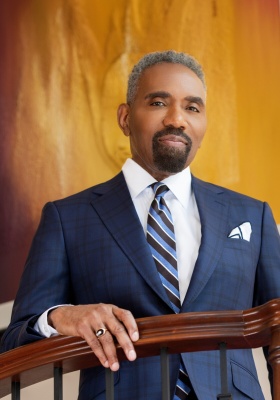
PANAMA CITY, Panama, CMC – The Secretary General of the Organization of American States (OAS), Albert Ramdin, has welcomed the launch of a collaboration platform with the private sector to promote economic growth and social development in the Americas, including the Caribbean.
“This is a structured platform designed to move from dialogue to impact, leveraging the convening power of the OAS and working with governments, the private sector, and social actors across the Americas,” Ramdin said.
“We seek to create a powerful and unique architecture for collaboration among governments, businesses, strategic international partners, investment banks, and commercial banks across the Americas.”
The platform was launched ahead of Monday’s opening of the OAS’s 56th General Assembly and seeks to leverage the region’s strengths as a zone of peace, its strategic geographic position, its human talent and entrepreneurial capacity, as well as its energy wealth, critical resources, and biodiversity.
The event was held under the theme “Toward a Prosperity Agenda: Positioning the Americas for the New Wave of Opportunities,” and included panels on energy and critical resources; artificial intelligence, digital transformation, and skills for the jobs of the future; and trade and investment facilitation.
It also featured a dialogue dedicated to the Panama Canal as a strategic platform for trade, investment, and regional integration.
In his address, Ramdin told the ceremony that he sees significant economic opportunities for Suriname and Guyana, which together could develop into the second-largest oil region in the world. However, according to Ramdin, this development must be accompanied by investments in local companies, good governance, and regional cooperation.
Ramdin said the Western Hemisphere possesses exceptional economic potential thanks to its natural resources, strategic location, biodiversity, and entrepreneurship. He told the audience that Guyana currently produces about 900,000 barrels of oil per day and is expected to reach approximately 1.8 million barrels per day by 2030.
Ramdin said combined with the expected production in Suriname, the region could develop into one of the most important oil-producing areas in the world.
But Ramdin said that natural resources alone are not sufficient for sustainable economic growth and that strong institutions, legal certainty, transparency, and a predictable investment climate are necessary to maintain investor confidence.
“Economic progress arises when governments and the business community jointly invest in stability, good governance, and sustainable development,” he said, adding that the oil and gas sector should not be utilized exclusively for the export of raw materials, but also for the development of regional value chains, local industries, employment, and sustainable investments.
“The future of the Americas depends on how we connect economic growth with democratic governance, security, and sustainable development,” Ramdin said.
Meanwhile, in a statement ahead of the opening of the General Assembly, the OAS Secretariat has sought to reaffirm its full commitment to the principles, purposes, rules, and procedures established in the OAS Charter and the Organization’s institutional framework.
It said that Ramdin was “unanimously” elected on March 10, last year, as the first Caribbean Community (CARICOM) national to hold this position, after previously serving two terms as OAS assistant secretary general.
“Throughout his professional career, Secretary General Ramdin has been recognized for his commitment to dialogue, consensus-building, transparency, and the collective pursuit of peace, democracy, development, and prosperity in the Americas.
” The Secretary General is fully committed to carrying out his responsibilities in accordance with the rules, regulations, and protocols that govern the General Secretariat, and to ensuring the proper and transparent management of the Organization in service of the peoples of the Americas.”
The OAS Secretariat said that the former Suriname foreign minister “takes note of concerns that have been raised publicly in recent weeks and considers it important to address them with the seriousness, transparency, and institutional responsibility they deserve”
The Secretariat said questions regarding financial governance, budget execution, accounting, administrative procedures, and internal controls are governed by established institutional rules and oversight mechanisms.
“Within the General Secretariat, such matters are handled through defined administrative structures, including the Office of the Executive Director, operating under applicable regulations, financial controls, and segregation of duties.
The General Secretariat is also subject to a robust system of oversight and accountability. This includes annual external audits conducted by independent auditors, as well as internal audits and evaluations carried out by the Office of the Inspector General. These mechanisms are designed to assess financial compliance, internal controls, efficiency, and the proper use of the Organization’s resources.”
The General Secretariat recalled that the Office of the Inspector General is the formal institutional mechanism responsible for reviewing and determining cases involving financial irregularities. In the absence of findings by the competent oversight bodies, claims regarding financial governance should not be presented as facts.
It also said that Ramdin “does not unilaterally control the resources of the Organization” and that “the execution of mandates and activities is carried out pursuant to the program-budget approved by the General Assembly, and the General Secretariat reports regularly to the political organs of the Organization, including the Permanent Council and the General Assembly, in accordance with applicable mandates.
Secretary General Ramdin has consistently maintained that any concerns regarding the administration of the General Secretariat should be addressed through the Organization’s established institutional mechanisms. He welcomes any review conducted in accordance with those procedures, so that conclusions may be based on facts, rules, and evidence.
” In that spirit, and in the interest of full transparency, the General Secretariat confirms its full disposition to discuss the terms of a formal, independent review or investigation, should the Member States so decide through the appropriate institutional channels.”