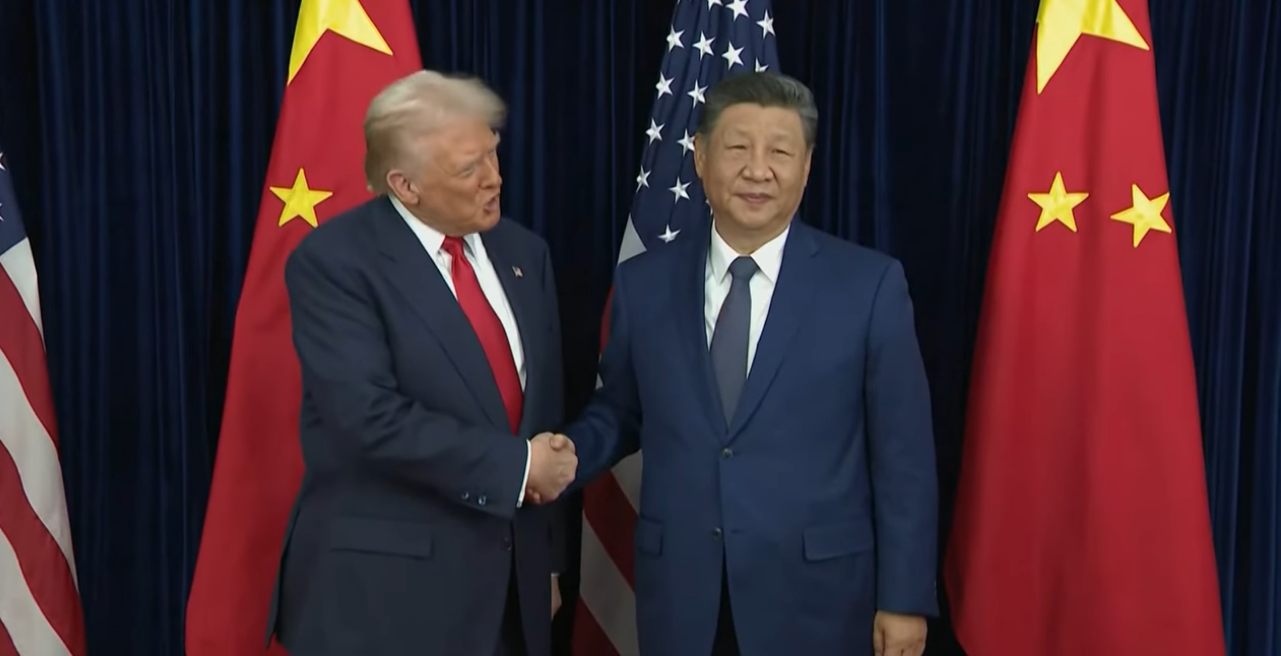
China offers African countries support to tackle spillover from Middle East conflict
Xi Jinping said China is prepared to work with African nations to cushion the economic fallout from the Middle East conflict, following talks with Daniel Chapo in Beijing.
 Black News



Xi Jinping said China is prepared to work with African nations to cushion the economic fallout from the Middle East conflict, following talks with Daniel Chapo in Beijing.
- Xi Jinping stated that China is ready to collaborate with African countries to mitigate economic impacts from the Middle East conflict.
- He emphasised the need for China and Africa to promote peace, development, and a joint push for a ceasefire.
- The conflict in the Middle East is increasing economic risks for Africa, causing concerns over currency weakness, trade deficits, and inflation due to rising oil prices.
- The Democratic Republic of the Congo is particularly vulnerable due to its reliance on imported fuel and exposure to energy price fluctuations.
Xi Jinping said China is prepared to work with African nations to cushion the economic fallout from the Middle East conflict, following talks with Daniel Chapo in Beijing on Tuesday, according to state media.
“The spillover effects of the Middle East conflict are impacting African countries, and China is willing to work with African partners to respond together, promote peace, and advance development,” Xi said.
He also urged China and African countries to jointly push for a ceasefire and called on the international community to embrace what he described as “genuine multilateralism,” Reuters reported.
African countries under pressure
The ongoing conflict has heightened economic risks across Africa, as rising oil prices threaten to weaken currencies, widen trade deficits, and drive inflation higher.
Many African economies remain heavily dependent on imported fuel, meaning global energy shocks quickly feed into higher transport costs, rising food prices, and increased pressure on government finances.
Among major economies, the Democratic Republic of the Congo is expected to face some of the most significant strains. Despite its vast mineral wealth, the country relies heavily on fuel imports, leaving it exposed to higher energy, transportation, and production costs amid limited refining capacity and ongoing currency volatility.
At the same time, Africa is emerging as an increasingly strategic player in global energy and trade logistics. As Iraq and Gulf states accelerate efforts to bypass the Strait of Hormuz following recent disruptions, attention is shifting toward alternative corridors across the continent.
The Red Sea is becoming a critical artery for global energy flows, boosting the strategic importance of countries such as Egypt, Sudan, and Djibouti. Egypt remains pivotal through the Suez Canal, while Djibouti is strengthening its role as a key logistics and transit hub for regional and international trade.