Chinese Platforms: A Conversation with Wilfred Wang and Jian Lin
Jian Lin, Wilfred Yang Wang, and Ping Sun’s Chinese Platforms: A Critical Introduction (Polity Press, 2025) is one of the first English-language books to offer a systematic examination of Chinese digital platforms across technology, geopolitics, business, culture, gender, and labour. For decades, scholarship on Chinese platforms has been shaped by a dichotomy: either viewing them […] The post Chinese Platforms: A Conversation with Wilfred Wang and Jian Lin appeared first on Made in China Journal.
 Black News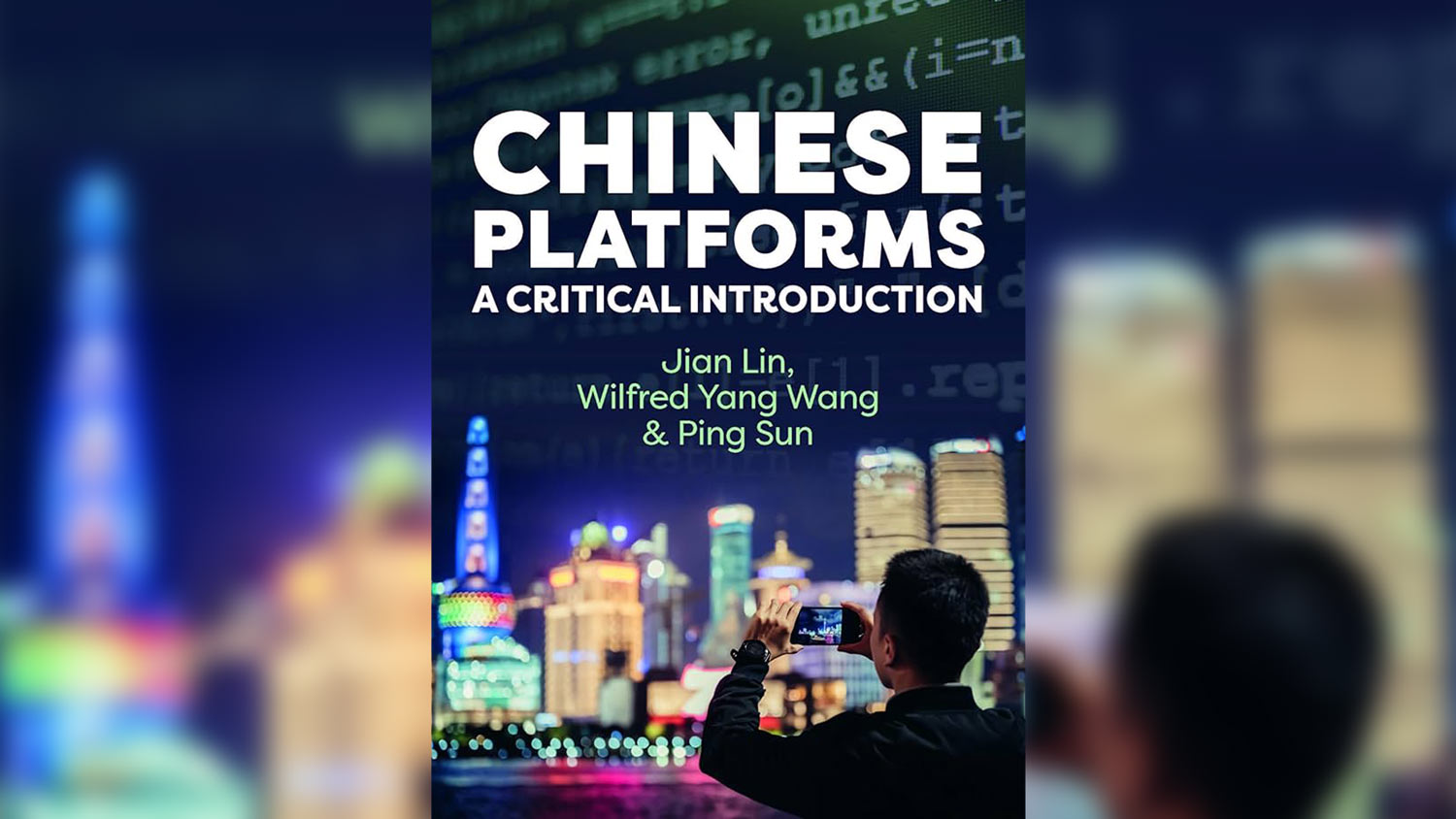
Jian Lin, Wilfred Yang Wang, and Ping Sun’s Chinese Platforms: A Critical Introduction (Polity Press, 2025) is one of the first English-language books to offer a systematic examination of Chinese digital platforms across technology, geopolitics, business, culture, gender, and labour. For decades, scholarship on Chinese platforms has been shaped by a dichotomy: either viewing them as a threat to Western techno-ecologies or imagining them as a utopian alternative to Western infrastructures. For the authors, neither perspective is particularly helpful for understanding the complexity of the field today. The book therefore seeks to establish a new approach—one that is truer to the subject and capable of informing future generations interested in this area.
By adopting a de-Westernised methodology, the book aims to challenge biases in knowledge production within Chinese media studies while keeping the field current. Readers can expect a comprehensive introduction to the structure and dynamics of China’s digital ecology, spanning key areas such as governance, platform economies, and social media culture. The book offers a thorough discussion of the ‘alternative online ecosystem’ shaped by ongoing state intervention and censorship. Building on this, the authors revisit the notion of ‘digital sovereignty’, examining how it is constructed within and beyond China and assessing its broader implications. They argue that this sense of digital sovereignty has been justified domestically through platform nationalism over the past decade, while also serving to shield domestic platforms from global competition and enable a highly lucrative business environment.
From there, the book turns to specific sectors, tracing the rapid growth of e-commerce and the gig economy, including food delivery services, as well as rapidly industrialising areas such as digital games and social media influencer culture. It examines how labour management has become increasingly automated and at what cost, alongside the rising influence and governance of social media and the global expansion of Chinese platforms beyond China. While aligning with broader trends that shape global media culture, digital platforms in China are developing with distinct characteristics, shaped by the country’s own sociopolitical and economic contexts. The book offers a significant yet accessible text that articulates these developments from both insider and outsider perspectives.
Joyce Cheng: This is the first systematic introduction to Chinese platforms in the English-language publishing world in a decade. Why did you choose to structure the book in a textbook style?
Jian Lin: The past decade has seen a surge in the number of publications about the Chinese internet, especially digital platforms and culture. This has to do with the growing geopolitical, cultural, and economic importance of Chinese platforms globally. This book was pitched as a textbook to address the increasing global significance of the Chinese internet and introduce this growing body of literature to the public, but also to clarify and even dismiss some of the existing misunderstandings.
Wilfred Wang: The fact that there is interest in learning about Chinese platforms in a systematic way shows two things. First, it indicates the growing presence of Chinese platforms beyond the People’s Republic of China in recent years. One just has to think about the global popularity of short-video platforms such as TikTok and the wide adoption of WeChat among Chinese diasporic communities. Second, it reminds us of the historical and present modes of internet governance and regulation in China, where the internet is envisioned as both a crucial infrastructure for economic restructuring and social governance and a disruptive media space that has the potential to challenge the dominant ideological order, and thus must be put under strict surveillance and censorship. These two points lead to a broader question: whether the growing presence of Chinese platforms indicates a shift in the way we understand the internet at large and the social, cultural, and political implications of all future technologies.
JC: Can you give an example of your experience with Western-centric norms in academia today? How have they impacted media and platform studies?
WW: I will give you one example. A few years ago, the submission system for a large international internet research conference about decolonialising internet studies required applicants to fill in their surname and given names. One of my Indonesian colleagues did not have a surname—a very common practice in his country. The only way for us to submit our abstract was to repeat his first name in the ‘Surname’ box. It was ironic but hardly surprising. My point here is how our understandings of the internet, even in these matters, have been inherently framed through a Western and US-centric world view. There is a tendency to exaggerate and wrongly believe that such a view is universal, representing the rest of the world, but that is not the case.
A core mission of our book is to try to shift the frame of reference by proposing a different but parallel history of platform media and the internet in general. We are not saying the Chinese platforms’ development is detached from the so-called global US platform ecosystem, nor are we suggesting a new binary between the US and Chinese platforms. Instead, shifting the frame of reference opens opportunities for a localised approach that will allow us to appreciate and accept the fact that there are indeed many platform ecosystems, which are paralleling while continuing to interact and overlap with each other. Understanding the Chinese platform could offer an important step towards multi-polar platform worlds.
JC: Your book reflects significant changes in both the field and the platforms themselves. In this shifting landscape, and in line with your aim to present Chinese platforms in a de-Westernised way rather than through a Silicon Valley lens, what do you see as the most significant developments in the field, and which distinguishing features of the Chinese platform model stand out most clearly today?
WW: The so-called Chinese model is interesting. The distinctions between Chinese and Western platforms underpin the centrality of the nation-state in knowledge of digital media—despite ongoing marketing slogans and the cultural imagination of a borderless and connected world. One of the largest and most obvious changes in the past few years is the re-emergence of the nation-state in defining new platform-based media and digital technologies. Chinese platforms have always been closely associated with the Party-State’s ideological and political power, but we are seeing a similar trend in the United States. This is especially the case since the return of President Donald Trump in 2025, when tech giants actively donated to his inauguration ceremony. Mark Zuckerberg (2025) even explicitly stated that Meta could push back against global censorship with the support of the US Government.
Ironically, TikTok users have alleged that the platform is censoring anti-Trump content following the ownership change to TikTok USDS Joint Venture LLC, a company controlled by a majority of American investors. TikTok US has denied the allegation. Suddenly, Chinese platforms with their close ties to the state no longer looked like outliers. This development is of course regrettable and depressing. We are increasingly seeing that governments around the world are no longer shying away from the race to develop artificial intelligence (AI) and are imposing their ideological values for political purposes. We have much to learn from the history of Chinese platforms to make sense of this global transformation.
JL: The resurgence of the nation-state, or what critics may term platform nationalism, in global digital governance is something we want to highlight. At the same time, it’s crucial that we reiterate in this book the fact that Chinese platforms have a global nature that cannot be defined simply by what is insinuated from the outside. Chinese platforms distinguish themselves from their Silicon Valley counterparts in many aspects, but we don’t want to essentialise any of these differences. They share similar technical infrastructure and logics of commercialisation but differ in state intervention and local political-economic context.
JC: As your book notes, many Chinese platforms have ‘gone abroad’, expanding and becoming widely available globally. Are we at a turning point towards a China-led global technological era?
WW: Outside China, American platforms continue to dominate, but this does not mean Chinese platforms are less relevant. Chinese platforms have made significant inroads into key Western markets such as Australia, Europe, and even the United States, as well as others such as Southeast Asia and Taiwan. The online retail platform Temu, for example, has managed to capture the lower-end market, coexisting with Amazon, which focuses on the premium end of the retail market in the United States. The ride-sharing platform Didi has become the second-most used ride-sharing app in Australia after Uber. Importantly, many drivers operate on both Didi and Uber to maximise their income, showing that, by going abroad, Didi has provided greater diversity rather than aggressive competition in Australia’s ride-share market.
This expansion highlights the need to recognise parallel digital universes—a concept we try to develop in the book. The core idea of this is coexistence, but more concretely, this refers to a hybrid system that is regionally based, with universes connected and shaped by the interplay of geopolitics and the flow of capital and culture. We suspect that creating a parallel universe has been a key strategy for Chinese platforms to deal with these dynamics, especially since the dramatic exit of Huawei from Western markets in the late 2010s.
When categorising the different strategies and business models of Chinese platforms, it is quite interesting to see that the initial ambition of trying to directly challenge Silicon Valley’s dominance has been replaced with a more commercially and ideologically pragmatic approach of pursuing strategic growth in key markets. The approach of RedNote (Xiaohongshu) is probably the most interesting because the company does not even have an overseas office and it offers only a single app version. Yet, its popularity has soared across borders among Chinese-speaking diaspora. While such a model will never allow RedNote to challenge, let alone replace, American platforms, that is precisely the point. It aims simply to find its niche market and user base without being seen as a dominant player.
JC: Public opinion about Chinese platforms in the West remains divided. In debates about WeChat and TikTok, some view these platforms as a progressive force that challenges US tech dominance, while others raise concerns about censorship. It is also interesting to observe how these two camps of critics have responded both to TikTok’s past removal of content critical of the Chinese Government and to the allegations you mentioned above that its new US owners are removing content critical of Trump. How do you respond to these two strands of opinion?
WW: This divergence reflects a shift in knowledge. The dominance of US platforms has shaped our knowledge about platform-based media and the internet. Silicon Valley’s tech giants have tried to present themselves as the leading authorities on internet technologies and the associated cultural imagination. While Chinese platforms have not directly challenged this knowledge regime, they have offered alternatives. The divided views about their growing popularity stem from their creation of alternative digital spheres, different universes that coexist with their American counterparts and other regional digital universes (such as LINES and KakaoTalk). The parallel universes that define this new arrangement refer not only to technologies or services but also to the ethos that guides platform-based media’s development, operation, and cultural manifestations. A prominent example is Elon Musk’s admiration of how WeChat has transformed into a super app that fosters further platformisation of everyday lives and cultural productions. Yet, concerns about content censorship breed distrust and even dissent vis-a-vis this ethos of technological development.
JL: Both celebratory and paranoid discourses about the globalising process of Chinese platforms are inherently flawed. The so-called parallel universe is a direct, natural consequence of China’s techno-nationalist approach to the platform economy: tech giants such as ByteDance, Tencent, and Alibaba follow capitalist logic to operate across borders, yet they are forced to adopt a parallel platformisation strategy to separate their overseas services from Chinese domestic markets given divergent modes of governance and regulation. However, this approach is imbued with contradictions and paradoxes—evident in all the geopolitical disputes and security-related concerns about their international penetration. An interesting case is RedNote, which surprisingly refuses to adopt a parallel strategy. That said, navigating the different and sometimes opposing regulatory systems between China and other countries becomes a major challenge for their further international growth. Overall, what we really need is more critical, contextualised scrutiny of Chinese platforms, their operations, techno-cultural politics, and user practices around the world.
JC: For researchers and observers interested in Chinese platforms, what is one key trend or issue you think we should watch in the coming years?
WW: A key trend will be the rise of parallel digital universes, as previously mentioned. These digital universes have always been there, but again, the inability to recognise and appreciate them is a knowledge gap that has persisted over time. On the one hand, scholarly inquiry should critically reflect on why we have not been paying enough attention to the multipolar platforms over the past two decades. To what extent does the lack of understanding of internet and platform ecologies outside the United States and English-language systems reflect our failure to decolonise media and communication studies in general? On the other hand, there should be greater attention to the plurality of the Chinese platform universe, which is not a monolith. In our book, we try to highlight the many Chinese platforms overlooked by critical scholarly inquiry and public attention, including some that are as popular as WeChat and TikTok.
Another significant example is Trip.com, which can provide a reverse perspective to understand platform governance in China and the broader platform economy. This company has become a dominant force in the global travel booking space through acquisitions (for example, of SkyScanner in 2016) and local partnerships (for example, with TrainPal in the United Kingdom). It has also played an active role in shaping Chinese local governments’ tourism decisions, especially since the Covid-19 pandemic, in advocating for greater uptake of international credit cards among small businesses and in diversifying China’s payment system duopoly of WeChat Pay and AliPay. Yet, such a key player has received little to no scholarly attention in media and communications studies and platform research. Scholars and students in the field should reflect on why such an omission occurred and how the knowledge deficit about such a key platform might have shaped the conventional wisdom on Chinese platforms. I leave these questions for us to reflect on.
JL: We will see a greater presence of Chinese platforms in international society. I’m curious how these Chinese companies will eventually address the contradictions mentioned earlier. The parallel platformisation from China seems like an expedient move. In the current time of turmoil, their international expansion is often characterised by a pragmatic vision of globalisation. It will be interesting to see how such pragmatism may generate tech innovations and how these new applications will challenge, disrupt, or simply replicate Silicon Valley and its ‘Californian Ideology’.
References
Zuckerberg, Mark. Instagram reel, 7 January. www.instagram.com/reel/DEhf2uTJUs0.
The post Chinese Platforms: A Conversation with Wilfred Wang and Jian Lin appeared first on Made in China Journal.