As Wildfire Smoke Chokes the Northeast Again, Black Communities Are at Risk
The skies over New York City turned a hazy orange and grey again this week. Reminiscent of when the skies turned a deep orange in 2023 — and then again in 2024 — this reality is quickly becoming a normal summer occurrence. More than 850 wildfires are actively burning across Canada, with more than 180 […] The post As Wildfire Smoke Chokes the Northeast Again, Black Communities Are at Risk appeared first on Capital B News.
 Black News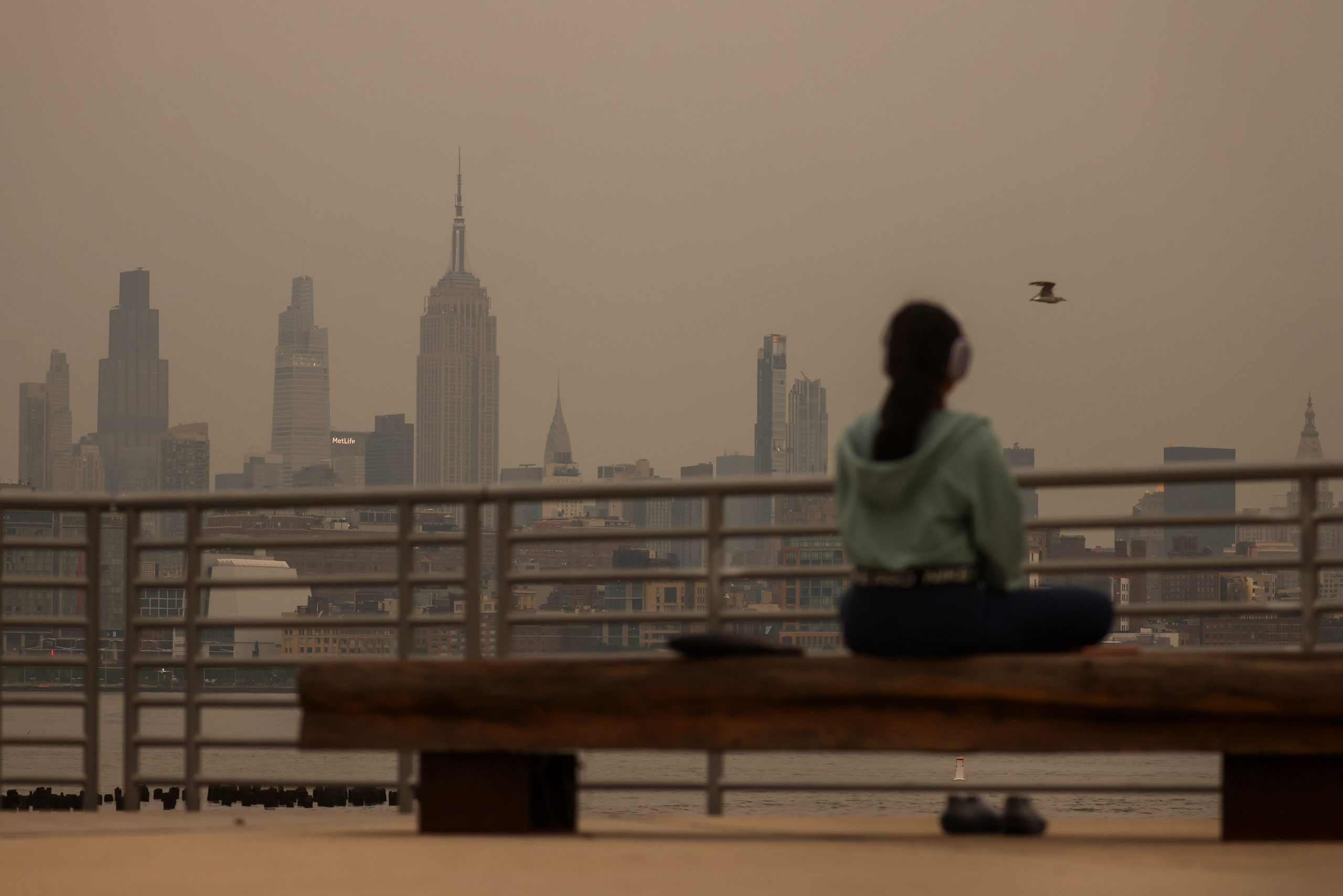

The skies over New York City turned a hazy orange and grey again this week.
Reminiscent of when the skies turned a deep orange in 2023 — and then again in 2024 — this reality is quickly becoming a normal summer occurrence.
More than 850 wildfires are actively burning across Canada, with more than 180 concentrated in Ontario. The blazes are sending thick plumes of smoke hundreds of miles south and blanketing the Midwest and Northeast in dangerous, hazy air.
On Wednesday, New York City ranked among the most polluted cities in the world. By Thursday, Gov. Kathy Hochul expanded a statewide Air Quality Health Advisory, warning that levels across New York City, Long Island, and Western New York could begin to cause adverse health effects on people. The most intense smoke is forecast to push as far south as Washington, D.C.
More than 100 million people across the region are now under air quality alerts. State officials are urging residents to stay inside, seal their windows, and dig out whatever N95 masks they still have from the last crisis.
For Black communities across the Midwest and Northeast, the scene is familiar. Black communities already shoulder a disproportionate burden of air pollution, asthma, and respiratory disease, which makes these smoke events land even harder. Some of the worst hit places so far include Chicago, Cleveland, Detroit, and Milwaukee.
A recent study found that Black adults and those living in higher-poverty census tracts faced the strongest mortality effects from cumulative wildfire smoke exposure. Wildfire smoke, researchers at Stanford University have noted, is “10 times as toxic” as typical air pollution.
Studies have also shown that oftentimes during high pollution days, the air inside a building can actually be worse than outside, especially in Black and low-income communities where homes are older.
The Trump administration, which has moved to gut Biden-era pollution limits and eliminated the Environmental Protection Agency’s Office of Environmental Justice entirely, has stripped away much of the infrastructure that existed to protect the communities most at risk. So the public health infrastructure to protect the most vulnerable — air filter distributions, community shelter-in-place plans, and food access during these events — remains thin.
These issues were already pressing in 2023, when a prior wave of Canadian wildfire smoke sent New Yorkers to emergency rooms with asthma flare-ups at the highest rates in high-poverty Black and Latino neighborhoods.
Below you’ll find an interview from then with Vickie Mays, a professor at the University of California, Los Angeles whose research focuses on the mental and physical health disparities affecting racial minorities. Capital B caught up with her in 2023 to understand how the visually apocalyptic nature of the recent wildfires, coupled with disruptions in day-to-day life, threaten to create unseen health struggles — and how you can better prepare.
Capital B: Are there specific ways smoke and pollution are affecting people’s mental and physical health?
Vickie Mays: It really depends. Like, for example, if you were talking to someone who is in Northern California, and they’ve experienced a wildfire before, it could trigger and bring back those experiences. So, you know, people have relatives and loved ones experiencing this as well.
It has left us in a situation again where people have to worry about their health. So people were talking about having to get masks again. And so it’s kind of like, “Oh, we had these masks, during COVID, now we have these masks again.” It has made people down and out again. We’re being told don’t go outside, be careful what you’re breathing, so it’s reminiscent of 2020. And remember, because we don’t know which way the wind is, how long these fires are burning, so for many people, it has turned into “how long am I going to be up in his house again?”
How do these particular stressors impact Black Americans?
We have to look across the generations, because I think it will have different meanings for different people. For some people it will be if you have asthma, and the deep trauma of having an asthma attack triggered because of this air pollution; the emergency room visits. And we know Black folks, because of health disparities, have a high rate of asthma, so that is a totally different and unique worry. You may have the elderly worrying about being out and about, and then being forced to be inside, the worry about mental and physical decline there.
In the Black community, we have to recognize that climate makes health disparities. So we can see this and say, wildfires are a big problem for us. So now we got to worry, and are we prepared? Are we going to be ensuring that those people who need a new mask have gotten them? Is it going to make us want to start addressing the climate disparities because it just reminds us of who’s the most vulnerable?
But there were, I’d bet, a lot of people in the Black community who are also thinking about the economic challenges of this. They can’t go out to work, doing more working-class jobs like construction. There is a lot to consider.
When we’re talking about the different ways that this disrupts daily life, whether it be someone’s job or health, are there mitigation efforts?
[The U.S. doesn’t] have plans. Now, we know that we weren’t prepared for this first bout of smoke. I didn’t see a public health system in place; direct calls to shelter in place, public places for people to escape the smoke, HEPA filter distributions. So that worries me that mitigation efforts for people to respond to this are not in place.
There needs to be systems in place. We can do things like help bring people groceries, distributing masks, and filters. I just don’t think that this is the last time we’re going to have this situation happen. We should have learned a lot from this and from COVID. I’m most fearful of food scarcity during disasters like this, which is one of the most significant outcomes we saw for the Black population during COVID.
You outlined the gaps that have been left open at the local, state, and federal level. What are the different ways that folks in their communities can prepare for these kinds of events?
You need to be able to respond and take care of yourself, because you don’t know exactly when help is going to come. So I would say that the city of Los Angeles, for example, has neighborhood councils. So we need to think about lowering the level of these responses, and helping people to think about, “OK, if I am in a neighborhood, I know exactly where to go in times of disaster.”
We need to know who needs food on an ongoing basis in our community, who is willing and able to check on certain people, and volunteer to do certain things.
So for example, if I own a business in the neighborhood and I’m considered part of the neighborhood response, that I can have, you know, instead of trying to do x, I can have 50 people coming in my store and making sure that there’s fresh air for them. Or, you know, making sure that if I’m a grocer, I see that there’s five neighborhood kids who will deliver on a bicycle. And we’ve identified who those households are, in which they might need to get groceries delivered to them. But that’s planning at a neighborhood level. And I think that we have to stop depending upon the state and the county. And we have to start realizing that we need to survey what we have in our neighborhoods, and figure out who can volunteer to do what, where are places we can go, and who has the capacity to provide resources.
About the mental health part, we need to be able to identify those areas and people who want to be trained in psychology and some level of psychological intervention. They could be the organizer of rituals, and the opportunity to invite people together for stress reduction, offering a sense of neighborhood cohesiveness. Those are the kinds of things that actually bring people together, and some of these are the lasting relationships that make the next incident feel less challenging.
Read More:
This story has been updated.
The post As Wildfire Smoke Chokes the Northeast Again, Black Communities Are at Risk appeared first on Capital B News.