Congo’s health crisis begins to threaten its mineral trade with the US as its rivalry with China heats up
According to those familiar with the Ebola situation in the Democratic Republic of Congo (DRC), the disease’s spread is beginning to have an impact on foreign investments, including in the minerals sector.
 Black News

According to those familiar with the Ebola situation in the Democratic Republic of Congo (DRC), the disease’s spread is beginning to have an impact on foreign investments, including in the minerals sector.
- The Ebola outbreak in the Democratic Republic of Congo (DRC) is disrupting foreign investment, especially in the minerals sector, due to travel restrictions and health concerns.
- Meetings and visits involving mining projects and international investors have been delayed or relocated, hindering planned discussions and investments.
- The World Health Organization has secured less than half the needed funds to fight the outbreak, which lacks approved treatments or vaccines, increasing reliance on field interventions.
- The DRC is strategically important in global mining, being a top producer of cobalt and copper, and holding significant reserves of lithium, germanium, and tantalum.
Discussions about a vital minerals cooperation between the DRC and the United States are being disrupted by travel restrictions and health concerns.
Attending meetings related to mining projects has become challenging for government officials, investors, and business delegations due to the outbreak's impact on travel into and out of the Central African country.
Several visits have been delayed because of quarantine regulations and worries about the virus's spread, a diplomat and consultants advising on U.S. investments told Reuters.
According to Congolese official data, the Ebola outbreak, which began in mid-May, has infected over 1,000 individuals and killed more than 750.
The US Embassy in Kinshasa recently recommended American citizens not to travel to the Democratic Republic of the Congo, saying that anybody infected with the virus might face a 21-day quarantine at their expense.
Very recently, the World Health Organization (WHO) announced that it has secured less than half of the required funding to combat the spreading Ebola outbreak in the eastern region of the Democratic Republic of Congo (DRC).
The global health organization has only received 40% of its $115 million emergency appeal to combat the spread of the Bundibugyo strain of the virus.
This particular virus strain presently lacks any formally authorized therapies or prophylactic immunizations, putting containment efforts heavily reliant on intense field activities.
A US State Department official stated that protecting American people remains Washington's top concern, but that attempts to strengthen economic collaboration with the DRC are ongoing, as seen on Reuters.
The agency noted continued work on the Lobito Corridor infrastructure project and the Congolese government's desire to attract US investment.
The aforementioned publication also reported that some talks have been moved to European cities such as London, Paris, and Brussels, while others have been postponed until travel situations improve, stalling progress on scheduled investment conversations.
The DRC holds a key role in the world's mining sector. In addition to having significant quantities of lithium, germanium, and tantalum, minerals that are becoming more and more crucial for electric cars, renewable energy technologies, and sophisticated manufacturing, it is the world's top producer of cobalt and the second-largest supplier of copper.
As rivalry for access to these vital resources heats up, both China and the United States have increased their attempts to fortify their alliances with Kinshasa.
China and the US
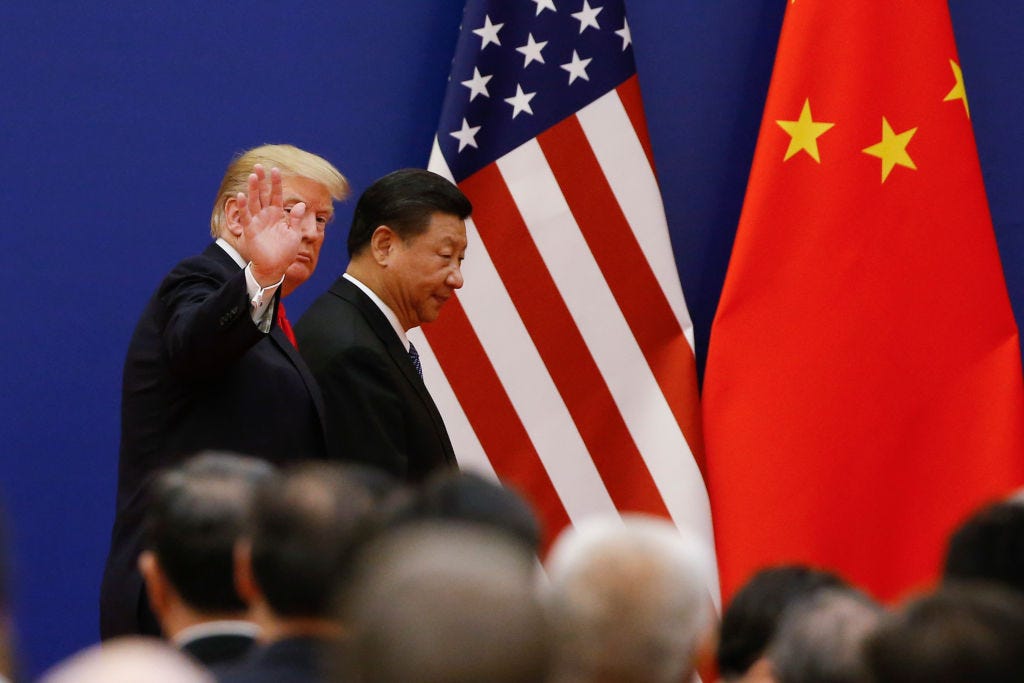
The Democratic Republic of the Congo (DRC) has emerged as one of the world's most strategically vital countries in the fight for crucial resources, putting it at the heart of a heightened geopolitical confrontation between the United States and China.
China has spent more than two decades strengthening its presence in the DRC's mining industry with large investments from businesses such as CMOC, Zijin Mining, and China Nonferrous Metal Mining Group.
As a result, Chinese companies now own or have major shares in many of the country's top copper and cobalt mines, bolstering Beijing's position in global essential mineral supply chains.
The International Energy Agency observes that China continues to be the world's major processor of numerous important minerals, including cobalt, while the United States Geological Survey credits Chinese investment for much of the DRC's fast development in cobalt output since the mid-2000s.
In response, Washington has increased attempts to diversify its supply chains and minimize its reliance on China.
The United States has supported the development of the Lobito Corridor, a strategic transportation network that connects the mineral-rich regions of the Democratic Republic of the Congo and Zambia to Angola's Atlantic coast, and has strengthened cooperation with Kinshasa through a strategic partnership focused on critical minerals, infrastructure, and governance.
According to analysts, the struggle goes beyond access to raw resources, as control over crucial mineral supply chains is increasingly seen as critical to renewable energy production, national security, and future technical leadership.