Could Healthcare Save AI?
It was meant to replace humans. But its success may depend on something only humans can produce It’s often said that AI can see more, predict earlier, and diagnose with greater accuracy. In that framing, the role of the human can begin to feel secondary—part of a broader narrative that imagines technology gradually taking the […] The post Could Healthcare Save AI? appeared first on Time Africa.
 Black News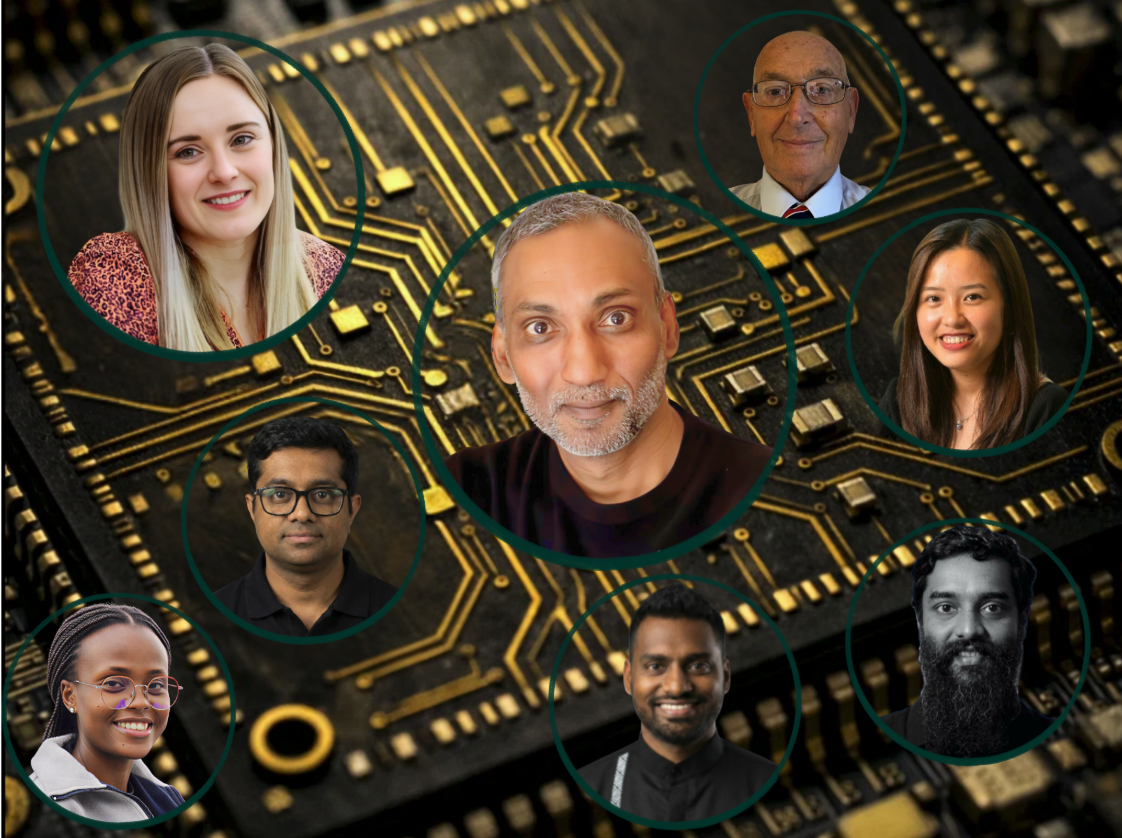


It was meant to replace humans. But its success may depend on something only humans can produce
It’s often said that AI can see more, predict earlier, and diagnose with greater accuracy. In that framing, the role of the human can begin to feel secondary—part of a broader narrative that imagines technology gradually taking the lead. It is such a compelling story that the world is forecast to spend $2.52 trillion on AI in 2026.¹
But a more plausible, and more interesting shift in healthcare may not be the replacement of clinicians, as Bill Gates and Elon Musk have each suggested in different ways.² AI may instead prove most useful in drawing together what doctors, nurses, managers, inspectors, and many others across the system learn through experience and daily practice. It could help spread what they have learnt about how to keep patients safe.
The cost of knowledge staying trapped can be measured. Between 2011 and September 2023, 816 care homes in England disappeared from the country’s care system. They were closed by regulators over serious safety risks or failures to meet standards.³ In the process, 19,918 registered beds were lost.⁴
But before each closure, someone, somewhere knew a way it could have been prevented. The knowledge existed. But healthcare may not always share that knowledge well.
The Experiment
There is a straightforward idea behind a platform called OpenDoc, by Health Connect Global, to solve the problem. They say that AI is only as useful as the living human expertise it can organise and learn from. Without that, it drifts toward the generic.
The infrastructure of care is simple to understand. Every care facility is run on policies and procedures. This is in essence the rulebook that defines how care is delivered to patients. When it fails, people suffer.
OpenDoc is where people across care can work with experts to improve the rulebook. This could improve care for patients anywhere because they can benefit from the collective experience and knowledge of professionals everywhere.
The platform did not begin with a traditional launch event or funding round. The first thing founder, Dr Devan Moodley, did was to chronicle the build on social media as a docu-series before anyone knew whether it would work. The failures went up alongside the progress. The wrong turns were visible and so was the exhaustion of his team. They even called their first prototype ‘ugly’. He posted it anyway. Was this clever marketing? Extraordinary confidence? A belief that honesty in public was the thing worth offering? Or his conviction that enough people in healthcare cared enough to step up?
Pooled knowledge is not a new concept. Wikipedia has done it because the knowledge is encyclopaedic and the stakes of being wrong are low. This isn’t the case for healthcare. And the roles in healthcare complicate the picture. A regulator’s job is to inspect, not co-author. A manager’s job is to survive the inspection, not to befriend the inspector. A consultant charges by the hour for the knowledge they have spent a career accumulating. And there is the desire to maintain competitive advantage. It is easy to understand why professionals from across the spectrum do not naturally build together.⁵ The current system was not designed for this. In some ways it was designed against it. Moodley says “The tragedy is not always ignorance. It is stranded knowledge.” But something unexpected happened.
Experts started showing up.
CEOs. Regulators. NHS leaders. Doctors. Nurses. Social Workers. Registered managers who had rebuilt broken services from the inside. Consultants who had spent careers turning failure into something others could learn from. It would seem they recognised something being built in the open that deserved their input.
Professor Craig Harris. (NHS), Mark Topps (social care leader) Tina Welford, (a former regulator); Lyndsey Lloyd, (nurse manager who achieved three Outstanding ratings) and the list kept growing.
The Expert Community
They come from all corners of care. The community is substantial and growing. That breadth of expertise does not prove the platform works. It suggests something rarer: the formation of a credible community, turning expertise into a shared resource.
In healthcare, roles have a fixed choreography. They meet through hierarchy, scrutiny, and transaction, then return to their separate parts of the system. But on OpenDoc, Harris, Topps, Lloyd and Welford are all publicly editing the same document. Every comment, every edit, every debate is visible. This approach could be seen as somewhat unconventional. Each person editing the document is operating with less privacy than would typically be expected.
The community is made up of people choosing to put their judgment to work. This is a sector full of commentary but these are the ones who decided that healthcare’s best knowledge should not be held captive. They chose to do something about it. Now. In public. For patients they will never meet and in services they may never see.
The variety and experience of the experts building this make it hard to ignore.
Right of Way
Healthcare’s greatest inequity has been knowledge. The knowledge of how to run a safe institution has been fragmented and sold. There is a growing community saying it does not have to be this way. One element of OpenDoc appears to have been less emphasized in broader discussions.
OpenDoc is free to access.
Intelligence developed inside one of the world’s most heavily regulated, most scrutinised healthcare systems is available to anyone who needs it.⁷
In much of Africa, AI remains more promise than reality. It runs into erratic power grids, punishing data costs, and token credits that assume a Silicon Valley expense account. Connectivity stops at the last mile exactly where the need begins.⁶ OpenDoc offers to deliver that shared knowledge in a form that doesn’t require expensive infrastructure.
But there are reasons to be sceptical.
However credible the people behind it, OpenDoc is still early and not yet tested at scale. Perhaps the relevant question is not whether it has already transformed care, but whether it deserves to be taken seriously as infrastructure in the making to do so.
The second criticism is more fundamental. Better policy co-authored in the cloud is not the same as better care on the ground. A rulebook can be perfect but the ward can still be unsafe since knowledge shared is not the same as knowledge used.
And a community matters only if it keeps building.
One notable aspect of this is if the same network of experts were AI agents autonomous, scalable, tireless, designed by big tech, this could be one of the most talked about developments in technology right now. But they are not agents. They are people with jobs and patients and very little time. People who showed up anyway.
Is this the limitation, or the whole point?
And yet.
Somewhere tonight, a decision will be made at a bedside. A nurse. A newborn. A moment where what someone knows or doesn’t know will determine what happens next. That knowledge exists somewhere in the world. It has been learned by someone who survived the same moment at a different bedside. It has never reliably travelled.
That is the oldest failure in healthcare.
If this experiment holds and if the community keeps building then the most powerful intelligence in healthcare may turn out not to be generative AI at all. It may be the collective knowledge that finally learns to travel.
Whether or not OpenDoc succeeds, the question it brings forward may continue to be part of the conversation.
Does the person at this bedside know what someone else already learned?
Does the knowledge reach the child in time?
Footnotes
¹ Gartner, Inc. “Gartner Says Worldwide AI Spending Will Total $2.5 Trillion in 2026.” Gartner Newsroom, 15 Jan. 2026.
² Bill Gates, interview on The Tonight Show Starring Jimmy Fallon, discussed in People, 27 Mar. 2025; Elon Musk, Moonshots with Peter Diamandis, episode 220, summarized in Windows Central, 12 Jan. 2026.
³ Bach-Mortensen, Anders, Benjamin Goodair, and Michelle Degli Esposti. “Involuntary closures of for-profit care homes in England by the Care Quality Commission.” The Lancet Healthy Longevity, vol. 5, no. 4, Apr. 2024, pp. e297–e302.
⁴ Bach-Mortensen, Anders, Benjamin Goodair, and Michelle Degli Esposti. “Involuntary closures of for-profit care homes in England by the Care Quality Commission.” The Lancet Healthy Longevity, vol. 5, no. 4, Apr. 2024, pp. e297–e302.
⁵ Dib, Kaoutar, and Zakaria Belrhiti. “Unpacking the Black Box of Interprofessional Collaboration within Healthcare Networks: A Scoping Review.” BMJ Open, vol. 15, no. 6, June 2025, p. e101702. Anderson, Janet E., et al. “Come Together, Work Together, Achieve Together: Tensions in Leading Intersectoral Partnerships.” International Journal of Integrated Care, vol. 25, no. 1, Apr. 2025, p. 17. Zipfel, Nina, et al. “Exploring Motivations, Barriers and Solutions for Interdisciplinary Practice in Work-Focused Healthcare.” BMJ Open, vol. 16, no. 3, Mar. 2026, p. e103881.
⁶ Bataliack, S., et al. Health Data Digitalization in Africa. WHO Regional Office for Africa, 2024; The State of AI in Africa Report, CIPIT, 2025; Reuters, “World Bank backs Africa digital data push with $100 million Raxio deal,” 3 Apr. 2025.
⁷ OECD. OECD Reviews of Health Care Quality: United Kingdom 2016: Raising Standards. OECD Publishing, 2016. See also: Review into the operational effectiveness of the Care Quality Commission, UK Government interim report, 15 Oct. 2024.
⁸ Care Quality Commission. State of Care 2023/24. CQC, October 2024. Outstanding ratings represent approximately 4% of all adult social care providers in England.
Disclosure: The author has no financial, professional or personal affiliation with Health Connect Global, OpenDoc or any of the individuals or organisations mentioned in this article beyond the interviews conducted for reporting purposes.
This article is for informational purposes only and does not substitute for professional medical advice. If you are seeking medical advice, diagnosis or treatment, please consult a medical professional or healthcare provider.
TIME Africa’s editorial team were not involved in the creation of this content.
The post Could Healthcare Save AI? appeared first on Time Africa.