Days after Ghana setback, Ramaphosa turns to France to strengthen trade and diplomatic ties
President Cyril Ramaphosa is courting French investors and strengthening ties with President Emmanuel Macron, days after anti-migrant unrest at home disrupted South Africa’s diplomatic engagement with one of its key African partners.
 Black News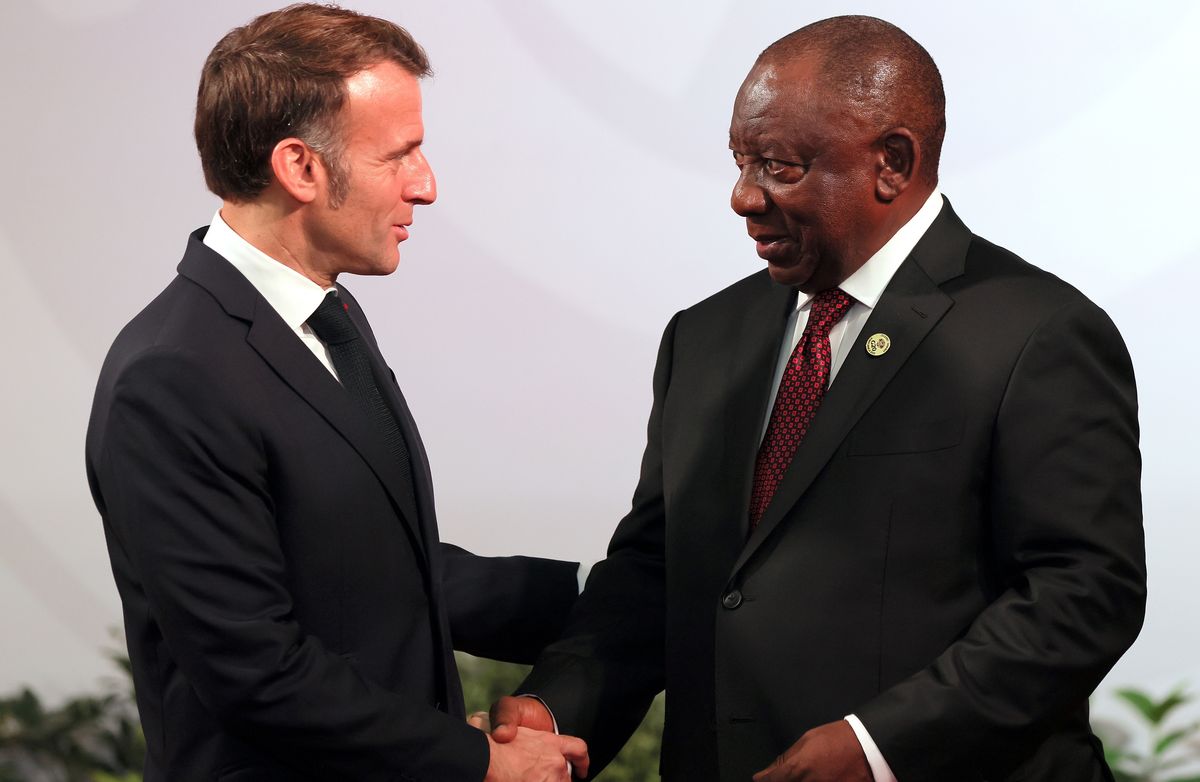
![South African President Cyril Ramaphosa is meeting French President Emmanuel Macron during a three-day official visit to France. [Daily Maverick]](https://ocdn.eu/pulscms/MDA_/581ad25bcfddaead56c4b3d609a70ed7.jpg)
President Cyril Ramaphosa is courting French investors and strengthening ties with President Emmanuel Macron, days after anti-migrant unrest at home disrupted South Africa’s diplomatic engagement with one of its key African partners.
- President Cyril Ramaphosa is visiting France for talks with Emmanuel Macron, UNESCO engagements and meetings with French business leaders.
- The trip comes days after Ghana deferred high-level talks with South Africa because anti-migrant unrest risked overshadowing the meeting.
- France has nearly 370 companies operating in South Africa, employing more than 65,000 people across manufacturing, finance and other industries.
- Ramaphosa’s visit gives Pretoria an opportunity to attract investment while defending South Africa’s international standing.
Ramaphosa arrived in France on Friday for a three-day official visit that includes talks with Macron, meetings with French business leaders and high-level education engagements at UNESCO.
The visit comes at a delicate moment for Pretoria’s foreign relations. Ghana postponed a meeting of the South Africa-Ghana Bi-National Commission that was expected to be co-chaired by Ramaphosa and Ghanaian President John Mahama in August.
Ghanaian officials said the recent anti-migrant unrest in South Africa would probably have overshadowed the talks and that it would be better for the leaders to meet after tensions had subsided.
DON'T MISS THIS: Ghana says xenophobia made it reject South Africa's president's visit; Pretoria disagrees
South Africa said both countries would continue consultations to agree on a new date. However, the postponement showed how domestic unrest is beginning to complicate Pretoria’s relations with other African governments.
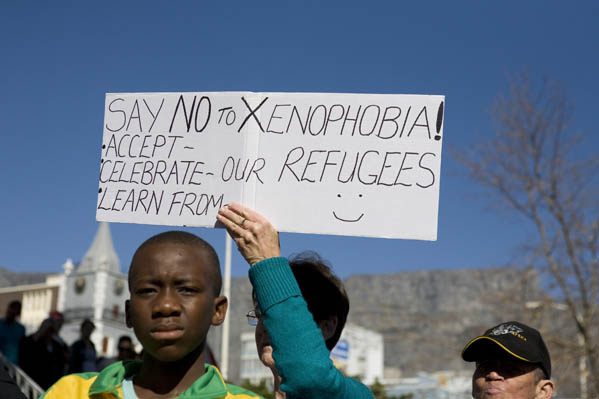
Ghana had already repatriated hundreds of citizens ahead of a June 30 deadline issued by a South African anti-migrant movement for undocumented foreigners to leave the country.
Nigeria, Malawi and Mozambique have also raised concerns about the treatment of their citizens as protests spread across South African cities.
![Ramaphosa’s visit includes talks with French business leaders as South Africa seeks additional investment in energy, infrastructure and manufacturing.. [Photo by Leon Sadiki/Bloomberg via Getty Images]](https://ocdn.eu/pulscms/MDA_/4ba3edb629aa487d86d1f502090f3a81.png)
Ramaphosa has condemned attacks on foreign nationals and warned that immigration laws must be enforced by the state rather than vigilante groups. His government also deployed 3,405 soldiers to support the police during the demonstrations, at an estimated cost of $3.37 million (R54.6 million).
Against that backdrop, the France visit gives Ramaphosa an opportunity to project South Africa as a stable investment destination and dependable international partner.
France is a major investor in South Africa
Ramaphosa is scheduled to meet French business leaders on Saturday as Pretoria seeks investment to support economic growth, infrastructure development and job creation.
France is one of South Africa’s important European economic partners.
DON'T MISS THIS: France commits €300 million to ease South Africa’s freight and port challenges
Almost 370 French companies operate in South Africa and employ more than 65,000 people, according to the French government. Their investments span manufacturing, chemicals, pharmaceuticals, construction, finance, energy and transport.
Trade between the two countries stood at €3.2 billion in 2024, although the figure was 1.1% lower than the previous year.
French companies including TotalEnergies, Alstom, Schneider Electric, Sanofi and major financial institutions have established operations or commercial interests in South Africa.
The relationship has become particularly important as South Africa tries to attract capital into renewable energy, electricity infrastructure, rail, industrial production and other sectors affected by years of weak investment.
The business meeting could therefore prove more consequential than the ceremonial elements of Ramaphosa’s programme, particularly if it produces new investment commitments or progress on existing projects.
Ramaphosa and Macron deepen political ties
Ramaphosa will hold talks with Macron and attend a dinner hosted by the French president on Friday.
The two governments cooperate on trade, investment, energy, defence, health, higher education, science and technology.
They have also worked together on climate finance and proposals to reform the global financial system so developing countries can access funding on less punitive terms.
The talks come as France tries to rebuild its relationships across Africa following political and military setbacks in several of its former colonies.
South Africa offers Paris a different type of partnership: a major industrial economy, a member of the G20 and BRICS, and one of Africa’s most influential diplomatic actors.
For Pretoria, closer engagement with France helps maintain access to European capital and technology while South Africa continues to balance its relationships with Western countries, China and Russia.
DON'T MISS THIS:Nigeria’s top airline tycoon calls for economic pressure on South Africa amid xenophobic unrest
Education diplomacy at UNESCO
Ramaphosa’s programme began at UNESCO headquarters in Paris, where he was invited to co-chair a meeting of the High-Level Steering Committee on Sustainable Development Goal 4, which covers access to quality education.
The meeting is expected to set priorities for the global education agenda for 2026 and 2027, including teacher development, foundational learning, digital transformation and education financing.
Ramaphosa will also participate in a review of progress since the 2022 Transforming Education Summit.
The engagements allow South Africa to position itself as a leader in global education policy at a time when its own school system continues to face problems including unequal access, poor infrastructure and weak learning outcomes.
Ramaphosa will conclude the trip on Sunday at the South African National Memorial in Longueval, where he will attend the 110th commemoration of the Battle of Delville Wood.
The ceremony will honour South African soldiers who fought in the July 1916 battle during the First World War and include the unveiling of a UNESCO plaque.
But the immediate significance of the visit lies beyond its education and commemorative programme.
Ramaphosa is meeting one of South Africa’s most important European partners while Pretoria faces growing scrutiny from African governments over attacks on their nationals.
His challenge in France will be to secure stronger investment and diplomatic cooperation without allowing the unrest at home to further damage South Africa’s claim to continental leadership.