Druski’s Viral Sketch Has Reignited the Black Diaspora Debate
Renowned influencer, actor, and comedian Druski dropped his latest sketch and within 24 hours it had already garnered more than 20 million views. The viral video is a satirical takedown of British actors taking on Black American roles in Hollywood. In the sketch, Druski plays an enslaved American man working in a cotton field in… The post Druski’s Viral Sketch Has Reignited the Black Diaspora Debate appeared first on Black Girl Nerds.
 Black News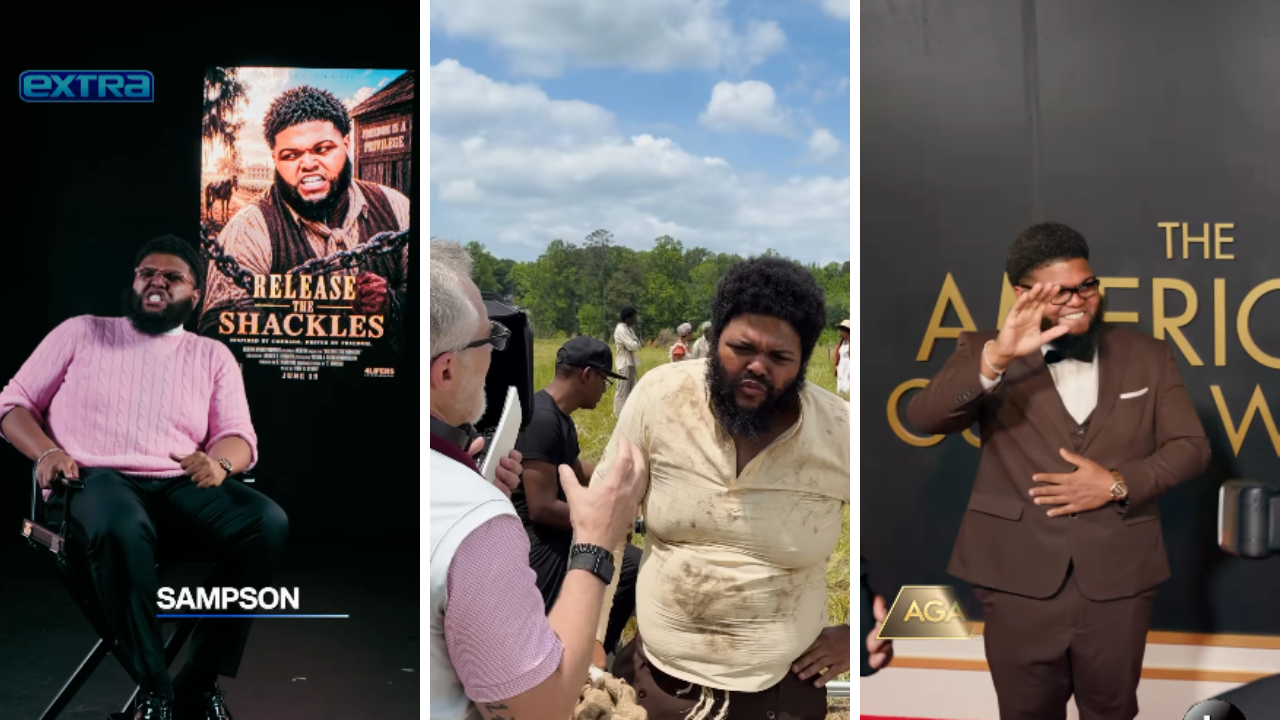
Renowned influencer, actor, and comedian Druski dropped his latest sketch and within 24 hours it had already garnered more than 20 million views. The viral video is a satirical takedown of British actors taking on Black American roles in Hollywood.
In the sketch, Druski plays an enslaved American man working in a cotton field in a fictional film titled Release the Shackles. But the moment the director yells “cut,” we we hear Sampson Dubois (Druski), suddenly switch into a polished English accent. The director then encourages him to sound “more American,”.
The sketch escalates into mockumentary territory with a fake Extra-style interview where Dubois discusses how “oppressed” he felt portraying an American slave. Later, he appears at a fictional “American Guild Awards” red carpet where he once again discusses struggling to maintain the dialect while balancing his Manchester accent. The irony is present here as this British man is at an event celebrating American excellence.
As fans dissected the sketch online, speculation immediately swirled over which British actors Druski could be parodying. Was it Idris Elba? Or perhaps more directly, Chiwetel Ejiofor, whose acclaimed performance in 12 Years a Slave remains one of the most notable portrayals of an enslaved American by a British actor?
What felt especially on the nose was Druski’s “Concrete Jungle” sketch, which many viewers believed visually mirrored scenes from FX’s Snowfall almost shot-for-shot. From the lighting to the cadence to the emotional intensity Druski gave in his scene, fans online quickly drew comparisons between Druski’s performance and Damson Idris portrayal of Franklin Saint. Social media users even resurfaced old interviews and clips of Idris discussing dialect work, fueling the discourse even further.
But beneath the jokes is a much deeper conversation about Black British actors, Black American actors, and the complicated tensions that continue to emerge throughout the diaspora. The “Black diaspora wars,” as social media often jokingly labels them, have clearly reignited once again. Yet this conversation is far from new.
It predates the famous Key & Peele sketch that tackled nearly identical themes. It predates Samuel L. Jackson comments in 2017 questioning whether Black British actors fully understood the cultural nuances of Black experiences. It goes as far back to Robert Townsend’s 1987 satire Hollywood Shuffle.
One of the film’s most memorable segments, “Black Acting School,” mocked the limited and stereotypical roles Hollywood routinely offered Black performers. In the scene, aspiring actors are literally trained in “Jive Talk 101” and coached on how to convincingly portray slaves, pimps, gang members, and street hustlers. It was comedy, yes, but it was also an indictment of an industry that historically reduced Black American identity to exaggerated caricature.
And perhaps that is where the real wound exists.
Because this debate is not simply about British actors “taking jobs.” It is about who gets to embody Black American pain, history, and culture onscreen, particularly when Hollywood has spent decades flattening those experiences into stereotypes. For some Black American actors and audiences, there is frustration that historically specific American stories are not always entrusted to performers who come directly from those lived experiences.
At the same time, the hostility that sometimes emerges from these conversations can feel uniquely divisive within the Black diaspora itself. The pitting against one another often ignores the reality that Black performers globally have all had to navigate industries shaped by exclusion and limited opportunity.
There is also nuance in how audiences receive certain performances. Few people questioned Letitia Wright leading the Black Panther franchise because Wakanda itself exists outside the framework of Black America specifically. Likewise, Wunmi Mosaku’s performance in Sinners resonated deeply with audiences because her portrayal of Annie felt emotionally authentic and fully realized.
That is why this discussion cannot be reduced to “us versus them.” The issue is more layered than social media discourse often allows. It involves representation, access, cultural specificity, performance, globalization, and the lingering impact of how Hollywood has historically commodified Blackness itself.
And maybe that is why these conversations continue to resurface every few years. The industry has evolved in some ways, but what Robert Townsend satirized nearly 40 years ago still linger beneath the surface.
Personally, I fall somewhere close to the philosophy of Issa Rae: “I’m rooting for everybody Black.”
That does not mean ignoring legitimate concerns about representation or historical authenticity. But it also means resisting the urge to turn every casting conversation into a diaspora battleground. There is room to acknowledge the roots of the frustration while still recognizing the immense talent that exists across the global Black experience.
The conversation deserves nuance that’s for sure.
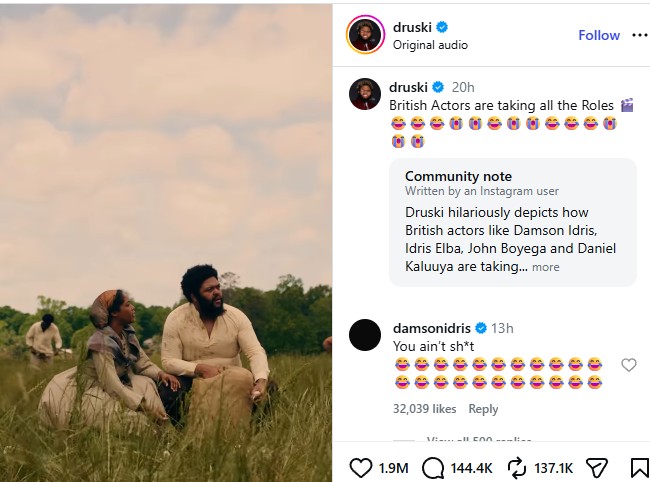
And at least Damson Idris can take a joke
The post Druski’s Viral Sketch Has Reignited the Black Diaspora Debate appeared first on Black Girl Nerds.