Episode 8 | The Poetic Justice of Queer China
From royal court legends to a seventeenth-century deity, gay people have been part of Chinese life and literature for millennia. Since the 1990s, legal reforms and deeper integration into global capitalism have fostered new avenues for civic action. Queer Chinese activists have fought for their rights in the courts, through legislative channels, and by garnering […] The post Episode 8 | The Poetic Justice of Queer China appeared first on Made in China Journal.
 Black News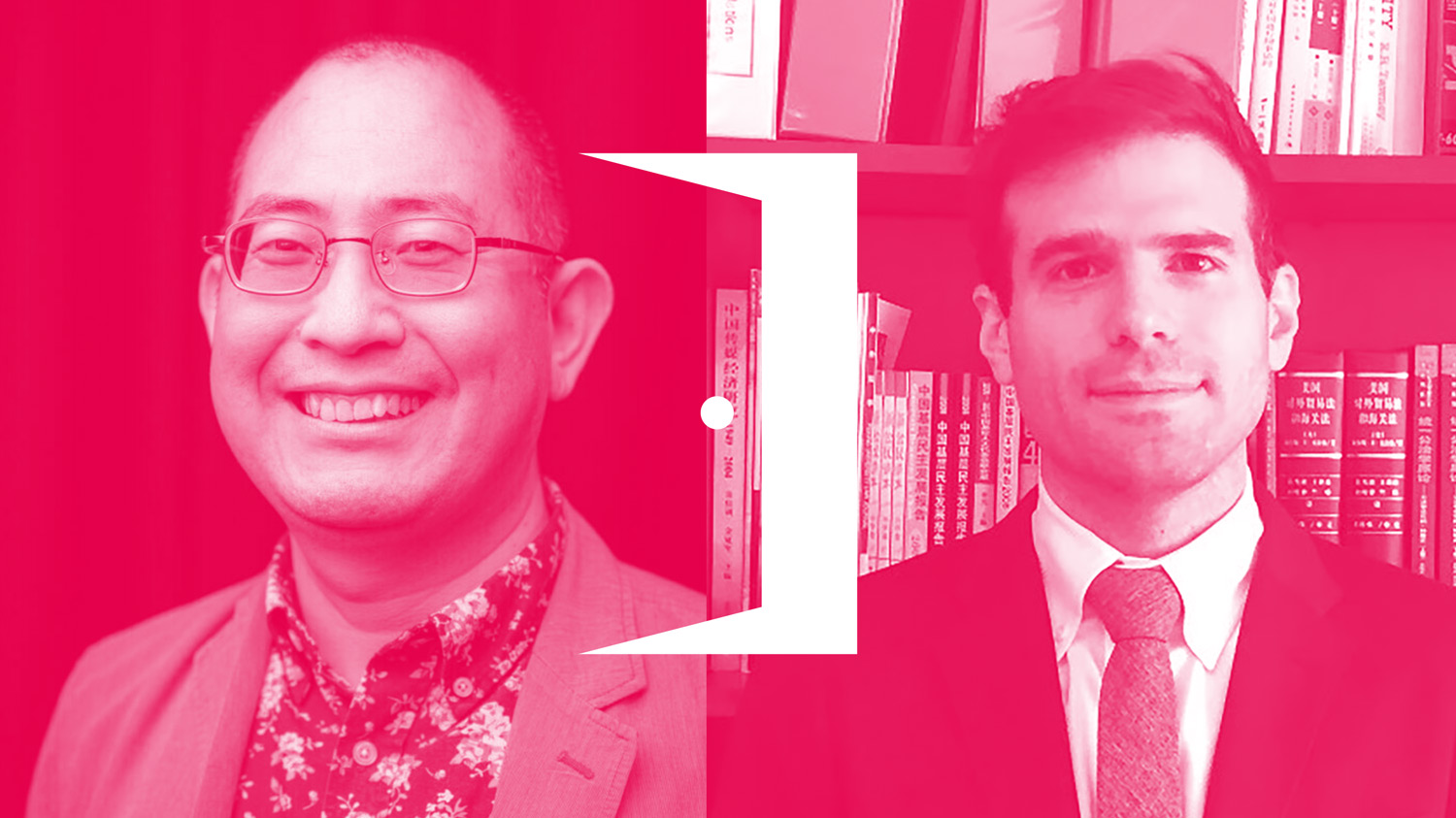
From royal court legends to a seventeenth-century deity, gay people have been part of Chinese life and literature for millennia. Since the 1990s, legal reforms and deeper integration into global capitalism have fostered new avenues for civic action. Queer Chinese activists have fought for their rights in the courts, through legislative channels, and by garnering public support. Despite government crackdowns in recent years, the work continues outside the limelight, while art and literature remain a fertile ground for queer expression and resistance.
How does the ancient history of queer China inspire life today? What have decades of gay activism accomplished, and what are the limitations? How should one interpret the relations between queer rights and state power, especially in an authoritarian society? For this episode, Yangyang spoke with media studies professor Hongwei Bao and legal scholar Darius Longarino on queer literature and activism in China, and why poetry can reign when courts fail.
Guest Bios:
Hongwei Bao is an Associate Professor in Media Studies at the University of Nottingham. His work explores queer desire, Asian identity, diasporic positionality, and transcultural intimacy. He is the author of Queer Comrades (NIAS Press, 2018), Queer China (Routledge, 2020), Queer Media in China (Routledge, 2021), Contemporary Chinese Queer Performance (Routledge, 2022) and Queering the Asian Diaspora (Sage, 2024). As a poet, he is the author of The Passion of the Rabbit God (Valley Press, 2024), Dream of the Orchid Pavilion (Big White Shed, 2024), and Self-Portrait as a Banana (Poetic Edge, 2025). His debut stage play Hot Pot will tour in UK theatres in June 2026.
Darius Longarino is a Research Scholar in Law and Senior Fellow at Yale Law School’s Paul Tsai China Center, where he focuses on LGBTQ rights and gender equality in China. His recent and forthcoming work includes chapters in the Oxford Handbook of East Asian Gender History (forthcoming), Challenges for Chinese Women in the Early Twenty-first Century (2025), and the Routledge Handbook of Constitutional Law in Greater China (2022). He recently co-edited a special issue of LGBTQ+ Family: An Interdisciplinary Journal on LGBTQ+ parenting in China. His other writings have appeared in The Washington Post, ChinaFile, and The Diplomat.
Related Materials:
Bao, Hongwei. 2024. ‘On Being Queer and Underclass: Mu Cao and His Poetry.’ Made in China Journal 9(2): 18–27.madeinchinajournal.com/2025/03/04/on-being-queer-and-underclass-mu-cao-and-his-poetry.
Bao, Hongwei. 2024. The Passion of the Rabbit God. Scarborough, UK: Valley Press.
Bao, Hongwei. 2025. ‘Performing the Rabbit God: Imagining Queer Identity and Heritage in the Chinese Diaspora.’ Made in China Journal 10(2): 136–41. madeinchinajournal.com/2026/02/19/performing-the-rabbit-god.
Longarino, Darius. 2020. ‘Could Same-Sex Marriage Advocacy in China Be Poised for a Breakthrough?’ ChinaFile, 17 September. www.chinafile.com/reporting-opinion/viewpoint/could-same-sex-marriage-advocacy-china-be-poised-breakthrough.
Longarino, Darius. 2024. ‘How a Crackdown Transformed LGBTQ Activism in China.’ ChinaFile, 26 September. www.chinafile.com/reporting-opinion/viewpoint/how-crackdown-transformed-lgbtq-activism-china.
Full episode transcript:
Yangyang (00:44)
For many Chinese millennials like myself, the first gay person we knew of was the Hong Kong singer and actor Leslie Chang, Zhang Guorong. I also remember my mother’s indignation when she found out what the movie Brokeback Mountain is about. She had allowed me to watch it only because its director, Ang Lee, is of Chinese descent. Being a self-righteous teenager, I loudly protested my mother’s prejudice at the time. But it was not until several years later, after I had moved to the US, that I met people who were openly queer for the first time. Bell Hooks famously said, “queer, not as being about who you are having sex with. That can be a dimension of it. But queer as being about the self that is at odds with everything around it, and that has to invent and create and find a place to speak and to thrive and to live.”
Queerness, then, is s not just about one’s sexual orientation. It is a political position. So what is it like to be gay in China? How have queer Chinese people lived and loved historically and in the present? And how might their struggles help all of us, regardless of nationality or sexual orientation? Imagine a freer and more loving world.
I’m really excited to have this conversation with two esteemed scholars whose works on queer China have been a vital source of political education for myself. First, we have Dr. Hong Wei Bao, an associate professor in the media studies department at University of Nottingham and the author of several books, including Queer Comrades, Gay Identity and Tongzhi Activism in Post-Socialist China.
Hongwei is also the producer of the Queer Chinese Arts Festival and a frequent contributor to the Made in China journal. So Hongwei, in one of your recent essays for us in the Made in China Journal, you wrote about the rabbit god, Tu’er shen, the patron saint of gay people in China. And you mentioned one thing was when you were born and raised in China, when you were growing up in China, you did not know about the rabbit god.
And I must admit, I did not either. And the first time I learned about it was actually from the queer Chinese American poet, Chen Chen, who uses that as part of his social media handle. So tell us a little bit about the rabbit god. And why are we celebrating the god now, this ancient Chinese deity in the 21st century?
Hongwei (2:28)
Thank you, Yangyang, for your very kind introduction and for your question. I love your sharing of stories about your growing up experience and your mother’s attitude and so on. So I think that we share a lot in common because we both probably grow up in China or spent a certain amount of time in China when we were not informed of proper or sufficient queer knowledge.
And then when I went to Australia to study, I discovered actually there is a long history of same sex intimacy, including Long Yang and Qu Yuan among others. And Rabbit God actually, the story of the Rabbit God immediately captured my attention. What’s important about the Rabbit God was that it’s a kind of beautiful story actually rooted in Chinese history and culture. So that makes me feel that being queer is not only a kind of Western identity as some people would like you to believe, at least that’s what the Chinese government actually labels Queer as, kind of Western lifestyle. So basically the Rabbit God tells me that there is this historical tradition and there is this cultural diversity and gender diversity that we should look at in Chinese history. So reading the kind of Rabbit God story and writing Rabbi God poetry, really becomes a way for me to reconcile the two aspects of my identities, the Chinese identity and the queer identity. So it’s lovely and I’m a big fan of Chen Chen’s poems as well. I think that a lot of his poems speak really closely to the kind of queer Asian identity and experience. And there are also me other queer Asian American or queer British Chinese works. For example, Los Angeles based queer American artist Andrew Thomas Huang has also a video, a short film called The Kiss of the Rabbit God which is lovely so I recommend that everybody go to Google and find out that film which is called The Kiss of the Rabbit God so that’s an advertisement.
Yangyang: (05:00)
Thank you so much. And so actually the rabbit god, like he had a name, right? And he was a Qing era official. So tell us a little bit about his story. Who was him in real life before he became a deity?
Hongwei (05:12)
Yeah, that’s a great question. So of course there are different versions. I’m using the Zibuyu version. So it’s kind of 17th century tale. So which is about a Chinese clerk. That clerk is probably a kind of very low rank official working in a kind of provincial court. Once he caught sight , his name is Hu Tianbao. Once he caught sight of a kind of higher rank official, a Sansa Xunfu and so on. So he fell in love immediately.
So what he did was basically to follow that person around to the office, to the garden, and even to the lavatory. Of course, he was caught by the guards and then he was questioned, trialed. When he said that, I’m following this person, following you because I’m in love with you. And this person doesn’t understand the high rank official. So he was executed to death. And when he went to the underworld or yincao difu and Yanluo Wang basically heard of the story and was saying that what ignorant people in the world, I mean they don’t even know about China’s kind of same-sex traditions if they had read for example Shi Ji they would have known the stories and so on. So Yanluo Wang basically crowned or deified him as a Tu’ershen or the rabbit god so he became the patron saint of LGBTQ+ people in ancient china so this is basically the rabbit god story and it’s a beautiful story about first the intolerance of same-sex intimacy especially in late imperial china in the kind of Qing dynasty in Qing dynasty there were a period of intolerance in which sodomy or jijian was criminalized but at the same time there was a kind of popular tolerance of homosexuality or same-sex intimacy within the kind of grassroots or in Chinese society especially under the influence of Daoism. So that’s a beautiful story.
Yangyang (07:26)
Yeah, I think one of the lessons here is even if hell freezes over, the warmth of queer love can bring life back to it. And so I feel the rabbit god also appears in the title of your first poetry collection, The Passion of the Rabbit God, which I read with great interest last year. And one of the poems that really struck me in it is one you had about Qu Yuan, and who is this Chu kingdom nobleman and poet who lived in the Warring States era about 2300 years ago. And I mentioned this also because my ancestral hometown where my father was born and raised and where my grandfather still lives is Jingzhou, the ancient capital of the kingdom of Chu. And so sometimes I joke that I consider Qu Yuan a blood relative.
Of course, Qu Yuan was banished by the King of Chu and he later drowned himself in the branch of the Yangtze after the capital of Chu, Jingzhou fell to invading troops from the neighboring kingdom of Qin. And for centuries, Chinese scholars and literati have written about Qu Yuan, including 20th century scholars like Guo Moruo or the astrophysicist Fang Lizhi. But usually they were writing about Qu Yuan or in the text I was familiar with as a political figure and they were projecting their own political ambitions or their political frustrations on this ancient legend, this true era poet. However, in your poem, you did something very different, that your Qu Yuan’s exile and his suicide was reinterpreted not as a political act, but as a deeply private and personal one. So can you tell us a little bit about the inspirations behind the poem? What is the political significance of a queer Qu Yuan?
Hongwei (09:14)
Yeah, sure. That’s a great question. You probably know about the kind of history of Qu Yuan better than me. For me, actually, what’s important is that there were so little accounts of Qu Yuan or of other historical figures about their kind of sexuality. Of course, I mean, there were rumors in different times that Qu Yuan were in love with the King of Chu at the time, which was not surprising because at that time almost every Chinese emperor had their favorites. So this was where the story of Duan Xiu, the cut sleeve and the Fen Tao split peach comes from, essentially. So why couldn’t Qu Yuan actually have a kind of relationship with the Chu?
So essentially we don’t have much evidence but we have anecdotal evidence. I think sometimes for queer archive, those anecdotes are important because you can’t expect historians just to write about their same-sex intimacy. So you’ve got to actually take the anecdotes with a pinch of salt. And for me, because I’m writing poetry, I’m not a historian. So I’m not so much burdened by historical accuracy. For me, it’s more important actually to find a way to talk about queer identity without being kind of constrained by mainstream narratives. As you said that for Guo Moruo among others, Qu Yuan is pretty much interpreted as a patriotic figure, someone who loves the nation, who committed suicide because of his love for the nation, et cetera. So for me, actually, I think that this was a very kind of in a way, very mainstream and very dominant reading of Qu Yuan’s story. For me as a queer person, especially as a queer person living in the diaspora with no country and so on. So I think that it’s important to recognize that a queer person’s sometimes decisions are not driven by nation state or political reasons, but probably sometimes just by personal and intimate reasons, for example, his love for Chu Huai Wang. Of course, this is a kind of brave reading and but it’s a creative license that a poet can have and without having to worry about being questioned for our historical knowledge or accuracy.
Yangyang (11:47)
This is really, powerful because I think Qu Yuan, on one hand, he was a real person. On the other hand, he is very much a legend and generations of Chinese scholars have reinvented the figure and in a way to project and reinterpret their own present through this historical figure, right? And so you’re very much writing in that tradition.
And so now going from Imperial China to the present day to talk about the current Chinese government’s attitudes towards homosexuality, let’s bring in our second guest. So joining me here in the studio today is my very dear friend and colleague, Darius Longarino, a research scholar in law and senior fellow at Yale Law School’s Paul Tsai China Center. Darius has studied and worked alongside queer activists in China for over a decade. And so Darius, this year marks the 25 years after Chinese authorities updated its official list of mental disorders.
And one controversy about it is whether or not the Chinese government actually removed homosexuality from its list of mental disorders back in 2001. And so you have been writing a paper about it. So tell us about it, did they? And what is the significance of this change? And what are the caveats or limitations?
Darius (13:03)
Thank you, Yangyang, so much for inviting me. So happy to be here with you and Dr. Bao . So many observers, when talking about LGBTQ rights in China, often cite two dates to sort of anchor the reader, give them context, historical context. One is 1997, saying that’s when China removed hooliganism from the criminal code. And that sort of stands for the decriminalization of homosexuality. That’s more complicated story. But that’s usually one landmark that people use to provide context. And then the other one, and we see this in media articles, academic articles, UN reports, all over the place. The other second landmark date would be in 2001, China, quote unquote, removed homosexuality from the Chinese classification of mental disorders, version three.
But if you were to open up the actual book, the manual, you’ll find that homosexuality and bisexuality are still listed in there. And they’re more just redefined rather than removed. And then this leads to the question of, homosexuality actually depathologized in China now?
And I think the answer is that it’s not yet completely pathologized. And what happened in the Chinese classification of mental disorders version 3, CCMD3, is that homosexuality was left in there. but there are some gestures made at the idea that only if people feel conflict or depression, anxiety, or have other negative feelings about their sexual orientation, that that constitutes a diagnosable disorder. But what this in effect does is open up the door or leave the door open to conversion therapy. So, the idea behind that that revision and the CCMD3 is that people who, you know, go to a mental health counselor or a psychiatrist, they could either try to pursue acceptance of their sexual orientation or pursue changing the sexual orientation. Now CCMD3 has not been updated in 25 years and China has been moving towards using the standards that are issued by the World Health Organization, which is the International Classification of Diseases.
So when they started doing that, there was the 10th version of the International Classification of Diseases. And that had removed homosexuality as a mental disorder. But it replaced it with something called ego-dystonic sexual orientation. And that also leaves the door open to conversion therapy, because it gives a choice of you can either learn to accept your sexual orientation or try to change your sexual orientation and there was a case from a few years ago involving a trans woman in Hebei who had been sent to a mental hospital by her parents, even though she was an adult, and they subjected her to several months of treatment, including electroshocks. And on the diagnosis records, they clearly cite ICD-10 ego-dystonic sexual orientation as a basis for pursuing the treatment. So that’s just a very clear example of how ICD-10 can still provide a basis for pursuing something like conversion therapy. But recently, China has now wanted to move towards using ICD-11, which has completely removed ego-dystonic sexual orientation as a diagnosis. And thus, would constitute full adoption of ICD-11 would constitute a policy of full depathologization. So until that happens, think we’re sort of in only a partial depathologization state in China.
Yangyang (16:50)
So one thing I’m learning from this is even though it might just seem like a very technical entry on the very technical manual for psychiatrists and mental health professionals, but it has very real impacts on the lives of queer people in China. And many of them have still been subjected to conversion therapy. And one particular individual, Yanzi or Peng Yanhui, he actually sued the hospital that gave him conversion therapy, and it was a landmark case. So can you tell us a little bit about that particular case?
Darius (17:22)
Sure. So CCMD3’s position was sort of confusing and self-contradictory, and it created lots of different interpretations. So before Yazi case, you could find examples of government entities citing CCMD3 as a reason for continuing to deny gay people equal rights. even like the authority in China responsible for managing adoptions said same-sex couples or gay people are not eligible to adopt children because homosexuality is still listed as a disorder in CCMD3. But in Yanzi’s case, the court took another position. So Yan sort of went undercover to a conversion therapy clinic, recorded the whole experience and even received like hard paper evidence saying that they were treating him for his quote unquote homosexuality. And at court, evidence was presented to show that the therapist, first of all, didn’t have a license. His license was fake. Secondly, even if he was a mental health counselor with the certificate, he had performed a treatment that went well beyond his authority, which was to administer electroshocks.
That would be something that only a medical doctor or psychiatrist could do. And then third, the judge had one line in the judgment that made a huge impact and was talked about a lot in the media, which is that since homosexuality is not a mental disorder, to promise a cure for it is a form of consumer fraud. And that was really probably the first official statement I can think of from any part of the government making that statement. Unfortunately, think that case had sort of, fortunately had a great media impact. It was discussed a lot, widely made a broad impact in society. But ultimately the conversion therapist only had to pay a few thousand yuan for basically refunding Yanzi for the treatment. But then that therapist was allowed to continue operating.
And from what I understand, years later they still continued providing conversion therapy as a service. even though there’s these sort of piecemeal victories, didn’t create a broad-based regulatory change in China.
Yangyang (19:52)
So were there like some technical changes in terms of acquiring the proper license or changing some of the therapeutic methods with regards to the court ruling?
Darius (20:02)
I am not aware of the… So what I heard from friends is that the conversion therapist continued advertising. And even, you know, I heard from somebody that they even like upped the price a little bit after that. And, you know, just recently when I’ve gone online to some like message boards where people ask doctors at hospitals questions and there several questions about is homosexuality a mental disorderand is changing one’s sexual orientation possible, you’ll still see lots of messages from medical doctors, not just mental health counselors who are not trained in medicine. They will still say yes to both of those questions. Not everybody, but it just shows that there’s a pervasive continuing understanding that homosexuality is a mental disorder. And there’s some survey results to also to back that up. So in 2019, I was at a conference where somebody was sharing results of a survey of about 8,000 respondents. And only a third of people responded that they thought homosexuality was not a mental disorder. I think there’s a generational change happening where when you look at surveys that involve younger people, a more recent survey involving college students showed sort of the reverse, that 75 % of them knew that homosexuality was not a mental disorder. That means that a quarter still did.
And there’s a really big gender imbalance in that survey where male students answer that question correctly at about a rate of half, like 54%. So the process is ongoingI think as ICD-11 is implemented and training curricula focus on that, and also as younger people age into positions of power, we’ll see these pathologizing views of homosexuality decrease over time. Or at that is my hope.
Yangyang (21:53)
Yeah, thank you. This is really interesting. And one thing that’s also like even for legal cases, whether or not they win, they may have very limited impact in terms of the actual regulations. On the other hand, they can have much broader and lasting impact in terms of public opinion.
And I should also mention that Yanzi was a visiting scholar with us at the Paul Tsai China Center here at Yale Law School a few years ago. And I also noticed that a photo of Yanzi, I think after he won his lawsuit, is on the cover of Hongwei, your book, Queer Comrades. And so Hongwei, coming back to you, so outside of the court system and official channels, another very important site of queer activism and resistance is in art and literature.
And in another essay you wrote for the Made in China journal, you talked about one particular gay Chinese poet, Mu Cao. And I was particularly struck by a poem of his, which you had translated as well, about this encounter between a bicycle thief and a cop. And so can you tell us a little bit about Mu Cao’s work, his background, and why is it so significant?
Hongwei (22:58)
Yeah, sure. So Mu Cao is a fascinating poet. So he was born in rural China in Henan province and then went to Zhengzhou to work and after Zhengzhou he went to Beijing and did different art jobs, etc. And now he’s settled in Shandong after his award-winning experience in the Netherlands. So what’s interesting about his experience was that his poetry was actually his poems were could be understood as the migrant workers poetry, but his poems are also extremely queer in that they depict explicit queer desires, of course, and working class lines, etc. This is very different from, for example, the queer literature and poetry that we are familiar with. So most of the queer writers write about queer urban life or queer young people’s life and they all have their own concerns, et cetera, but their kind of challenges might be very different from that of a migrant poet. And what’s also surprising was that despite Mu Cao’s efforts and contribution to contemporary Chinese poetry, his names were not widely known in contemporary Chinese poetry, partly because of his migrant worker identity and partly because of his queer identity. For example, he started publishing actually around the year 2000 and he edited several contemporary Chinese poetry collections and even founded a website and he really made great contributions to contemporary Chinese poetry and in particular vernacular spoken word poetry. However, his contribution was why not widely known actually inside and outside China’s poetry community. So my kind of chapter or my article about him written together with Mahiru Van Kaven from the University of Leiden was to highlight his works and his contribution to Chinese contemporary poetry and that article was also written actually to celebrate Mu Cao’s winning of the Prince Claus award so that was a kind of also a kind of late but very long due overdue recognition of his work the both literary merits of his work as well as the uniqueness of his voice as a queer migrant worker voice inside China.
Yangyang: (25:41)
Yeah, thank you. so one thing that I particularly, that particular poem about a bicycle thief’s encounter with a cop and the thief thought he was getting arrested instead he had a very passionate intimate experience. And he felt, well, wouldn’t we have world peace if all the encounters between thieves and cops are like that. And I thought on one hand, like as an abolitionist myself, like on one hand, I felt like, no, but there is a power imbalance here. how could
a thief actually have a consensual sexual relationship with his arresting officer. On the other hand, I also felt there was almost like a giddiness because it was narrated from the position of the thief that he felt he was actually in power. He was in control and he was subverting a kind of state institution of violence. And in some way there is a subversiveness that kind of echoes your poem with regards to this queer love tragedy between Qu Yuan and the King of Chu that it dispels this traditional reverence of state authority. And another note that I noticed was also, like I should mention, the founder of the largest gay dating and social networking app, Blueed, is a former cop, Ma Baoli. And so Hongwei, have a question, this particular question is, on the topic of conforming to or subverting state authority, I would like to hear your thoughts about same-sex marriage and more particularly whether or not centering legalizing same-sex marriage is the, should be the dominant approach for the fight for queer rights. And so on one hand, of course, I understand the need to have equal rights as straight people. On the other hand, if marriage by construct is an oppressive state institution, that normalizes hetero patriarchy, normalizes state intervention in private lives. Why should queer people fight to have access to it rather than fight to abolish it?
Hongwei: (27:46)
Thanks very much for your question. So before we go on to discuss same-sex marriage, let me also respond to your fantastic reading of Mu Cao’s poetry. So that poem is called Xiao Tou A Xin and the Chinese version and English version both appeared in the article Being Queer and Underclass Mu Cao’s Poetry, which is also on the Made in China website, which you’re welcome to read.
Another analogy that I can draw is Zhang Yuan’s book, Zhang Yuan’s film, Donggong, Xi Gong, of course, all originally adapted from Wang Xiaobo’s novel, Si Shui Rou Qing, and screenplay Si Shui Rou Qing. So that text, that story is also a story between a queer person and a policeman. So of course, can also talk about many things such as what is queerness, what is sex, what’s the relationship between power and sexuality, etc., which really has a really long discussion and it’s a huge philosophical debate and even I mean in the kind of queer community there is a of a worship in a way of kind of police uniforms etc as in some kind of BDSM communities etc and that’s a separate discussion but I think what’s important in Mu Cao’s poetry and in Zhang Yuan’s film as well as other stories was that we tend to actually think about state power and queer desire as antithetical or opposite to each other. But in fact, actually, they are often intertwined and they are mutually dependent upon each other. So queer people actually needs the state to recognize itself. But at the same time, the state power also actually requires marginalized groups such as queer people actually to recognize itself, at least to recognize its power. So essentially it’s a kind of negotiation of power between the two. I know we’re talking about it on a very kind of abstract and philosophical level but I think that this informs, this can actually give us a different angle to think about actually the relationship between citizen and the state and so on. Now going back to the topic of same-sex marriage and probably with time goes on with my age. So I’m now currently in a same sex marriage So I would probably give you slightly different answers from for example ten years ago. And now I see marriage actually not simply as a kind of hetero-normative institution, but also as a type of ethical, possibly ethical, it’s not the only kind of way for people to negotiate, to recognize their relationship, but it is one of the ways for people actually to recognize their relationship, to show their commitment to each other. So it’s about state recognition, yes, but it’s also about the negotiation between two people, the ethical relationship between the two people. Of course, two people or three people or more people, they can have different types of relationships, have their relationships recognized in different ways, such as monogamy, polyamory, and same-sex partnership or civil union and so on. And marriage is not the only form, but I would argue that marriage should become one of the options for queer people to choose from. They do not have to choose the marriage as the only option, but it should be a kind of a right for queer people to aspire to. And on a practical level, I also understand that same-sex marriage actually is a convenient and is a kind of good rallying point for queer people to articulate their demands, especially in China. If you talk about queer rights, that’s a very abstract concept. Any mentioning of rights, quanli, etc. would immediately make a type of activism very politically sensitive. However, if you’re talking about marriage equality or chengjia and so on, so because of the kind of positive association, at least to family marriage, kinship in contemporary China. So the advocacy for same sex marriage is more likely actually to gain the kind of ordinary people’s support than saying that we should recognize queer rights, et cetera. So I also think that for rhetoric and strategic reasons, marriage equality would be a possible way to talk about within the kind of state legislative framework. But of course we can also debate on whether the legal advocacy is the only way or is the best way actually to fight for queer rights. But it should be one of the options or one of the possibilities that people should pursue.
Yangyang (33:16)
Thank you. This is beautiful and profound. And I should say that actually my own attitude towards marriage as an institution has also shifted with my own relationship. And so I get some of that as well. But then Darius, coming to you, since Hongwei just mentioned about the pursuits or the advocacy about marriage equality in China. So what is the situation in China? On one hand, of course, the political terrain is very different from Western countries. On the other hand, I also know, for example, there are queer people in China who took advantage of this brief period of Zoom weddings that were offered by a particular court in Utah during the COVID-19 pandemic to get marriage licenses in the US with their same sex partners. So tell us a little bit about that.
Darius (34:04)
Sure and can I go back to the topic of marriage advocacy in the 2010s? Because I think what Hongwei mentioned about it being a very effective rallying point, I think looking at the kinds of legal advocacy that was being done in 2010s, whether it’s lawsuits or sort of making appeals to the legislator, when the topic was same-sex marriage, it did seem to sort of hit a nerve and like the volume of people participating seemed to increase by a lot. So I’m just
thinking of how when Sun Wenlin and his partner brought a lawsuit in Changsha for their marriage to be recognized, hundreds of people showed up outside the court that day. And I think the court even reserved a really big trial room to accommodate a lot of people to be able to sit in it. And of course, they lost that case later, but it really just sparked a lot of conversation really quickly online. people chose to travel, even from far distances, to be witnesses to that case.
And we compare that to other cases about employment discrimination or about even Yanzi’s case on anti-conversion therapy, it didn’t have the same kind of mobilizing effects. And in 2019, when China’s legislator was drafting the civil code and opening up public feedback on it, a number of activists sort of this as an opportunity to make the demand for same-sex marriage publicly. And they put out a call for people to participate in this process online. The hashtag related to that campaign quickly hit, I think, like 200 million views within a few days before getting censored. But they were still able, through WeChat groups and sort of one-on-one or group chats, to sort of spread the word. And maybe over 200,000 people then participated in making the appeal to the National People’s Congress for same-sex marriage to be legalized.
And that’s probably the biggest mobilization around a gay rights legal advocacy issue up until that point. Now, because the space for advocacy has declined a lot, the ability to make public rights demands, to bring lawsuits, do mass campaigns, have big discussions on social media, that has been squeezed down a lot. And so civil society, advocacy is much more, it’s more off the radar, it’s more low key. There’s more focus on the kind of community support or providing support to individual people, but not then advertising that to the media, because once you do that, you invite greater scrutiny and possibly repression. So I think the advocacy has become more personal, sort of to carve out space for your own life, which can include having children, it’s not legally recognized, you’re not going out and advocating for having parental rights recognized or marriage recognized, but just sort of building your life on your own terms. And part of that is this amazing thing that happened with Utah over during the pandemic, where I think, I have not checked in with the Utah Provo County government recently, but I believe people who have, So that hundreds of couples, same sex couples from China have married through a service that they offer on Zoom where people from all over the world can use it. And that can have very real effects when people apply for visas in countries that do recognize same sex marriage. People who are married through this Zoom service can then get spousal visas when going abroad. So there’s that legal effect and then sometimes people just quote unquote, like make it official. You they just feel like, okay, we’ve done this and now we’ve sort of publicly expressed our commitment to each other. And they do that for that reason. You know, if there’s no legal effect inside China and they’re not planning on going abroad.
Yangyang (38:09)
This is really beautiful, And it’s cute, but it also has its own political significance, right? But you did also say over the past several years, the space for civil society and civic activism in general have contracted sharply in China, and that includes queer activism. So what are the things that queer activists can still do in China? Have they shifted their strategy or have they more shifted the focus of their work? For example, if like something like AIDS or HIV or sexual transmitted disease prevention is still something that the government pays attention to and there is still some space for maneuvering that.
Darius (38:50)
Yes, there’s still some space for like service provision. So if you’re providing services that, you know, comport the government’s agenda, for example, public health goals, doing HIV testing, education.
But even that is sort of at a lower key than it once was. And maybe the relationship between the grassroots gay men’s groups that help the CDC in China perform these services, those relationships in some places maybe become more fraught, more tense. And if, for the people who used to do legal cases, maybe they no longer try to pursue what was once called impact litigation, where
you file a case in court, and your aim is to have the media cover it and then spark public discussion. Now it’s more you want to, in an authoritative way, of let people know that you have services to help them as individuals in a particular case.
And so, know, I’ve heard of cases where people have suffered employment discrimination and they’ve been able to get a good result for that client in that case, but they need to keep it, you know, under wraps and not like Yanzi did in the 2010s or other plaintiffs did in the 2010s where you can then go to the media, have it be discussed, then scholars might then take your case and analyze it and then advocate for changing the law to be inclusive of LGBTQ rights.
That was sort of like a whole strategy and system that worked to some degree in the 2010s. But now it’s much more about providing assistance to an individual in a quieter way. But that can be effective for a while, but I guess over time, less people will be aware of the services you provide, since you’re not visible on social media or in some sort of public way.
And you know, anti-LGBTQ voices, however, are allowed to shout loudly online and sort of take up space online and change the information environment. So right now we’re sort of still benefiting from the, I think the visibility and gains that were made in the 2010s and maybe early 2020s. But how the future will play out is still uncertain it’s sort of atomized, quiet, conversion of services where possible. But it’s more service oriented and less about public advocacy.
Yangyang (41:27)
It’s like learning to walk underground. so on that, Hongwei, I would like to come back to you. And so like, as Darius just mentioned, right, the contraction of official channels or public advocacy in some ways also highlights the importance of underground literature, highlights the importance of
staying in the margins and creating space in the margins. And one of these is of course, often literature. I noticed one one essay you wrote for us about queer zines or these literature pamphlets. And you notice that they use a form of narrow casting rather than broadcasting that they are writing to their own community rather than trying to reach a broader audience. And that reminded me of a line from the queer Chinese American poet Chen Chen we mentioned earlier who uses on Rabbit God as his Twitter handle that he talked about once he talked about he only wants to write for queer Asian diaspora. And I remember at the time when I read about it and as a public writer myself, I thought, that is both that seems really, really narrow and specific. On the other hand, I also really, really respect that was that means one can be freer and does not need to conform or over explain. And so tell us a little bit about your thoughts.
Hongwei (42:47)
Yeah, absolutely. So as I said, that I’m a big fan of Chen Chen’s poem. And when reading Chen Chen’s poems, I feel that these poems really speak to my experience. Although me, he and I probably have different migration experience and grow up experience, we belong to different generations in the first place. While I admire the kind of courage to write only for a community audience, I also recognize that this is position that not everybody can take.
For example, I see my works actually as dividing into different genres. For my academic work, cannot write simply for a kind Chinese queer audience. It’s more about bridging the kind of gap or bring together communities so the wider academic community and public community can understand queer Chinese experience more. Well, for my own poetry, they are different story.
I think that poetry has this very personalized and individual mode of expression that you do not have to worry about actually translating it for other people. And of course, the Passion of the Rabbit God book actually was primarily written for myself during the pandemic. So of course, they were like diaries written for myself without over explanation. It was only in the editing stage when putting together this book that I’ve put all those cultural references, explanation, whoQu Yuan is , in the poetry. But essentially they were written for oneself. And my other book, Queering the Asian Diaspora, in which I also discussed the Rabbit God, was also written for the queer Chinese audience or community. Primarily, this was because this was a book written in the pandemic or in response to the pandemic.
I saw that they were really great examples of activism in Stop Asian Hate movement, but at the same time I also felt that the movement actually needs a more intersectional perspective. For example, let’s talk about queer experience in Stop Asian Hate or in Asian communities. That was why I wrote this book in the first place. So my book Queering the Asian Diaspora can be said to speak primarily to a community and especially queer Asian communities an Asian community audience. So I would say that the narrow casting and broadcasting are two positions that one can occupy strategically for different reasons. For example, some materials are better at broadcasting, but one can question how broad an academic book can have. But in a way, actually, we are making effort. So that’s why I also appreciate Made in China Journal as well as our podcast, because we are trying to actually communicate academic knowledge to a broader readership or audience. So thanks very much.
Yangyang (46:05)
Thank you so much Hongwei. I was wondering whether you have a poem of yours that you can share with our audience to close out this episode.
Hongwei (46:15)
Sure, So my pleasure. So I thought that because we’ve discussed the Qu Yuan and I would like to read the poem Qu Yuan, if that’s okay.
Yangyang (46:28)
of course. Thank you.
Hongwei: (46:30)
So Qu Yuan is from the Passion of the Rabbit God. So I think that this is a poem that many people probably actually will recognize the story and will probably have some resonances. So let me also explain the format of these poems.
It’s a couplet, which means that two lines in one stanza and also it’s free form, free verse, which means it’s not rhymed in a way, but there are actually internal rhymes. And what else? It’s a persona poem meaning that is written in the voice of first person that is Qu Yuan and capturing the moment of Qu Yuan’s suicide. It sounds like very depressing poem, but I hope it’s not. So let me find the beginning. Okay.
Qu Yuan
As I threw myself into the Miluo River, I felt the glare
of the sun, the whisper of the wind, the splash of the cold
water breaking into a thousand tiny waves, rippling,
reverberating, glistening in the bright sunlight. I plunged
deep into the sandy riverbed, where my lips were kissed
by the fish, feet tickled by the weeds, which all reminded
me of you, my dear king, your smile, your kiss, my
pounding heart, your peach-coloured cheeks. Our time
was short, because of your weakness, and the rumours
spread in the royal court by petty bystanders, those who
disliked me, who envied us. What intrigues! What malicious
lies! They say I sacrificed myself for the nation. I didn’t.
The kingdom means nothing to me. All its pompousness,
pretentiousness, emptiness. But you, my love, you are my
Muse. You are the only reason for all my verses. Please don’t
let them fall into the hands of those people. They don’t
deserve to read my poems. They won’t appreciate my affection
for you, and our feelings for each other. Remember me,
every year on the fifth day of the fifth month, when the crescent
moon climbs up the sky, when its silver light is cast on the river,
when the water is calm and clean. Think of the many
happy days we’ve had together. Please don’t shed tears.
Take delight eating rice dumplings in my memory, unwrapping
the green bamboo leaves, feeling the warmth of my tongue, the taste
of me in your mouth. Please don’t throw dumplings into the river
while the poor are starving, or allow dragon boats to roar
on the canal, in my name, for the thunderous noise will disturb
the quiet life of the fish, the plants, my spirit, the river ghosts.
Yangyang (50:16)
Wow, rice dumplings would never taste the same after this. So Dr. Hongwei Bao, thank you so much for this deeply moving and illuminating journey across boundaries of time, national borders, language, the living world and the afterlife. Thank you.
Hongwei: (50:36)
Thank you. Thank Yang Yang and thank Darius. It has been a great conversation.
Yangyang (50:40)
And Darius Longarino, thank you so much for bearing with me in the studio today and sharing your experience and insights.
Darius (50:49)
Thank you so much for having me. It’s great to see you, Dr. Bao. Hope we can have more conversation in the future.
Yangyang (50:56)
Absolutely. And always read more poems.
The post Episode 8 | The Poetic Justice of Queer China appeared first on Made in China Journal.