Ethiopia Reaffirms Rights over Nile, Red Sea as Regional Alliances Shift
Ethiopia has reaffirmed its stance on the Abay River and its strategic interests in the Red Sea as diplomatic tensions with neighboring states escalate alongside renewed fighting between federal forces and the Tigray People’s Liberation Front (TPLF) in northern Ethiopia. Responding to regional developments, the Ethiopian Ministry of Foreign Affairs issued a firm statement on […]
 Black News
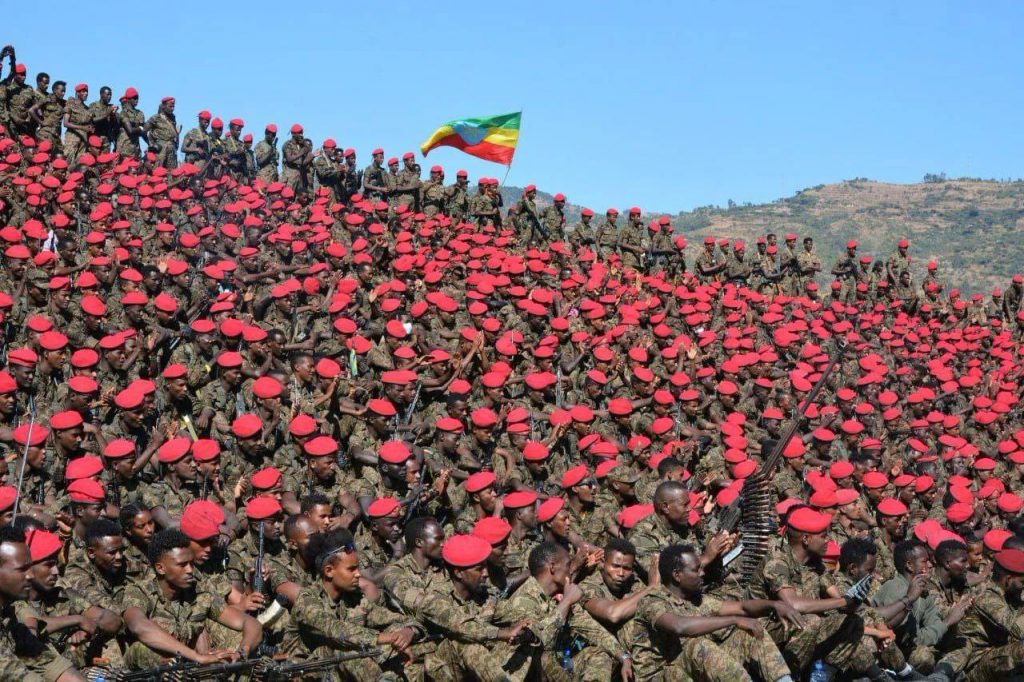
Ethiopia has reaffirmed its stance on the Abay River and its strategic interests in the Red Sea as diplomatic tensions with neighboring states escalate alongside renewed fighting between federal forces and the Tigray People’s Liberation Front (TPLF) in northern Ethiopia.
Responding to regional developments, the Ethiopian Ministry of Foreign Affairs issued a firm statement on October 5 asserting the country’s central role in regional water and maritime affairs. “Ethiopia is the primary source of the Abay River, contributing about 85 percent of the Nile’s total flow,” the ministry stated, emphasizing that “any discussions regarding its management and utilization must fully account for Ethiopia’s foundational role.”
Addressing maritime security, the ministry noted that Ethiopia maintains deep-rooted geographic and historical ties to the Red Sea, with its border lying just 30 miles from the coastline. “Discussions surrounding maritime affairs and regional security must respect Ethiopia’s legitimate interests,” the statement read, adding that the government remains committed to protecting its nation. “Ethiopia will defend its sovereignty, territorial integrity, and national interests while pursuing dialogue and regional cooperation. However, political rhetoric, coercive measures, and acts of destabilization will not alter Ethiopia’s geographic and historical realities.”
The Ministry’s pushback follows a quadrilateral summit held a day earlier in New Alamein, Egypt, where the leaders of Egypt, Eritrea, Somalia, and Sudan issued the El Alamein Joint Declaration. The joint communique called for strict adherence to state sovereignty and rejected external interference in domestic affairs, while declaring that “governance of the Red Sea is strictly the responsibility of littoral states.” On the Nile issue, the four nations advocated for international law compliance, insisting on “prior notification, consultation, and consensus,” while explicitly rejecting “unilateral measures that affect the existing water uses of downstream nations.”
The diplomatic friction coincides with a breakdown in domestic stability, as heavy fighting resumed in northern Ethiopia, fracturing the fragile peace maintained since the November 2022 Pretoria Agreement. The renewed conflict has fueled a rapid deterioration in bilateral relations between Addis Ababa and Asmara. Ethiopia has accused Eritrea and “all regional actors” of sponsoring opposition alliances within its borders. Eritrea swiftly rejected the allegations and announced it had severed diplomatic ties with Ethiopia.
Downstream, Egypt sought to distance itself from the military developments while maintaining a firm line on water security. Egyptian Foreign Minister Badr Abdelatty told reporters that Cairo is not involved in Ethiopia’s internal conflicts, describing the Grand Ethiopian Renaissance Dam (GERD) dispute as a distinct issue. “Egypt recognizes Ethiopia’s right to development,” Abdelatty stated, “but we will not accept any measures that compromise Egypt’s water security.”
Maritime diplomacy also remains stalled with Somalia following Ethiopia’s January 2024 Memorandum of Understanding with Somaliland, which Mogadishu rejected as a violation of its territorial integrity. In an October 3 interview with Al Jazeera, Somali President Hassan Sheikh Mohamud clarified his government’s position on commercial sea access. “Somalia has no objection to Ethiopia obtaining commercial access through Somali ports,” Mohamud said, noting that “Addis Ababa has not approached Mogadishu to negotiate such an arrangement.” He added that Ethiopia could utilize multiple Somali ports provided it negotiates a standard commercial agreement covering tariffs and operational terms.
The rapid escalation across multiple fronts has drawn international concern. On October 3, the U.S. Department of State warned that brewing hostilities between Ethiopia and Eritrea threaten to destabilize the broader Horn of Africa. U.S. State Department Spokesperson Thomas Pigott urged both governments “to respect the sovereignty and territorial integrity of neighboring states and return to dialogue under the framework of their 2018 peace agreement.”
The African Union Commission similarly urged Ethiopia, Eritrea, and Egypt to exercise maximum restraint and resolve disputes through diplomatic channels. Following diplomatic expulsions in the region, the AU clarified that its appeal was not meant to assign blame to any specific nation, but rather to prevent further escalation and keep diplomatic lines open.
Despite mounting international pressure, the Ethiopian government reiterated that while it remains open to constructive dialogue, it will not compromise on protecting its core national interests.