EU commits $42.8 million to Google-linked undersea cable connecting East Africa
The European Union has committed €37 million ($42.8 million) to extend Google’s Blue-Raman undersea cable into East Africa, a move expected to improve internet connectivity, reduce bandwidth costs and strengthen the region’s position in the global digital economy.
 Black News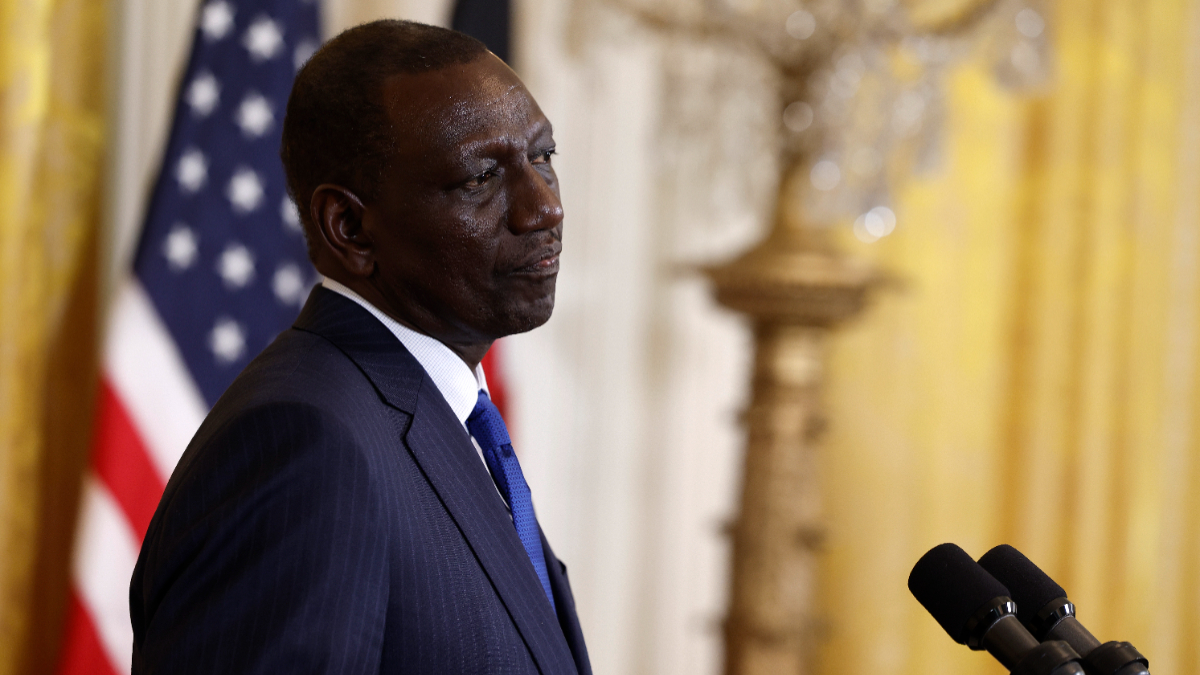
![Kenyan President William Ruto announced €37 million in EU funding for the East African extension of the Google-backed Blue-Raman submarine cable project during talks in Brussels.[Photo by Anna Moneymaker/Getty Images]](https://ocdn.eu/pulscms/MDA_/05d8b1aead7fb19f1050255b1d051672.jpg)
The European Union has committed €37 million ($42.8 million) to extend Google’s Blue-Raman undersea cable into East Africa, a move expected to improve internet connectivity, reduce bandwidth costs and strengthen the region’s position in the global digital economy.
- The EU has committed €37 million ($42.8 million) to extend the Blue-Raman subsea cable into East Africa.
- The project will connect Kenya, Tanzania, Somalia and Djibouti to a digital corridor linking Europe and India.
- The cable is expected to lower bandwidth costs and improve internet resilience.
- The investment forms part of a broader push to strengthen Africa’s digital infrastructure and support future growth in cloud computing, AI and digital trade.
Kenyan President William Ruto announced the funding following talks with European Commission Executive Vice-President Henna Virkkunen in Brussels, saying the cable extension will connect Kenya, Tanzania, Somalia and Djibouti to a major digital corridor linking Europe, the Middle East and India.
The funding forms part of a broader package of €139 million in digital investments secured during the visit.
The project is the latest sign of growing European and technology-sector investment in Africa’s digital infrastructure as governments seek to expand internet access, support digital trade and meet rising demand for cloud computing and artificial intelligence services.
DON'T MISS THIS: Repeated internet outages push Orange into ambitious Nigeria-Europe subsea cable project
East Africa joins a major digital highway
The cable forms the African extension of the Blue-Raman system, a Google-backed subsea network unveiled in 2021 in partnership with Italian telecommunications company Sparkle and other operators.
The 12,700-kilometre network was designed to connect Europe and India through the Middle East while creating a new route for international internet traffic outside traditional bottlenecks.
Under the original design, the Blue segment links Italy, France, Greece and Israel, while the Raman segment connects Jordan, Saudi Arabia, Djibouti, Oman and India.
The system contains 16 fibre pairs and operates on an open-access model intended to increase competition among internet providers.
The East African extension will connect Djibouti to Somalia, Kenya and Tanzania, giving the region direct access to one of the newest high-capacity international data routes.
The European Union has previously described the project as a key component of its broader EU-Africa-India Digital Corridor initiative, which aims to strengthen secure digital connectivity between Europe, Africa and Asia.
Why the project matters
The investment comes as East Africa experiences rapid growth in digital services, mobile money, e-commerce and business process outsourcing.
Kenya has emerged as one of Africa’s leading technology hubs, while Tanzania and Somalia are investing heavily in digital infrastructure to expand internet access and financial inclusion.
Ruto said the new cable would lower bandwidth costs across the region, a view supported by research showing that increased international connectivity often leads to cheaper internet services.
A June 2025 study by the Foundation for Studies and Research on International Development found that doubling international connectivity capacity can significantly reduce both mobile and fixed broadband prices.
Lower internet costs remain a major priority across East Africa, where broadband affordability continues to lag international targets despite years of investment in digital infrastructure.
The project is also expected to strengthen East Africa’s attractiveness to data centres, cloud service providers and technology companies seeking reliable international connectivity.
Building resilience after repeated disruptions
Beyond lower costs, the cable is expected to improve network resilience at a time when undersea infrastructure has become increasingly vulnerable.
Several cable failures in the Red Sea and along Africa’s eastern coastline have caused widespread internet disruptions over the past two years.
In March 2025, damage to the PEACE cable affected internet traffic across parts of Africa and Asia.
Earlier outages involving the EASSy and SEACOM systems disrupted connectivity in multiple East African countries, highlighting the risks associated with dependence on a limited number of international routes.
Industry analysts say additional cable systems are becoming increasingly important as internet traffic surges due to cloud computing, video streaming and emerging artificial intelligence applications.
The Blue-Raman project also provides an alternative route that reduces reliance on some of the world’s most congested digital chokepoints, an increasingly important consideration amid geopolitical tensions and security concerns affecting international telecommunications infrastructure.
Europe deepens Africa’s digital push
The investment reflects the European Union’s broader effort to expand its presence in Africa’s digital infrastructure sector through its Global Gateway programme.
Brussels has increasingly focused on financing strategic projects in transport, energy and digital connectivity across Africa as competition intensifies among global powers seeking influence over the continent’s next phase of economic development.
For East Africa, the Blue-Raman extension represents more than another internet cable.
It forms part of a growing race to build the digital infrastructure needed to support future growth in fintech, artificial intelligence, cloud services and cross-border digital trade.
As African economies become increasingly data-driven, control over digital highways is becoming as strategically important as ports, roads and power networks.