From Gallion to the Statewide Stage: Dr. Valencia Wells Makes History in Optometry
By Sym Posey | The Birmingham Times Dr. Valencia Wells of Morris Avenue Eyecare knew she wanted to be an optometrist as early as eighth grade. It all started with a research paper. Growing up in Gallion, Alabama, a small community in rural Marengo County, Wells already knew she wanted to work in medicine. She […]
 Black News

By Sym Posey | The Birmingham Times
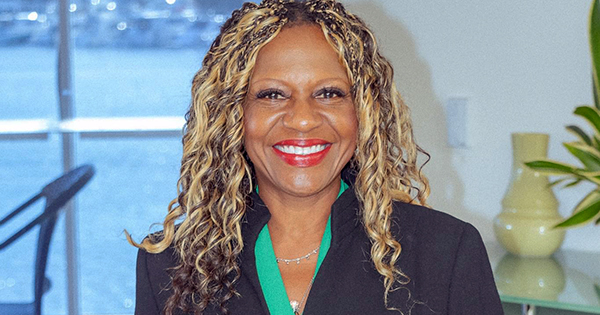
Dr. Valencia Wells of Morris Avenue Eyecare knew she wanted to be an optometrist as early as eighth grade. It all started with a research paper.
Growing up in Gallion, Alabama, a small community in rural Marengo County, Wells already knew she wanted to work in medicine. She just had to figure out what kind of doctor she wanted to become.
Her English teacher at Amelia Love Johnson High School in Thomaston, Alabama, assigned the class a research paper on careers. Wells began weighing her options.
Dentistry was out.
“I said, Lord, I can’t do slob,” Wells recalled with a laugh.
Pharmacy did not appeal to her either. She wanted a profession that would allow her to interact with people.
Physical therapy presented another problem. Wells had undergone surgery for scoliosis as a child and knew she had physical limitations.
Then she thought about optometry.
She had worn glasses since the second grade, and her own eye doctor made an impression on her.
“I said, Dr. Mac, it seemed like he got it going on,” Wells said.
So she wrote her paper on optometry.
More than two decades later, Wells is a doctor of optometry, business owner, mentor, community advocate and the first Black person — male or female — to serve as president of the 125-year-old Alabama Optometric Association (ALOA).
“Being elected as the first Black President of the Alabama Optometric Association is both a profound honor and a deeply meaningful milestone,” Wells said. “It represents not only personal achievement but progress in representation and equity within our profession.”
A Country Girl with a Big Vision
Wells describes herself affectionately as being from “the country.”
She grew up in Gallion, an area of Marengo County in West Central Alabama, and attended Amelia Love Johnson High School in Thomaston. Her mother was a teacher, and Wells remembers herself as the child who could always be found talking.
She was social, curious and involved.
“I used to get in trouble all the time for talking too much,” she said.
Her name, she recalled, would regularly end up on the board in class because she could not stop talking. Her kindergarten teacher even complained that Wells was constantly socializing with her classmates.
Looking back, Wells sees something familiar in that child.
“I feel like every kid that might have had ‘talking too much’ on their report card … look at them now,” she said. “They’re a CEO, a doctor, a president or something.”
That outgoing personality would eventually become an asset in a career built around connecting with patients, colleagues, lawmakers and students.
Wells earned a bachelor’s degree in biology from the University of Alabama before attending the UAB School of Optometry, graduating in 2009.
She jokes that she did not have the best study habits as an undergraduate. She said some of her friends could spend hours studying while she would wait until the last minute and still understand the material.
Optometry school forced her to change.
“They taught me a whole different style that you have to study,” Wells said. “So I finally learned to study in optometry school.”
Today, Wells practices as a primary-care family optometrist, treating patients of all ages. Her work includes glasses and contact lenses, pediatric vision care, glaucoma, ocular disease, diabetic eye care and hypertensive eye care.
“The only thing we don’t do is surgery,” she said. “So if it’s something a little bit in-depth or you need to see the specialist that does that, I refer to a specialist. But I’m pretty much your primary-care family eye doctor.”

Making History, One Year at a Time
Wells’ journey within the Alabama Optometric Association began long before she became president.
She was elected to the ALOA Board of Directors in October 2020 and has served in several leadership positions, including secretary/treasurer, vice president and president-elect.
Her one-year term as president began October 3, 2025. After completing the presidency, she will serve another year as immediate past president.
The presidency may last only one year, but Wells views her leadership as part of an eight-year commitment to the organization.
As president, Wells served as the association’s chief elected officer and spokesperson for optometrists across Alabama. Her responsibilities included leading strategic planning, chairing board meetings, appointing committee members and helping guide the association’s advocacy agenda on vision care access, legislation, professional standards and public health.
The association also works to educate optometrists and advocate on issues affecting patients and the profession.
“We support and advocate for the profession of optometry, the eye doctors, so that they can meet the healthcare needs and serve the general public,” Wells said.
That advocacy can take Wells from the exam room to the halls of government, where she and other optometrists work with lawmakers on policies involving vision care and insurance.
For Wells, the opportunity to lead the organization is a reminder that representation matters.
She said she has been welcomed and supported by her colleagues throughout her time on the board.
“I have not had an issue or problem with anybody on the board,” she said. “They welcomed me with open arms. I feel appreciated. I feel supported.”
Wells also remembers an encounter earlier in her career that helped her understand the importance of representation from another perspective.
A white male optometrist who had served as ALOA president once told her that, despite living his entire life in Alabama, he had never had the opportunity to work closely with a person of color.
Wells said he told her he believed that had been a disservice to his life.
For Wells, the conversation reinforced the importance of people having opportunities to know one another beyond assumptions or stereotypes.
“We are valuable,” she said. “We are an asset.”
Opening Doors
Wells said her position as a Black optometrist also gives her access to conversations and relationships that can benefit the association’s advocacy work.
She recalled visiting lawmakers with colleagues and noticing how differently she could sometimes be received.
That difference, she said, can become an advantage when the goal is to build relationships and advance public policy.
“We got to understand, it takes all of us,” Wells said.
Her belief in the value of representation extends beyond her own profession.
Wells has made youth development a major part of her work. She provides opportunities for students to experience professional environments, including Birmingham Promise apprentices, career-tech students and optometry students.
Students interested in optometry have also contacted her to shadow her practice and learn more about the profession.
One recent connection was particularly meaningful: Wells had once shadowed the father of a student who later came to her practice to shadow her.
“It was so sweet because I’m like, your dad helped me when I was in undergrad,” she said.
Wells also works to expose young people to careers in science, technology, engineering and mathematics through hands-on optometry workshops.
Her practice has hosted Birmingham Promise students and Division of Youth Services summer interns, giving young people an opportunity to see what life looks like inside a Black professional environment.
“I think they’re getting life lessons, if anything else, and just a different environment so they can see their possibilities,” Wells said.
A Scholarship with a Mission
That commitment to the next generation is also reflected in the Dr. Valencia Wells Optometry Scholarship, which she recently endowed through the UAB School of Optometry.
The scholarship has evolved in response to Alabama’s changing legal landscape surrounding diversity, equity and inclusion.
Wells said the scholarship was originally designed for a Black optometry student. Following the passage of Alabama’s law restricting certain DEI programs, she said the scholarship parameters had to be changed.
The scholarship now gives preference to an optometry student from rural Alabama, reflecting Wells’ own roots, or from an urban area connected to where she practices and serves.
For Wells, the change does not erase the original purpose behind the scholarship.
She wants the opportunity to remain connected to students who may not otherwise see optometry as a career within reach.
“I just want it to go to who it’s intended for, which is a student from rural Alabama,” she said.
That mission is deeply personal.
Wells knows what it means to grow up in a rural Alabama community and decide, as an eighth grader, that she wanted to become a doctor.
She also knows what it means to have someone open a door.

More Than an Eye Doctor
Wells’ influence extends beyond the optometry profession.
She serves on the UAB School of Optometry Alumni Association Board of Directors and Dean’s Strategic Advisory Board. She was appointed to Mayor Randall Woodfin’s inaugural Small Business Council and is a Goldman Sachs 10,000 Small Businesses graduate.
She is also a member-at-large of Delta Sigma Theta Sorority, Inc.
Through her work in the media, Wells regularly serves as an optometry consultant for Birmingham television stations, discussing children’s eye health, diabetic eye health, glaucoma and other vision-related topics.
She has also written about children’s eye health and safety.
But even with the professional honors and leadership positions, Wells does not describe her career primarily in terms of awards.
When asked to describe her career in three words, she initially struggled to narrow it down.
Then she landed on her picks: “Blessed, busy, an advocate,” Wells said.
That description fits the pace of her life.
She is wrapping up her term as ALOA president, preparing for the association’s annual conference and balancing additional opportunities, including an upcoming UAB Black Alumni Network honor.
At the same time, she continues to see patients, speak publicly about eye health, mentor students and invest in the Birmingham community.
For Wells, the work is connected.
The girl from Gallion who chose optometry for an eighth-grade research paper is now using the profession not only to help people see, but to help young people see themselves in possibilities they may not have considered.
And she credits her faith throughout the journey.
“I just always say it’s really, my brain has been a blessing from above,” Wells said.
When she looks at where that blessing has taken her — from a rural Alabama classroom to the presidency of a statewide professional association — Wells sees a path that began with a young girl trying to figure out what she wanted to be when she grew up.
“I wrote my paper on optometry,” she said, “and the Lord has always worked out everything ever since I said it then.”
Learn more about Morris Avenue Eyecare at morrisavenueeyecare.com.