FSQA moves to revolutionise food safety in Gambia with novel Strategic Plan
In his welcoming remarks, FSQA director general Mamadou Bah outlined the number of policies they have initiated over the years, saying it is to ensure they are structured. He also delved into capacity-building and the great strides accomplished in that domain. He underscored how the Chinese Embassy has been of great help, likewise the EU mission in The Gambia, especially in capacity-building and strengthening regulatory frameworks. On the international front, he acknowledged the likes of FAO and the AU, which have been very supportive over the years, especially in assuming the regional coordinator role for the FAO/WHO Codex Coordinating Committee for Africa (CCAFRICA). DG Bah asserted that FSQA is on the right track and what lacked "was a structured document" that would lay a strategic roadmap as they step up efforts. He thus urged attendees to look at the Strategic Plan to be launched and proffer suggestions where they see gaps and think they "can add value". He also urged development partners to support the Strategic Plan. The EU ambassador Immaculada Roca I. Cortés described the day's event as "not only the launch of a document, but also a statement of ambition, an ambition to strengthen food safety systems, an ambition to protect public health, and an ambition to position The Gambia more strongly in regional and international markets”. Food safety is sometimes seen as a technical issue, but in reality; it touches on some of the most fundamental aspects of development, according to the EU official. "It is about the safety of the food we eat,” she affirmed. "It is about the health of families and communities." She said further: "What makes this Strategic Plan particularly important is that it provides a clear direction. It sets priorities. It brings coherence, and it creates a framework within which partners, both national and international, can align their support." However, she cautioned: "A strategy is only as strong as its implementation. Its success will depend on continued commitment, coordination across institutions, and sustained investment in people, systems and infrastructure." FSQA board chairperson Dr Amadou Sowe underscored the immense pleasure the launching accords him as board chairperson, adding: "Today's occasion represents far more than the launch of a strategic document; it signals a decisive shift in The Gambia's approach to food safety governance and quality assurance. It is a moment of institutional consolidation, policy clarity and national ambition." He thus maintained that the plan, therefore, articulates a clear strategic direction for the FSQA over the coming years, built on 5 fundamental pillars, adding: "We must also be candid that this ambition will require sustained investment, strong political will and unwavering commitment from all stakeholders. Strategic plans do not implement themselves; they require leadership, discipline, resources, and collective ownership. "This launch of the plan should therefore not be seen as the culmination of a process, but rather as the beginning of a transformative journey, a pathway towards building a modern, resilient, and internationally credible food safety system for The Gambia. In doing so, we will not only protect the health of our population but also strengthen our economy, enhance our global standing and secure a safer future for generations to come." Vice President B.S. Jallow delved into the realities surrounding food safety, underscoring how unsafe food claims life. He stated: "Over the past decade, FSQA has laid important foundations: developing national regulations, training technical staff, expanding inspections, operationalising regional offices and assuming leadership roles at the regional level, including as Codex Africa Coordinator for 2025 to 2027. But we are gathered here today not merely to celebrate the past. We are here to chart a bold and ambitious course for the future." He added that the FSQA Strategic Plan 2026–2030 is the product of rigorous analysis, wide consultation and honest self-reflection. He hastened to thank partners, such as the FAO, WHO, WFP, EU, ECOWAS, African Union and others who have supported FSQA's journey. Concluding, he entrusted the execution of the plan with the relevant officials: "To the staff of FSQA, the food inspectors in the field, the analysts in the laboratories, the officers driving the science, the enforcement officers enforcing food safety laws and the managers guiding this institution, this plan is your mandate, your roadmap and your accountability framework. Its success rests in your hands, and the government will work to ensure you have the tools, the training, and the conditions you need to succeed."
 Black News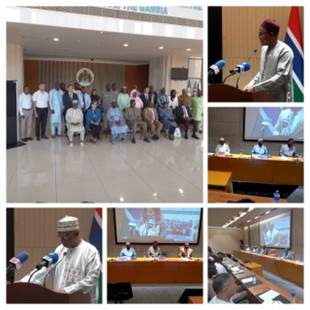
In his welcoming remarks, FSQA director general Mamadou Bah outlined the number of policies they have initiated over the years, saying it is to ensure they are structured.
He also delved into capacity-building and the great strides accomplished in that domain. He underscored how the Chinese Embassy has been of great help, likewise the EU mission in The Gambia, especially in capacity-building and strengthening regulatory frameworks.
On the international front, he acknowledged the likes of FAO and the AU, which have been very supportive over the years, especially in assuming the regional coordinator role for the FAO/WHO Codex Coordinating Committee for Africa (CCAFRICA).
DG Bah asserted that FSQA is on the right track and what lacked "was a structured document" that would lay a strategic roadmap as they step up efforts.
He thus urged attendees to look at the Strategic Plan to be launched and proffer suggestions where they see gaps and think they "can add value". He also urged development partners to support the Strategic Plan.
The EU ambassador Immaculada Roca I. Cortés described the day's event as "not only the launch of a document, but also a statement of ambition, an ambition to strengthen food safety systems, an ambition to protect public health, and an ambition to position The Gambia more strongly in regional and international markets”.
Food safety is sometimes seen as a technical issue, but in reality; it touches on some of the most fundamental aspects of development, according to the EU official. "It is about the safety of the food we eat,” she affirmed. "It is about the health of families and communities."
She said further: "What makes this Strategic Plan particularly important is that it provides a clear direction. It sets priorities. It brings coherence, and it creates a framework within which partners, both national and international, can align their support."
However, she cautioned: "A strategy is only as strong as its implementation. Its success will depend on continued commitment, coordination across institutions, and sustained investment in people, systems and infrastructure."
FSQA board chairperson Dr Amadou Sowe underscored the immense pleasure the launching accords him as board chairperson, adding: "Today's occasion represents far more than the launch of a strategic document; it signals a decisive shift in The Gambia's approach to food safety governance and quality assurance. It is a moment of institutional consolidation, policy clarity and national ambition."
He thus maintained that the plan, therefore, articulates a clear strategic direction for the FSQA over the coming years, built on 5 fundamental pillars, adding: "We must also be candid that this ambition will require sustained investment, strong political will and unwavering commitment from all stakeholders. Strategic plans do not implement themselves; they require leadership, discipline, resources, and collective ownership.
"This launch of the plan should therefore not be seen as the culmination of a process, but rather as the beginning of a transformative journey, a pathway towards building a modern, resilient, and internationally credible food safety system for The Gambia. In doing so, we will not only protect the health of our population but also strengthen our economy, enhance our global standing and secure a safer future for generations to come."
Vice President B.S. Jallow delved into the realities surrounding food safety, underscoring how unsafe food claims life.
He stated: "Over the past decade, FSQA has laid important foundations: developing national regulations, training technical staff, expanding inspections, operationalising regional offices and assuming leadership roles at the regional level, including as Codex Africa Coordinator for 2025 to 2027. But we are gathered here today not merely to celebrate the past. We are here to chart a bold and ambitious course for the future."
He added that the FSQA Strategic Plan 2026–2030 is the product of rigorous analysis, wide consultation and honest self-reflection. He hastened to thank partners, such as the FAO, WHO, WFP, EU, ECOWAS, African Union and others who have supported FSQA's journey.
Concluding, he entrusted the execution of the plan with the relevant officials: "To the staff of FSQA, the food inspectors in the field, the analysts in the laboratories, the officers driving the science, the enforcement officers enforcing food safety laws and the managers guiding this institution, this plan is your mandate, your roadmap and your accountability framework. Its success rests in your hands, and the government will work to ensure you have the tools, the training, and the conditions you need to succeed."