Gambia, Ghana seal landmark Petroleum Pact to strengthen oil sector governance
Speaking at the signing ceremony, Director General of the Petroleum Commission of The Gambia, Cany Jobe Taal, described the agreement as more than the signing of a document, saying it formalises a practical partnership that will benefit both countries. “For The Gambia, this partnership is particularly meaningful because although we remain a frontier petroleum jurisdiction, we have serious ambition, significant geological promise and a clear understanding that petroleum resources alone do not guarantee national development,” he said. Mrs Taal stressed that building strong institutions is as important as discovering petroleum resources, noting that transparent governance, technical competence and public trust are essential to ensuring that future petroleum wealth benefits Gambians. He said Ghana’s petroleum journey offers valuable lessons for The Gambia, highlighting that the West African nation spent more than a century exploring for oil before making the commercially viable Jubilee discovery that transformed it into a petroleum-producing country. “Petroleum development requires patience, persistence and scientific discipline. Countries that continue improving their investment environment and strengthening institutions are better positioned when commercial discoveries are made,” he added. He further stated that the Commission intends to adapt Ghana’s experience to The Gambia’s own context, ensuring that the country’s petroleum governance remains transparent, accountable and focused on long-term national development. Chief Executive Officer of the Petroleum Commission of Ghana, Emefa Hardcastle, reaffirmed Ghana’s commitment to supporting The Gambia’s petroleum sector development through continued technical cooperation and knowledge exchange. She noted that the partnership reflects a shared African vision of institutions learning from one another rather than relying solely on external models of development. “Today’s agreement reminds us that African institutions must deliberately share technical knowledge, regulatory experience and professional networks that will outlast ceremonial events,” she said. Permanent Secretary at the Ministry of Petroleum, Energy and Mines, Abdoulie Jallow, said the partnership demonstrates The Gambia’s determination to build a transparent, accountable and efficient petroleum sector capable of delivering lasting benefits for its citizens. He acknowledged Ghana’s longstanding support through study visits, technical exchanges and institutional engagements, describing the country’s Petroleum Commission as a trusted partner in strengthening The Gambia’s regulatory capacity. “The true measure of this Memorandum of Understanding will not be in the signatures appended today, but in the partnerships we strengthen, the knowledge we share, the capacity we build and the opportunities we create for future generations,” Mr Jallow said. The MoU is expected to deepen cooperation in petroleum governance while positioning The Gambia to benefit from Ghana’s decades of regulatory experience as it advances petroleum exploration and prepares for potential future commercial discoveries.
 Black News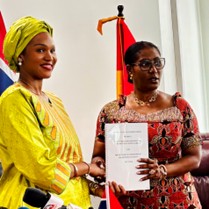
Speaking at the signing ceremony, Director General of the Petroleum Commission of The Gambia, Cany Jobe Taal, described the agreement as more than the signing of a document, saying it formalises a practical partnership that will benefit both countries.
“For The Gambia, this partnership is particularly meaningful because although we remain a frontier petroleum jurisdiction, we have serious ambition, significant geological promise and a clear understanding that petroleum resources alone do not guarantee national development,” he said.
Mrs Taal stressed that building strong institutions is as important as discovering petroleum resources, noting that transparent governance, technical competence and public trust are essential to ensuring that future petroleum wealth benefits Gambians.
He said Ghana’s petroleum journey offers valuable lessons for The Gambia, highlighting that the West African nation spent more than a century exploring for oil before making the commercially viable Jubilee discovery that transformed it into a petroleum-producing country.
“Petroleum development requires patience, persistence and scientific discipline. Countries that continue improving their investment environment and strengthening institutions are better positioned when commercial discoveries are made,” he added.
He further stated that the Commission intends to adapt Ghana’s experience to The Gambia’s own context, ensuring that the country’s petroleum governance remains transparent, accountable and focused on long-term national development.
Chief Executive Officer of the Petroleum Commission of Ghana, Emefa Hardcastle, reaffirmed Ghana’s commitment to supporting The Gambia’s petroleum sector development through continued technical cooperation and knowledge exchange.
She noted that the partnership reflects a shared African vision of institutions learning from one another rather than relying solely on external models of development.
“Today’s agreement reminds us that African institutions must deliberately share technical knowledge, regulatory experience and professional networks that will outlast ceremonial events,” she said.
Permanent Secretary at the Ministry of Petroleum, Energy and Mines, Abdoulie Jallow, said the partnership demonstrates The Gambia’s determination to build a transparent, accountable and efficient petroleum sector capable of delivering lasting benefits for its citizens.
He acknowledged Ghana’s longstanding support through study visits, technical exchanges and institutional engagements, describing the country’s Petroleum Commission as a trusted partner in strengthening The Gambia’s regulatory capacity.
“The true measure of this Memorandum of Understanding will not be in the signatures appended today, but in the partnerships we strengthen, the knowledge we share, the capacity we build and the opportunities we create for future generations,” Mr Jallow said.
The MoU is expected to deepen cooperation in petroleum governance while positioning The Gambia to benefit from Ghana’s decades of regulatory experience as it advances petroleum exploration and prepares for potential future commercial discoveries.