Henry VIII and Hebrew
King Henry VIII still looms large in England and worldwide. He’s a frequent visitor to our TV screens in dramas The post Henry VIII and Hebrew appeared first on Moment Magazine.
 Black News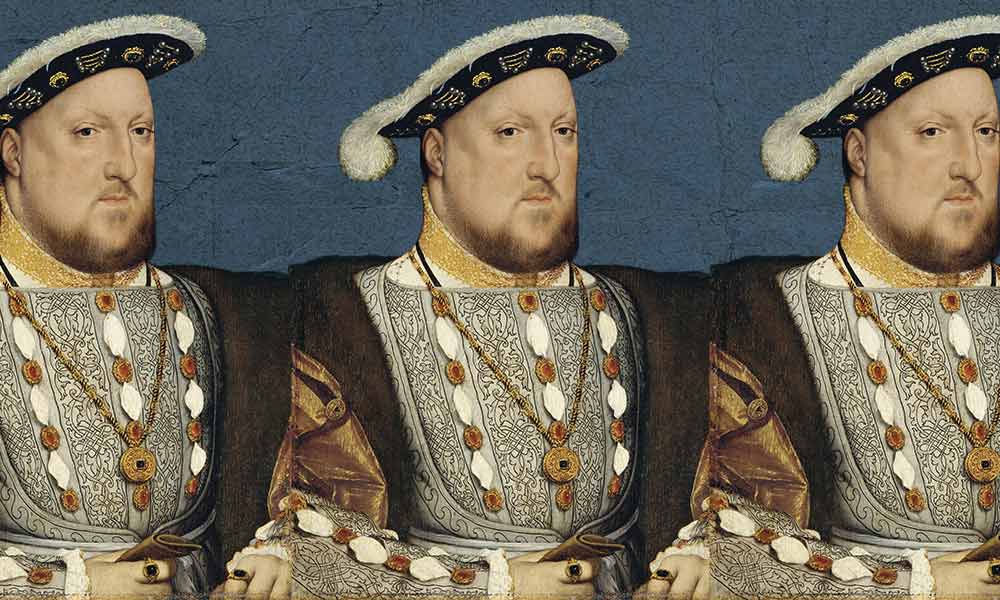
King Henry VIII still looms large in England and worldwide. He’s a frequent visitor to our TV screens in dramas and documentaries, and Six, the Musical has brought his wives’ stories to the London stage and Broadway. You can even buy Henry decorations to adorn your home at the holiday season. Thanks but, really, no thanks. I just don’t get the festive vibe from despotic monarchs, which is what Henry turned into over the course of his long reign.
Henry is best known for his large waistline and complex marital history, but his greatest historical legacy was the separation of the Church of England from the Catholic Church. This set England off on the path to become a Protestant country. This momentous change wasn’t driven by reformist conviction so much as dynastic necessity. In the mid-1520s, almost 20 years into his reign, Henry still lacked a male heir. He decided this meant he needed a divorce from his queen, Katherine of Aragon (no. 1 of 6), and a new wife. The pope refused to give permission, so English law was changed unilaterally, the king replaced the pope as the head of the church in England, and Henry got his way.
This religious revolution didn’t happen overnight. First Henry spent six years waging an elaborate, ultimately futile, legal and propaganda war to persuade the pope to grant the divorce. After trying every other avenue with no success, Henry took the unprecedented step of seeking rabbinic opinion as expert testimony in what was, in essence, a dispute over church law. This little-known aspect of one of the most important passages in English history goes unmentioned in most mainstream accounts—there are no rabbis in Wolf Hall. I looked into it and uncovered a fascinating web of unexpected connections between Henry, Hebrew and Jewish learning.
Henry and Katherine had married in 1509, shortly after he became king. But things were already complicated. Eight years previously she had been married to Henry’s elder brother, Prince Arthur, who was then heir to the throne of England. Arthur died the following year, and it was decided that Katherine should one day marry Henry, who, at the age of 10, was now next in line. But there was a problem. Church law did not allow a man to marry his brother’s widow. This prohibition was based on a key passage of what Christians know as the Old Testament. In Leviticus 18.16 God says, “You shall not uncover the nakedness of your brother’s wife; it is your brother’s nakedness,” which was interpreted as forbidding a man from marrying his sister-in-law. What was needed was a dispensation from Catholic canon law at the right level to ensure that any potential conflicts with Leviticus were properly resolved, and that meant Pope Julius II himself, who duly obliged.
Pope Clement wasn’t open to Henry’s rabbinical reasoning, despite his apparent weakness for Jewish messiahs.
The marriage between Katherine and Henry was happy. But 18 years later, there was still no son and heir. One can only feel for Katherine. Most of her children were either stillborn or died in infancy. Only one, the future Queen Mary, survived into adulthood.
Henry asked himself why God was afflicting him so. He remembered another passage from Leviticus (20.21): “If a man shall take his brother’s wife…they shall be childless.” Henry was a deeply pious Catholic. By the mid-1520s, he seems to have harboured genuine, if self-interested, anxieties about the religious validity of his marriage. Piety being entirely consistent with hypocrisy, he had also become infatuated with a young noblewoman, Anne Boleyn, and he wanted to make her his queen, which meant Katherine had to go. In 1527 he decided to approach the pope to have his marriage to Katherine dissolved.
Ordinarily this would not have been an insuperable problem. Popes were normally willing to be helpful to loyal kings and nobles. But on this occasion there was a serious obstacle. Katherine was the aunt of the Holy Roman Emperor Charles V, who had recently invaded Italy and had the current pope, Clement VII, under his thumb. This meant that Clement was unable to accede to Henry’s request for fear of upsetting Charles, whose army had already sacked Rome. Clement trumped Henry’s Levitical worries with another biblical passage, from Deuteronomy this time (25.5-10), which made it a positive obligation for a man to marry his brother’s widow in a procedure known as levirate marriage.
Henry was in a bind. In 1529 he persuaded Clement to allow the case to be tried in London, but papal procrastination meant it went nowhere. The following year he asked theology faculties in universities across Western Europe for their opinion on the validity of his marriage. Despite extensive bribery, the results he got back were mixed. Some came out in support of Henry’s position, but not all.
Things weren’t going well for Henry. Meanwhile, another new development was afoot on the intellectual scene in Western Europe in the early 1500s. Some Christians had started to learn Hebrew (and Greek), in order to get beyond the medieval Latin Bible and read Scripture in the original. The spread of Hebraism among Christians was like the advent of an exciting new technology for understanding the text—“Hebrew truth” as it was called. One of the early English pioneers of this movement, Robert Wakefield, read his way into the rabbis, including medieval Jewish commentators Rashi, Maimonides and Nahmanides. Henry thought Wakefield’s learning might be a useful weapon in his armory, so he summoned him to an audience in 1527. Wakefield wisely deployed his knowledge in support of the divorce. It didn’t make much of an impact, but the idea that Hebrew and Jewish learning might provide new impetus to the flagging campaign had caught Henry’s attention.
Henry had agents active in Italy searching for documents and opinions that might bolster his cause. As detailed in Jerry Rabow’s excellent book Henry VIII and His Rabbis, Henry and his allies began searching for rabbinic affirmation. One of them, Richard Croke, also began talking to leading members of the Jewish community in Venice and northern Italy to seek their views on the key biblical texts. In 1530 he reported back that levirate marriage was not regarded as obligatory in most cases and that it was rarely practiced. This was good news for Henry—not perhaps a game-changer, but certainly grist to his mill. Croke’s authorities for this information were prominent physician and kabbalist Elijah Menachem Chalfan and a former rabbi turned Christian, Marco Raphael. Halfon, who came from a distinguished rabbinic family, sought to recruit other rabbis to Henry’s cause during the first half of 1530. His support was important, and it attracted the hostile attention of the papal side and their Jewish advocate, Jacob Mantino, another Venetian medical man and philosopher who was well networked into the most senior levels of the Catholic Church, including Pope Clement.
Halfon and Mantino were not friends. They found themselves at odds over another matter that rocked Jewish communities across southern Europe in these years: the rise of Solomon Molcho, a fervent preacher and would-be messiah who attracted both Jewish and Christian followers and even counted Pope Clement among his supporters. Halfon the kabbalist mystic was an admirer, Mantino the prudent community leader was not, probably because he thought Molcho’s activities might stir up anti-Jewish sentiment within Italy. Molcho was arrested by the Inquisition, probably betrayed by Mantino, and condemned to death. Amazingly, Pope Clement stepped in and saved Molcho, though he was later executed on the orders of the emperor Charles V. Henry’s consultation of rabbinic opinion about his marital status seems quite restrained by comparison.
Only one of the rabbinic responses to Henry’s legal quandary survives. Preserved in the British Library bound up in a volume together with other documents about the divorce, it was probably written by an Italian rabbi called Jacob Raphael Faggiano and is dated Modena, January 1530. Written in Hebrew in the intricate style of an expert Talmudist, the rabbi’s position was that marriage between a man and his sister-in-law was only forbidden when the woman was divorced or widowed with children. This wasn’t what Henry wanted to hear. Jewish opinion was not uniformly on his side.
Henry wanted to meet his other Italian champion, Marco Raphael, in person, so he called him to England. Despite the best efforts of the emperor’s spies, who tried to stop him leaving Italy, Raphael made it over the Channel in January 1531. In a face-to-face meeting, he attempted to persuade Henry that he could remarry without divorcing Katherine, because Jewish law allowed him to have more than one wife—like the biblical Patriarchs. To Henry this sounded like bigamy, and he wasn’t having any of it. Undeterred, Raphael tried again: Marriage to a brother’s widow, he argued, was only legitimate if done with the intention of providing a successor for the deceased brother. This was more like it. Henry had only ever wanted an heir for himself; the marriage to Katherine had to be invalid. This went down well with Henry, who rewarded Raphael with a position at court. But Pope Clement wasn’t open to Henry’s rabbinical reasoning, despite his apparent weakness for Jewish messiahs.
There was no shifting the pope, no matter how many favorable opinions Henry piled up, Jewish or Christian. In the years after 1531 Henry’s patience finally ran out and he took a much more disruptive approach. He married Anne Boleyn in secret, had a law passed that prevented appeals to the pope and then got his own religious courts to dissolve his marriage to Katherine. After years of waiting, Anne finally became queen in 1533, and the history of England was changed forever.
Henry’s bold Jewish strategy had gotten him nowhere, but perhaps he learned a thing or two about Jewish theology and scholarship. His penchant for Hebrew certainly didn’t desert him. He may have acquired a copy of the Talmud and he certainly went on to found Regius chairs in Hebrew at both Oxford and Cambridge Universities,which survive to this day. In 2025, a distinguished scholar named Aaron Koller moved from Yeshiva University to Cambridge and became the first Jewish person ever to hold one of Henry’s two Hebrew professorships. After 500 years, Jewish learning and Hebrew truth are finally reconciled within the complex historical legacy of King Henry VIII.
Jonathan Williams is a historian, mostly of the ancient Roman world. He worked at the British Museum for many years and is learning biblical Hebrew—slowly, from a very patient rabbi.
The post Henry VIII and Hebrew appeared first on Moment Magazine.