Here is why E&P and Azumah are clashing over Ghana's $100 million Black Volta Gold Project
A big legal battle over a $100 million gold mine in northwest Ghana has shown growing tension between foreign mining investors and well-connected local businesses.
 Black News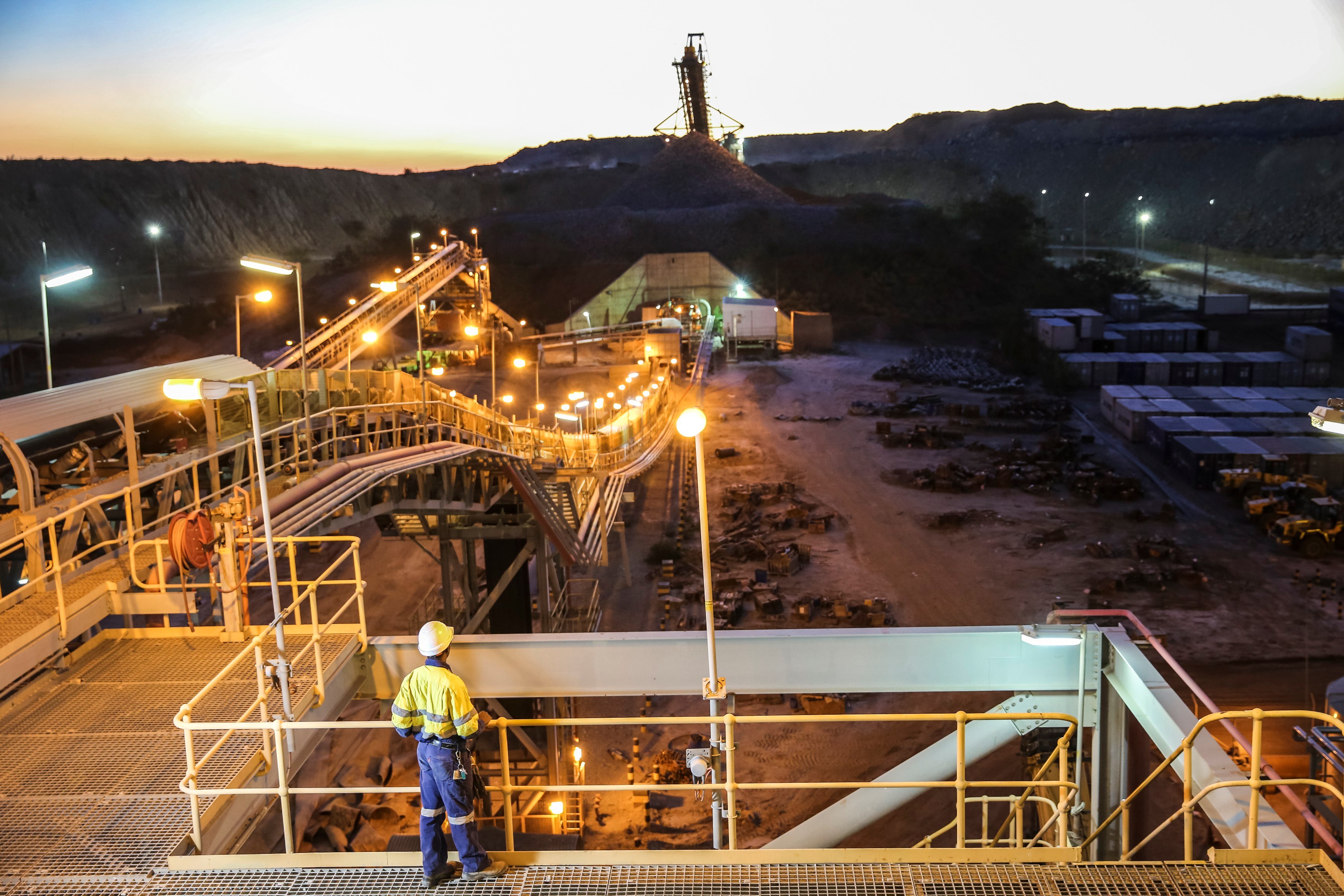
A big legal battle over a $100 million gold mine in northwest Ghana has shown growing tension between foreign mining investors and well-connected local businesses.
- The conflict centers on Azumah Resources, backed by U.S. firm Ibaera Capital, and local company Engineers and Planners (E&P), led by the Ghanaian president's brother.
- A $100 million ownership dispute over the Black Volta gold mine in Ghana has intensified tensions between foreign investors and local businesses.
- Foreign investors accuse E&P of failing to meet purchase agreements and allege unlawful seizure and document forgery, which E&P denies.
- International and English courts have issued orders favoring the foreign investors, but E&P reportedly continues to occupy the mine and plans to challenge the rulings.
At the center of the fight is the Black Volta gold project, a highly desired and mostly undeveloped site in the Wa-Lawra gold belt. It is now caught in a bitter ownership fight between a local mining company called Engineers and Planners, known as E&P, and the foreign investors who back Azumah Resources.
The argument has drawn a lot of attention because E&P is led by Ibrahim Mahama, the brother of Ghanaian President John Dramani Mahama. Aside from the family ties to the president, the standoff serves as an important test case for how safe foreign investments are at a time when Ghana is changing its mining rules to keep more resource wealth inside the country.
The Source of the Friction
The argument goes back to a 2023 deal. According to E&P, Azumah’s owners offered the company the right to buy the Black Volta asset for $100 million. To support its claim, E&P got a $120 million loan from a West African development bank in July 2025 specifically meant to pay for the purchase.
However, Azumah Resources and its main backer, a United States private equity firm called Ibaera Capital, strongly reject this story. The foreign investors argue that E&P failed to meet the required deal promises needed to hand over any ownership.
They have made serious accusations against the Ghanaian company, claiming that E&P unlawfully took over the mining site and even faked signatures to carry out a dishonest transfer of shares.
E&P has denied all claims of faking signatures and trespassing. Its lawyer maintains that the company has not taken over the mine or its resources, calling the accusations public relations tricks.
DON'T MISS THIS: Ghana says xenophobia made it reject South Africa's president's visit; Pretoria disagrees
The International Legal Tussle
Because the original contracts were made under English law with a plan to settle fights in the United Kingdom, the battlefield moved to international courts. So far, the legal wins have favored the foreign investors.
In October 2025, the International Chamber of Commerce’s International Court of Arbitration in London issued a temporary order telling E&P to stop trespassing on, occupying, or interfering with the Black Volta and Sankofa mine sites.
After that, in June 2026, the High Court of England and Wales ruled that E&P had failed to follow the arbitration court's orders.
Despite these two legal warnings, spokespeople for Azumah's investors claim E&P has ignored the rulings and refused to leave the property over the last nine months. On the other side, E&P’s legal team is currently preparing steps to legally challenge and remove the English court's order.
Broader Implications for Ghana's Mining Sector
The corporate showdown comes at a delicate economic time for Ghana. According to reporting by Semafor, the government is looking to its mining sector, which is Africa's largest gold producer, to secure long-term financial stability after recently coming out of a severe economic crisis that required a $3 billion IMF financial rescue.
To take advantage of high global gold prices, President Mahama's administration has started a sweeping change of plans, introducing rules like a shifting gold royalty system and strict local ownership demands.
New rules state that surface mining work must be entirely owned by Ghanaian citizens, and foreign mining giants have been told to hand over operations to local workers by December 2026 or face penalties from regulators.
While the government defends these rules as necessary steps toward control of its own economy and clearer resource management, the Black Volta fight has raised worries among foreign companies.
Critics and opposition politicians have raised concerns about potential favoritism and unfair advantages for relatives, warning that high-profile property fights involving political figures could make foreign investors more afraid to bring their money into the country.
A final answer to the immediate crisis is coming soon. Representatives from both sides have confirmed that the International Court of Arbitration is set to meet for a final hearing in September 2026, where a binding decision on who owns the Black Volta project is expected.