Sudan’s gold wealth under threat as the EU moves to choke a key war revenue stream
Fresh sanctions have been placed on the Sudanese gold trade by the European Union (EU), as a result of the North-Eastern African country’s ongoing conflict.
 Black News

Fresh sanctions have been placed on the Sudanese gold trade by the European Union (EU), as a result of the North-Eastern African country’s ongoing conflict.
- The European Union has imposed new sanctions on Sudan's gold trade, including an import ban and restrictions on selling gold within EU states, in response to the country's ongoing civil conflict.
- Sudan's gold exports have significantly declined from previous years, with official figures showing only 14.7 tons exported in 2025 compared to 22.9 tons in 2024, but substantial amounts are believed to be smuggled out.
- Gold accounts for more than 58% of Sudan's export value, making it a crucial economic resource amid the civil war that has devastated other sectors.
- Control over gold mines and trade routes has fueled the conflict, serving as a key source of funding for both Sudanese government forces and the paramilitary Rapid Support Forces (RSF).
The new prohibitions were approved on Monday by ministers within the European body, as Sudan marks four years into its brutal civil war.
These sanctions, as seen on Bloomberg, include an import ban on the country’s gold, a ban on selling cyanide and mercury to the war-torn nation, as well as tighter restrictions on selling Sudanese gold within EU states.
These measures represent part of the European Union's initiatives to restrict commercial entities that potentially sustain Sudan's internal conflict, which has persisted since 2023.
This move constitutes the bloc's first new punitive measures applied to this often overlooked conflict in several months.
Prior to this, the Union has also enforced sanctions against specific individuals associated with various factions involved in the conflict.
According to official documentation, Sudan's military-backed administration exported $14.7 tons of gold in 2025, representing a decline from the 22.9 tons exported during the preceding year.
Nevertheless, national authorities have regularly expressed concern that illicit smuggling networks deprive the country of billions of dollars annually.
According to the state-run Sudanese Mineral Resources Company, around $5 billion worth of Sudanese gold, which is one of the country’s top revenue generators, was smuggled into neighboring countries including Chad, South Sudan, and Egypt last year as the country's civil conflict ravaged it and killed hundreds of thousands of people.
Sudan’s recent gold margins
In April, the Sudanese Mineral Resources Company (SMRC) disclosed that profits from artisanal mining achieved 113% of predicted objectives in the first quarter of 2026, while overall gold production reached 89% of planned output.
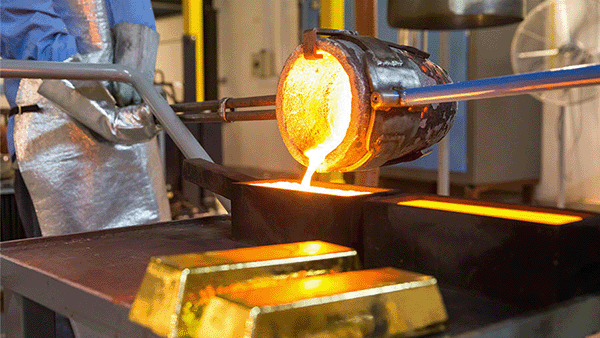
At the time, it was reported that gold represents more than 58% of Sudan's overall export value, making it the country's primary source of foreign cash.
Sudan's overall exports in 2023 were $5.09 billion, with gold accounting for $1.03 billion, second only to crude oil ($1.13 billion).
Finance Minister Gibril Ibrahim claimed Sudan produced over 70 tonnes of gold in 2025, exceeding its national objective by 13%, but official exports did not reach 20 tonnes, demonstrating the magnitude of smuggling and informal trade.
According to Central Bank figures, just 14.7 tons were exported through legitimate routes in 2025, totaling $1.536 billion.
These figures highlight gold's increasing importance as Sudan's primary economic lifeline, as combat between the Sudanese army and the paramilitary Rapid Support Forces (RSF) enters its fourth year, hurting agriculture, trade, and other government revenue streams.
Since the conflict began in 2023, ownership of gold mines and trade routes has become a key source of funding for both the Sudanese army and the paramilitary Rapid Support Forces (RSF), cementing gold's place at the heart of the country's war economy.
Additionally, the paramilitary Rapid Support Forces has been accused by the Sudanese Armed Forces of smuggling substantial amounts of gold to the United Arab Emirates to finance its combat activities. The RSF disputes this accusation.
Middle East influence on Sudan
As soon as the Sudanese civil war broke out, Saudi Arabia supported peace negotiations and maintained close contact with Sudan's army-backed administrations during the conflict, which hampered trade, crippled national finances, and displaced millions.
The UAE remains one of Sudan's most prominent Gulf-nation influences.
Its position, however, became increasingly politically delicate as the conflict progressed and suspicions of external backing for the RSF became more vocal.
Sudan's army-affiliated military council announced in May 2025 that it would terminate connections with the UAE, accusing Abu Dhabi of providing sophisticated weaponry to the RSF, which the UAE has denied.
The dispute expanded further after the UAE blocked Sudanese flights from its airports and, according to a Financial Times investigation, restricted cargo transfers to and from Port Sudan in early August, interrupting flows related to South Sudanese oil processed in Fujairah.