How Matt B Found His Way Home
Bristling with conviction after his 2025 Grammy win, Matt B set out to make his most ambitious project yet: on ‘ALKEBULAN III.’ The post How Matt B Found His Way Home appeared first on The NATIVE.
 Black News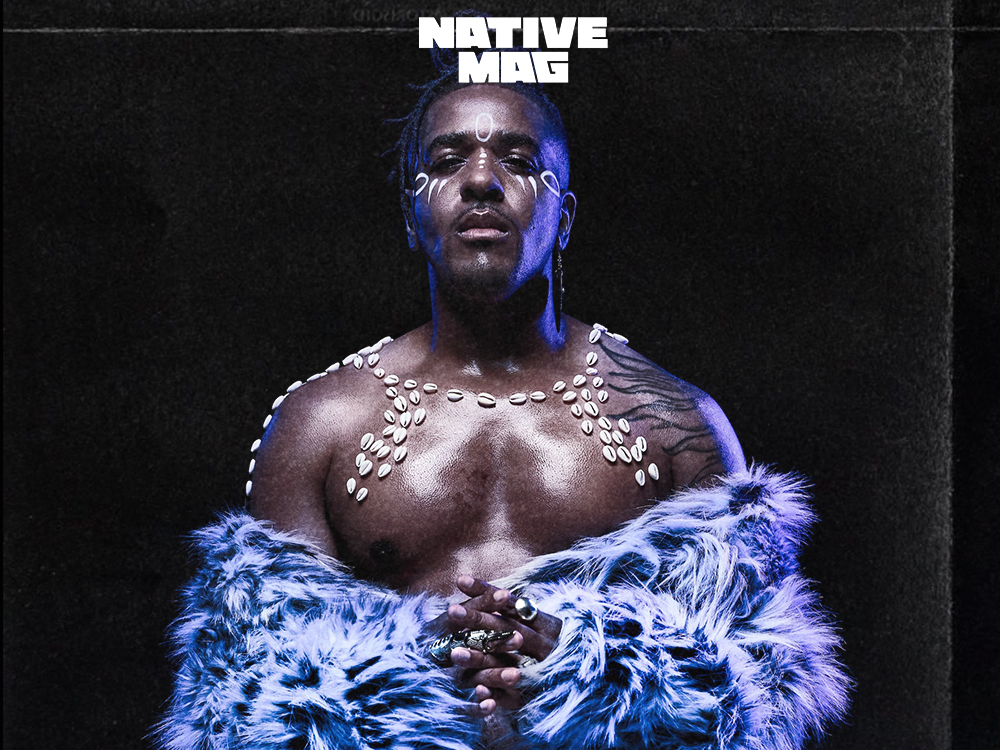
As the host announced the nominees in the Best Global Music Album category of the 2025 Grammy Awards, Matt B felt the weight of anticipation in the pit of his stomach. Wearing a sequined black suit with golden flourishes and large golden earrings that glistened under the ambient lighting, he looked like a modern incarnation of Mansa Musa, the 13th-century Malian monarch who earned global fame for his immense wealth. Tems, a fellow nominee alongside Nigerian star Rema, had just won the Best African Music Performance category. He wondered if she’d make a clean sweep.
He turned to his wife and manager, Angela Benson, who looked just as radiant in a golden dress, and told her they’d done their best. “No matter what happens, it’s in God’s hands now.” So, when he heard his name announced as the winner, followed by a thunderous boom of cheers and applause, for a few seconds, he sat stunned, wondering if there’d been a mistake. Soon, he was on the Grammy stage—slicked in a thin coat of sweat and gripped by an ecstasy that knew no bounds—thundering a poignant acceptance speech that foregrounded his intentions with the album: shining a light on the beautiful culture of Africa and reconnecting with his ancestral roots.
After the ceremony that night, members of his team and his close circle congregated at his hotel for preliminary celebrations, then crashed through a blitz of after-parties that lasted until the early hours of the next morning. “From there I just kind of crashed and burned,” he tells me over a Google Meet call sometime in September. “All that adrenaline coming in at one time—after the Grammys, I slept for days.” He’s framed against the backdrop of a white room adorned with leafy potted plants, a dreamy elephant painting, and a two-faced African mask. I ask him what, if anything, changed after winning the Grammy, and he says it imbued him with unshakeable confidence.
He explains that artists constantly seek external validation. During recording sessions, “you’re looking at the producer, at your co-writer, at the other people in the room, looking for that external validation, looking to see that what you’re doing is good enough.” After the Grammy, all that went away and his confidence soared. Bristling with conviction, he set out to make his most ambitious project yet: the final part of his ‘ALKEBULAN’ trilogy.
Matt B—real name Matthew Benson—is gregarious and warm. He has a tendency for wide smiles when he recounts stories and will often pause mid-conversation to ask if you follow. When he gets passionate, however, this tenderness gives way to something resembling holy fervor, the kind of conviction one finds with clergymen. He’s wearing a pink sweater, and his locs are styled to drape around his left temple. It’s his birthday; he just turned 37. But he tells me it’s just another day to him. “I’m just not really a birthday person. I last celebrated my birthday when I was thirteen,” he laughs. “But I’m always welcome to birthday wishes.”
It’s a few minutes past 1 pm in Los Angeles, where he lives with his family and his kids might have something planned, he says. But he’d prefer the day to pass without fanfare, especially considering he heads out to Texas the next day. Soon, our conversation turns to his latest album ‘ALKEBULAN III: The Water Remembers.’
Matt B had opened his Grammy acceptance speech by marveling at how the journey to his ‘ALKEBULAN’ album series—which melds orchestral music, contemporary Afropop, Afrobeat and Traditional African music into a vibrant cinematic soundscape—started with an AncestryDNA test which revealed he was mostly Nigerian. Following his speech, the company reached out to offer a deeper ancestral tracking process, which eventually revealed his roots in Owerri, a leafy metropolis in the South Eastern part of Nigeria. After learning this, it became obvious to him that ‘ALKEBULAN III’ would lean into exploring his Nigerian roots.
The album, which was released late in August, maintains his genre-agnostic style. And yet, its Nigerian influences leap out from the surface, often to dazzling effect. Consider “Iri Ji,” an ode to the New Yam Festival celebrated in the Eastern part of Nigeria. Soaring violins and the precision of the composition echo the technical deftness of the Philharmonic orchestra. But the underpinning melody is unmistakably Igbo. A fluttering guitar melody glides across the production, conjuring the festive air of a communal gathering at a family bungalow in Aba or Owerri.
While the scaffolds of the album had materialized with relative ease, making the project proved a more difficult enterprise. A major bottleneck was his decision to deliver much of the project in his native Igbo, which he had yet to gain mastery of. “It’s a very tonal language, so it’s very difficult to sing in,” he explains. The writing process presented other challenges. He’d often start in English, then work with co-writers and translators to re-render the lyrics in Igbo. In one case, he started with a melody, which he sent to a co-writer from Uganda, who then layered it with lyrics in Luganda, a language spoken by millions in Central Uganda. The lyrics had to be translated to English, then Igbo, before Matt B could layer them on the production.
The first song, from the album, he wrote “took me three or four months to write,” he says. “The premise of the song was there, but it just wasn’t right.” The breakthrough arrived when he dove into historical literature in search of real stories. Matt B gets animated as he relays this part of the story. He stumbled across a story about a nine-year-old girl who was captured in the 1700s and sold into slavery in the Americas. Shorn of physical links to her culture, the young girl held on to a tribal song her mother had taught her, passing it on to her children, who in turn bequeathed the melody to their descendants. 300 years later, they’d identify and return to their ancestral home, a village in Sierra Leone, through the song.
The story inspired “My Mother’s Song,” one of the standouts on the album. The track, and the story that inspired it, underscore his ethos on this album. For years, Matt B has explored cultural memory with his swelling orchestral compositions. However, on ‘ALKEBULAN III: The Water Remembers,’ the Grammy Award-winning musician offers the most precise rendering of his journey back home. The project’s thrust is the idea that water, which facilitated the transatlantic slavetrade, holds memory. “Water holds memory,” he explains.“We hold the memory of our ancestors, their experiences, their trauma, but also their joy.”
About a month before the album dropped, Matt B made his own pilgrimage back home, to his village in Owerri. First, he’d visited the Door of No Return at Ghana’s Elmina Castle, where captive Africans were forced onto ships during the transatlantic slave trade. “It was such a beautiful moment because when I put the water of the river on my body, that was not my last bath; it wasn’t my door of no return,” he laughs. In his hometown in Owerri, he received a welcome fit for a king: a 12-gun salute and lively performers by drummers and dancers dressed colorfully. “After 400 years of separation, I’m here staring into the eyes of my actual bloodline,” he recalls. “One of the people I met looked exactly like my father.”
Dressed in an Isi Agu and the distinctive Igbo red hat, he was conferred with two chieftaincy titles and a name: Ikechuckwu, meaning God’s Power. He’s come a long way from being a kid navigating hunger, cold, and the spectre of violence that lurked on the streets of Englewood, Chicago. “Going back home was a very powerful, emotional experience for me, and I hope and pray that more people from the diaspora, particularly African Americans, can experience it, because there truly is no place like home.”
Listen to ‘ALKEBULAN III: The Water Remembers’ here.
The post How Matt B Found His Way Home appeared first on The NATIVE.