How Sister Sage Was Built to Shatter Expectations of Black Women
In a standout moment for representation in superhero television, Susan Heyward is redefining what audiences expect from Black women on screen through her portrayal of Sister Sage in The Boys. In an interview with Black Girl Nerds, Heyward opened up about the intentionality behind the character and how Sister Sage was designed to disrupt long-standing… The post How Sister Sage Was Built to Shatter Expectations of Black Women appeared first on Black Girl Nerds.
 Black News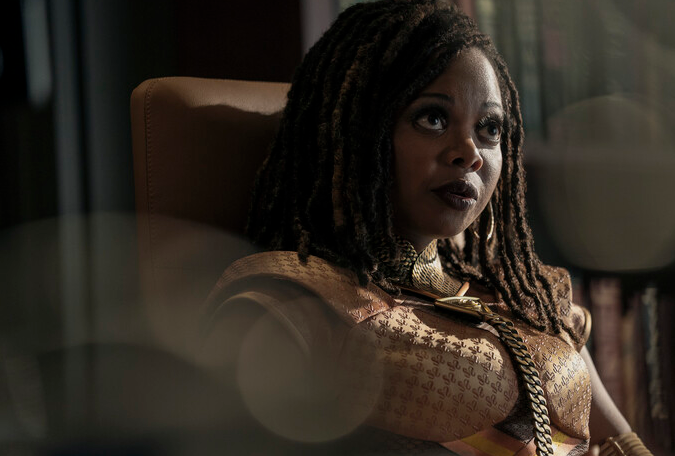


In a standout moment for representation in superhero television, Susan Heyward is redefining what audiences expect from Black women on screen through her portrayal of Sister Sage in The Boys.
In an interview with Black Girl Nerds, Heyward opened up about the intentionality behind the character and how Sister Sage was designed to disrupt long-standing stereotypes. From the moment the role was introduced, it was clear that this was not going to be a typical addition to the world of Supes.
“I think she challenges preconceptions of Black women specifically,” Heyward shared. “There are a lot of people who’ve been taught to not expect much intellectually from the group that I represent.”
That statement cuts to the core of why Sister Sage feels so revolutionary. In a genre often dominated by physical power and spectacle, intelligence is rarely positioned as the defining trait of a Black female character. Sister Sage flips that narrative entirely. Described as the smartest person in the world, the character immediately subverts expectations. For Heyward, that distinction was more than just a character detail. It was a statement.
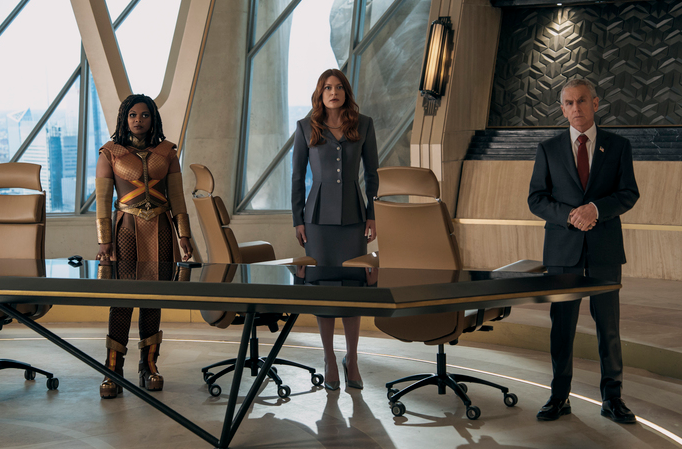
“When the opportunity came to present a Black female Supe who is the smartest person in the world, that immediately went against preconceived notions,” she explained.
Within the chaotic, often morally corrupt universe of The Boys, Sister Sage’s intellect becomes her superpower. It is not just about being brilliant. It is about how that brilliance challenges the audience’s assumptions and forces a recalibration of how Black women are perceived in positions of power.
Heyward also noted how rare it has been to see Black women occupy meaningful space in the series prior to Sister Sage’s arrival. While characters connected to Mother’s Milk have existed within the narrative, the introduction of a Black woman as a central Supe marks a significant shift. For viewers who have long searched for more layered and complex portrayals, Sister Sage arrives as both a revelation and a disruption.
“I had been looking for a Black woman character,” Heyward said. “So when this came along, it felt like finally.”
That sense of “finally” resonates beyond the show itself. It speaks to a broader cultural hunger for representation that goes beyond visibility and into depth, nuance, and power. Sister Sage is not simply present. She is dominant in a way that demands attention.
And perhaps most importantly, she is unapologetic in her intelligence.
Sister Sage is calculating, perceptive, and formidable. Her presence challenges viewers to confront their own biases, whether they realize it or not.
“I think she’s there to smash every preconception that’s possible,” Heyward said. It is a bold statement, but one that feels earned.
By centering a Black woman as the most intellectually powerful figure in the room, the series takes a meaningful step forward in redefining what power looks like. Not just in superhero narratives, but in television as a whole.
And if Heyward’s performance is any indication, Sister Sage is only getting started.
The Boys is currently streaming on Prime Video.
The post How Sister Sage Was Built to Shatter Expectations of Black Women appeared first on Black Girl Nerds.