In observance of Chinese Language Day, 40 scholarships awarded to UTG
The event, held at the Kanifing Campus auditorium, brought together senior university management, representatives of the Confucius Institute, government officials, students, and the Chinese Ambassador His Excellency Liu Jin. Delivering the keynote address, the Vice-Chancellor of UTG, Herbert Robinson, described the occasion as both “a celebration and a reaffirmation” of the enduring partnership between the University of The Gambia and the People’s Republic of China. He stressed that the Chinese Ambassador’s Scholarship represents more than financial aid. “This gesture is far more than financial support; it is an investment in talent, aspiration, and the future of young Gambians,” he stated. He outlined key academic developments driven by the partnership, including the approval of a Minor in Chinese Language, plans to introduce a full Major, and the upcoming launch of Chinese Development Studies under the School of Arts and Sciences. He further revealed plans to establish a Chinese Ambassador’s Diplomatic Lecture Series within the Master’s programme in International Relations and Diplomacy, as well as the creation of a “Chinese Corner” at the Faraba Campus library. Highlighting international engagement, Robinson referenced UTG’s participation in the 2025 World Chinese Language Conference in Beijing and pointed to the “Chinese Language Plus Agriculture” initiative as a strategic opportunity for The Gambia’s development, particularly in agritech, research collaboration, and value-chain development. Speaking on behalf of the scholarship recipients, student representative Omar K.B. Samura described the award as transformative for many students facing financial hardship. “This scholarship has lifted the burden that often blurs the line between delay and progress, between struggle and focus, and sometimes between dropping out and graduating,” he said. Samura highlighted that many students in UTG take longer than expected to complete their programmes due to financial constraints, often balancing academics with work. “Some students spend six to seven years completing programmes designed for four years, not because they lack ability, but because of financial hardship,” he explained. He also added that such challenges sometimes prevent students from achieving top academic honours like Summa Cum Laude or Magna Cum Laude, as they are forced to divide their time between studies and earning a living. In his remarks, Ambassador Liu Jin described the event as a moment for “cultural exchange, inspiring the youth and renewing our friendship.” He noted that this year marks the 80th anniversary of Chinese as an official language of the United Nations, as well as the 10th anniversary of diplomatic relations between China and The Gambia. The Ambassador highlighted the growing popularity of Chinese language education in The Gambia, particularly through the Confucius Institute at UTG, which now extends programmes to schools and the wider public. “We welcome Gambian friends to learn Chinese, understand China, and visit China,” he said. He also revealed that over 1,000 Gambians participated in exchange programmes in China last year, with more opportunities planned, including an AI Innovation Competition for African youth. Emphasising the role of young people in strengthening bilateral relations, the Ambassador encouraged scholarship recipients to study hard and contribute to national development. “I hope you will serve your country and become goodwill ambassadors of China-Gambia friendship,” he stated.
 Black News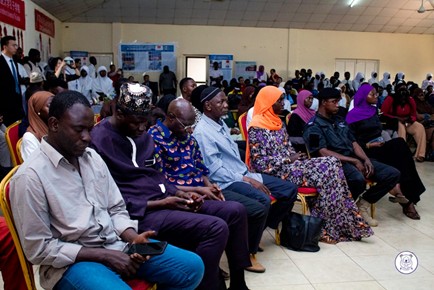

The event, held at the Kanifing Campus auditorium, brought together senior university management, representatives of the Confucius Institute, government officials, students, and the Chinese Ambassador His Excellency Liu Jin.
Delivering the keynote address, the Vice-Chancellor of UTG, Herbert Robinson, described the occasion as both “a celebration and a reaffirmation” of the enduring partnership between the University of The Gambia and the People’s Republic of China.
He stressed that the Chinese Ambassador’s Scholarship represents more than financial aid.
“This gesture is far more than financial support; it is an investment in talent, aspiration, and the future of young Gambians,” he stated.
He outlined key academic developments driven by the partnership, including the approval of a Minor in Chinese Language, plans to introduce a full Major, and the upcoming launch of Chinese Development Studies under the School of Arts and Sciences.
He further revealed plans to establish a Chinese Ambassador’s Diplomatic Lecture Series within the Master’s programme in International Relations and Diplomacy, as well as the creation of a “Chinese Corner” at the Faraba Campus library.
Highlighting international engagement, Robinson referenced UTG’s participation in the 2025 World Chinese Language Conference in Beijing and pointed to the “Chinese Language Plus Agriculture” initiative as a strategic opportunity for The Gambia’s development, particularly in agritech, research collaboration, and value-chain development.
Speaking on behalf of the scholarship recipients, student representative Omar K.B. Samura described the award as transformative for many students facing financial hardship.
“This scholarship has lifted the burden that often blurs the line between delay and progress, between struggle and focus, and sometimes between dropping out and graduating,” he said.
Samura highlighted that many students in UTG take longer than expected to complete their programmes due to financial constraints, often balancing academics with work. “Some students spend six to seven years completing programmes designed for four years, not because they lack ability, but because of financial hardship,” he explained.
He also added that such challenges sometimes prevent students from achieving top academic honours like Summa Cum Laude or Magna Cum Laude, as they are forced to divide their time between studies and earning a living.
In his remarks, Ambassador Liu Jin described the event as a moment for “cultural exchange, inspiring the youth and renewing our friendship.”
He noted that this year marks the 80th anniversary of Chinese as an official language of the United Nations, as well as the 10th anniversary of diplomatic relations between China and The Gambia.
The Ambassador highlighted the growing popularity of Chinese language education in The Gambia, particularly through the Confucius Institute at UTG, which now extends programmes to schools and the wider public. “We welcome Gambian friends to learn Chinese, understand China, and visit China,” he said.
He also revealed that over 1,000 Gambians participated in exchange programmes in China last year, with more opportunities planned, including an AI Innovation Competition for African youth.
Emphasising the role of young people in strengthening bilateral relations, the Ambassador encouraged scholarship recipients to study hard and contribute to national development. “I hope you will serve your country and become goodwill ambassadors of China-Gambia friendship,” he stated.