Iran ties future of US deal to Washington’s compliance
Iran’s Parliament Speaker Mohammad Baqer Qalibaf has warned that the future of a newly signed memorandum of understanding between Tehran and Washington will depend entirely on whether the United States honours its commitments. Speaking to Iranian state media, Qalibaf said the agreement is anchored on a strict “action for action” principle, under which Iran will […] The post Iran ties future of US deal to Washington’s compliance appeared first on Daily Star.
 Black News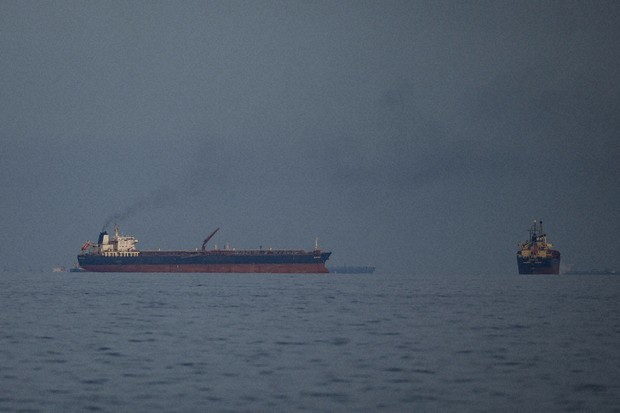
Iran’s Parliament Speaker Mohammad Baqer Qalibaf has warned that the future of a newly signed memorandum of understanding between Tehran and Washington will depend entirely on whether the United States honours its commitments.
Speaking to Iranian state media, Qalibaf said the agreement is anchored on a strict “action for action” principle, under which Iran will only fulfil its obligations if the United States does the same.
“Every commitment we have accepted in the memorandum of understanding is based on the principle of action for action,” Qalibaf said. “If the United States does not fulfil its commitments, we will not take any action either.”
The remarks offer fresh insight into Tehran’s approach to implementing the agreement reached after months of heightened tensions and a military confrontation that pushed the two countries to the brink of wider conflict.
Qalibaf struck a sceptical tone towards Washington, saying his distrust of the United States remains deep despite the deal.
“My distrust and pessimism towards the United States is greater than anyone else’s,” he said. “Even if there is a final agreement and it is approved by a Security Council resolution, it is still not trustworthy at all. Our guarantee is Iran’s power.”
He argued that Iran’s security would depend not on diplomatic assurances but on its military strength and national unity.
The comments are likely to heighten concerns about the durability of the agreement, given the long-standing mistrust between the two countries following the collapse of the 2015 nuclear deal.
Qalibaf also revealed that he was initially reluctant to join the negotiation team, citing his opposition to engaging with former US president Donald Trump, whom he accused of orchestrating the 2020 killing of Iranian military commander Qassem Soleimani.
“Not only was I not a volunteer to be part of the negotiation team, but I was also reluctant,” he said.
However, he said he later accepted the role out of a sense of duty.
“We are not supposed to do what we like, but rather what our duty is,” he added.
The speaker maintained that Iran negotiated from a position of strength, arguing that recent developments had shifted the regional balance of power in Tehran’s favour.
According to him, European countries that once pushed for sanctions are now seeking dialogue with Iran.
He also suggested that Western security officials who previously labelled Iran’s Revolutionary Guard a terrorist organisation have since sought engagement with Tehran.
On regional security, Qalibaf said the Strait of Hormuz — a key global energy route — would not return to its previous state following the recent conflict.
“The Strait of Hormuz will never return to its previous conditions,” he said, adding that Iran would assert its sovereign rights under international law, including charging fees for maritime services.
He further disclosed that the memorandum includes provisions for significant economic investment, with up to $300 billion earmarked for Iran’s reconstruction and development.
Qalibaf also insisted that Iran’s frozen assets abroad must be returned as part of the agreement.
Throughout the interview, he stressed that Tehran would closely monitor US compliance and respond firmly to any violations.
“Wherever the enemy does not fulfil its commitments, our policy is to retaliate,” he said.
In one of his strongest warnings, he added: “Our sword is ready… with the logic of power, we will make Americans understand.”
Qalibaf acknowledged he is not a career diplomat but insisted he knows how to deal with Washington.
“I am not a diplomat, but I know very well how to make America understand what it must do,” he said.
His remarks underscore the fragile nature of the agreement, with its survival likely to hinge on mutual trust that has long been in short supply between Tehran and Washington.
The post Iran ties future of US deal to Washington’s compliance appeared first on Daily Star.