Is Zimbabwe’s economic boom reserved only for the politically connected while ordinary citizens suffer?
“A tale of two cities”, as Charles Dickens wrote.
 Black News

Tendai Ruben Mbofana
No one in their right mind can deny the impressive economic figures and macroeconomic strides witnessed in Zimbabwe over the past few years under the so-called Second Republic.
To directly receive my articles please join my WhatsApp Channel on: https://whatsapp.com/channel/0029VaqprWCIyPtRnKpkHe08
State media and official releases paint a picture of an economy firing on all cylinders.
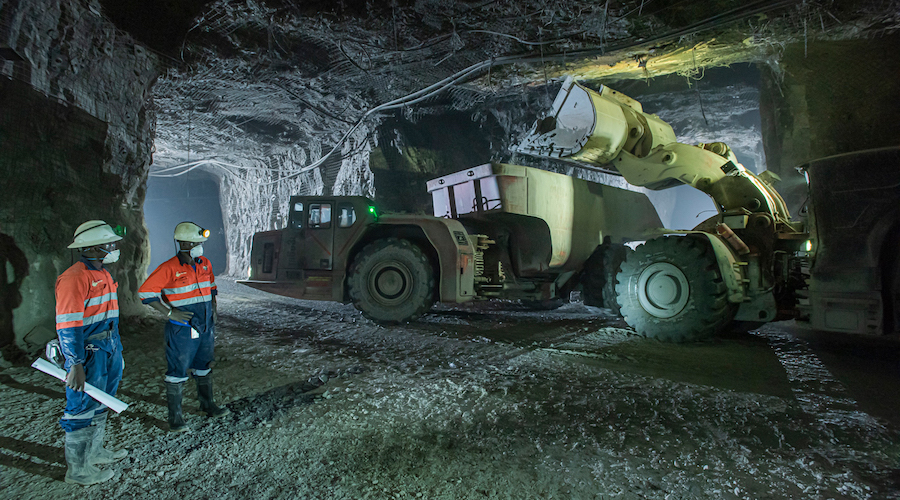
For the first time this year, monthly export earnings exceeded the $1 billion mark in June, jumping by 63 percent from $884 million in May, driven by semi-manufactured gold, nickel mattes, and other valuable minerals.
Across the first half of 2026, total export receipts reached an unprecedented $5.89 billion, up from $3.87 billion during the same period last year.
Backed by booming mineral exports, resilient diaspora remittances, and a move toward domestic lithium beneficiation, the International Monetary Fund confirmed a $2.1 billion current-account surplus in 2025 alongside a 58 percent year-on-year surge in exports.
These figures are accompanied by headline milestones that any treasury would boast about.
For the first time in decades, annual inflation has stabilized into single-digit territory, while the country recorded one of the fastest-growing Gross Domestic Products in the region.
Real GDP growth reached 8.3 percent in 2025 and is projected to expand between 4.6 and 5 percent this year.
The economy has consistently maintained this upward trajectory over the past few years.
Given these stellar statistics, one would naturally expect the daily livelihoods of ordinary Zimbabweans to simultaneously improve.
In any normal functioning economy, sustained GDP expansion, soaring export earnings, and balance-of-payment surpluses trickle down to improve basic living conditions, raise wages, and upgrade public infrastructure.
However, the reality on the ground in Zimbabwe is completely divorced from these celebrated macroeconomic achievements.
What citizens are witnessing daily are shocking, escalating levels of poverty.
The bitter truth is that ordinary Zimbabweans are significantly poorer today than they were nine years ago when the Second Republic assumed power in 2017.
Just as the government’s statistics on export growth do not lie, the figures tracking human suffering and poverty in Zimbabwe do not lie either.
According to IMF international poverty metrics, extreme poverty—defined as those surviving on less than $2.15 a day or earning under $65 a month—rose from 30.4 percent of the population in 2017 to an appalling 42 percent in 2025.
Similarly, general poverty, encompassing those living on less than $3.65 a day or earning under $110 a month, climbed from 61.6 percent in 2017 to 64.5 percent today.
When examining upper poverty—those living on less than $6.85 a day or under $200 a month—the figure rose from 83 percent in 2017 to 85 percent in 2025.
These numbers represent a profound social tragedy.
How can a nation where over two-thirds of the population takes home less than $200 per month boast of phenomenal economic growth and billion-dollar export earnings?
The endless government-sponsored “empowerment projects” touted in state media are clearly not empowering anyone in a meaningful way.
They are designed merely to keep citizens barely afloat and prevent outright starvation.
Even among formal workers, the distress is severe.
While the lowest-paid civil servant earns around $375 on paper, their actual take-home pay after taxes and mandatory deductions often drops as low as $150, placing state employees firmly within the poverty bracket.
This systemic decay is not felt only in empty pockets; it is measured in lost human lives across underfunded public hospitals where thousands die each year simply because there are no basic medications, functional machines, or working theater equipment.
Children’s futures are repeatedly stolen in schools—particularly in rural areas—that lack proper building infrastructure, textbooks, and science laboratories.
Roads across the country are in shambles and barely navigable, while major urban centers have gone years without reliable running tap water.
The natural question to ask is simple: who then is reaping the fruits of this lauded economic development?
It is certainly not ordinary Zimbabweans.
Instead, this is a country where an individual with close ties to the corridors of power can casually splash over $70 million in just a few years on lavish gifts for religious groups and celebrities.
It is a country where, within a mere 18 months, a romantic partner of a political elite can purchase at least ten luxury properties valued at an estimated $7 million.
One can only imagine the sheer volume of wealth possessed or spent by the political elite themselves.
Meanwhile, the overwhelming majority of hard-working Zimbabweans cannot afford to give even $10 to a family member in desperate need.
Where is all this private wealth coming from?
Even the world’s wealthiest individual, Elon Musk, does not hand out millions of dollars in liquid cash to private individuals on a personal whim.
It is undeniably clear that two separate economies operate in Zimbabwe today: one exclusive economy for the ruling elite and their cronies, and a subsistence economy for everyone else.
Transparency International’s Corruption Perceptions Index ranks Zimbabwe among the most corrupt nations globally, placing it at a dismal 157 out of 182 countries.
That ranking explains the structural disconnect.
In a country blessed with vast natural wealth and surging mineral revenues, millions remain among the poorest people on earth because the gains are systematically siphoned off at the top.
The economic development under the Second Republic is not designed for the general public—it is built by and for those in power.
If current trajectory holds, by 2030, ordinary Zimbabweans will remain just as poor, if not worse off.
- Tendai Ruben Mbofana is a social justice advocate and writer. Please feel free to contact him on +263715667700 or mbofana.tendairuben73@gmail.com