Hassoum Ceesay’s British Academy Honour: A new era for Gambian history, archives and heritage leadership
Why the recognition of a Gambian historian represents a turning point in how The Gambia preserves, interprets, and shares its historical identity with the world By Dr Jimmy Hendry Nzally The election of Gambian historian, author, and cultural heritage expert Hassoum Ceesay as an International Fellow of the British Academy represents far more than a […]
 Black News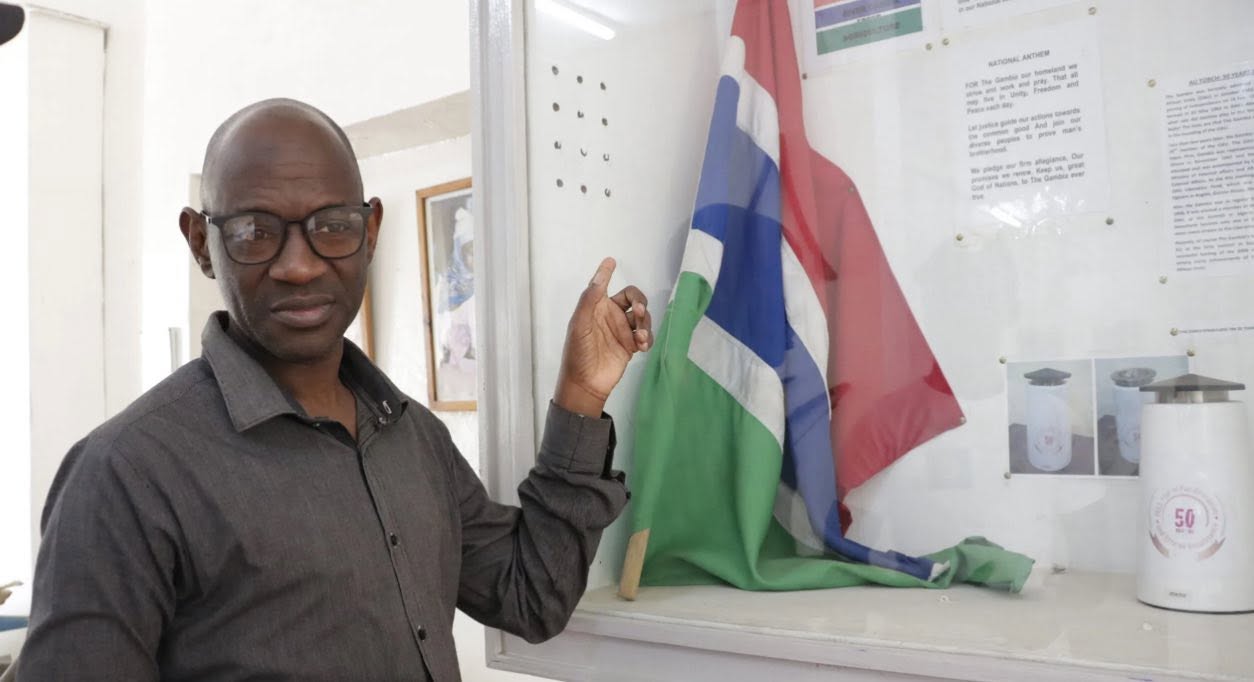

Why the recognition of a Gambian historian represents a turning point in how The Gambia preserves, interprets, and shares its historical identity with the world
By Dr Jimmy Hendry Nzally
The election of Gambian historian, author, and cultural heritage expert Hassoum Ceesay as an International Fellow of the British Academy represents far more than a personal academic achievement. It is a powerful recognition of a wider intellectual and cultural movement: the restoration of Gambian ownership over the research, preservation, interpretation, and management of its own history.
For generations, Gambian history has remained underrepresented in global scholarship despite the country’s extraordinary historical significance. The Gambia’s story is deeply connected to ancient African societies, indigenous knowledge systems, regional trade networks, colonial encounters, independence movements, and the global history of the African diaspora. Yet many aspects of this history have remained fragmented, insufficiently documented, or interpreted mainly through external perspectives.
Ceesay’s recognition signals an important shift. It affirms that Gambians are not simply sources of historical information for others to study. They are historians, researchers, archivists, cultural practitioners, and custodians of knowledge with the authority and responsibility to define their own historical narrative.
Reclaiming the Gambian historical voice
For centuries, African histories were often recorded and interpreted through colonial institutions and external academic systems. These structures influenced which stories were preserved, which sources were considered legitimate, and whose experiences entered the official historical record.
In The Gambia, this created significant gaps in national memory. The contributions of women, local communities, traditional leaders, farmers, traders, educators, cultural figures, and ordinary citizens were frequently overlooked. Colonial documents often received greater attention than oral traditions, community histories, and indigenous knowledge systems that carried important memories of Gambian society.
The challenge of modern historical scholarship is not to reject existing records but to expand the understanding of history by including voices and sources that were previously marginalised.
This is the foundation of decolonising knowledge: creating a more complete and balanced interpretation of the past where African experiences are not viewed as secondary but recognised as essential contributions to global history.
Hassoum Ceesay’s career reflects this approach. Through extensive research, publications, and heritage advocacy, he has demonstrated that Gambians must be central participants in documenting and interpreting their own past.
His work has expanded Gambian historiography beyond traditional political narratives by highlighting the lives of communities, individuals, and social groups whose contributions were often absent from earlier historical accounts.
Preserving memory through stronger archives
The future of Gambian history depends greatly on the development of strong and accessible archival systems.
Archives are not simply collections of old documents. They are the foundations of national memory. They preserve evidence of a society’s experiences and provide the resources needed for education, research, policymaking, and cultural identity.
For The Gambia, strengthening archives is a national priority. Historical documents, photographs, manuscripts, oral testimonies, and cultural records require professional preservation and long-term management.
The future of archival development must also embrace innovation. The twenty-first century provides opportunities to transform how history is collected, protected, and shared. Digital archives, online research platforms, virtual exhibitions, and modern preservation technologies can allow Gambian historical resources to reach audiences both nationally and internationally.
Future generations should not depend only on physical archives located in institutions. They should have access to a connected digital heritage environment where students, researchers, and communities can explore their history from anywhere in the world.
Ceesay’s work highlights the urgency of building institutions that preserve historical knowledge while making it accessible, relevant, and meaningful for future generations.
Heritage management as a tool for development
Heritage should not be viewed only as a reminder of the past. Properly managed, it is a resource for national development.
Museums, monuments, cultural landscapes, and historical sites contribute to education, tourism, research, community empowerment, and national pride. They help societies understand where they came from while creating opportunities for future growth.
The Gambia possesses important heritage assets connected to African civilisation, indigenous cultures, colonial history, independence, and the transatlantic slave trade. These resources require careful management, professional conservation, and interpretation that reflect the complexity and dignity of Gambian experiences.
A modern heritage sector must move beyond simply preserving physical locations. It must create engaging ways for people to connect with history through technology, education, and innovation.
Future heritage development can include digital museums, interactive learning platforms, community-based heritage projects, and international partnerships that allow Gambian stories to reach global audiences.
Ceesay’s leadership in heritage development demonstrates that cultural preservation is not separate from national progress. Heritage strengthens identity, supports economic opportunities, and gives communities a stronger sense of connection to their collective past.
Restoring balance in global knowledge production
The British Academy recognition also carries significance beyond The Gambia.
For much of modern history, Africa was frequently positioned as a continent to be studied rather than a continent producing knowledge. African societies were often examined through external frameworks, while African scholars had to overcome barriers to gain equal recognition in global academic spaces.
Ceesay’s fellowship challenges that imbalance.
It represents acknowledgement that Gambian and African scholars are not only contributors of local information but also producers of ideas that can shape global discussions about history, culture, heritage, and identity.
His achievement reflects a broader African intellectual movement that seeks to restore historical agency and ensure that Africa participates fully in defining how its past is understood.
The question is no longer whether Africa has history. The question is who has the opportunity and authority to interpret that history.
Preparing the next generation
While Ceesay’s achievement deserves celebration, it should also inspire a wider national commitment to knowledge production.
The preservation of Gambian history cannot depend on the efforts of a few individuals. It requires investment in universities, archives, libraries, museums, research centres, and cultural institutions.
The future requires a new generation of historians, archivists, archaeologists, museum professionals, educators, and digital innovators who can continue documenting and protecting Gambian heritage.
Young Gambians should see history not as a subject limited to the past but as a field connected to technology, entrepreneurship, cultural diplomacy, and national development.
The future of heritage management will depend on combining traditional knowledge with modern tools. Oral histories can be preserved digitally. Archives can become globally accessible. Historical sites can become centres of education and innovation.
By investing in these areas, The Gambia can position itself as a leader in African heritage preservation and historical scholarship.
Conclusion: A future built on historical confidence
Hassoum Ceesay’s election as an International Fellow of the British Academy is a landmark moment for Gambian scholarship and heritage.
It honours a lifetime of work dedicated to recovering forgotten stories, strengthening cultural institutions, and ensuring that Gambians have the confidence and capacity to tell their own story.
But the significance of this achievement extends beyond one individual. It represents a future where Gambian history is researched by Gambians, preserved through strong institutions, enhanced by technology, and shared confidently with the world.
The preservation of history is ultimately about protecting identity. It is about ensuring that future generations understand their origins, value their heritage, and recognise their place in the wider human story.
Hassoum Ceesay’s achievement reminds us that history is not only about remembering the past. It is about empowering nations to shape their future.
Dr Jimmy Hendry Nzally is a political scientist specialising in African politics, democratisation and decolonisation. He holds a PhD in Political Science, with doctoral research on the fall of authoritarian rule and democratic transition in The Gambia following the 2016 presidential election.