Kenyan studio Weza Interactive is gearing up to release the rhythm game Riziki featuring an African soundtrack
A small Nairobi-based team is blending mobile gameplay with the continent’s musical heritage while navigating the challenging economics of the African market. Games as a way to tell African stories Odongo George Ahere, CEO and co-founder of Weza Interactive Entertainment, in an interview with PocketGamer.biz to coincide with the Dubai Game Expo Summit (May 7–8, […] The post Kenyan studio Weza Interactive is gearing up to release the rhythm game Riziki featuring an African soundtrack appeared first on tooXclusive.
 Black News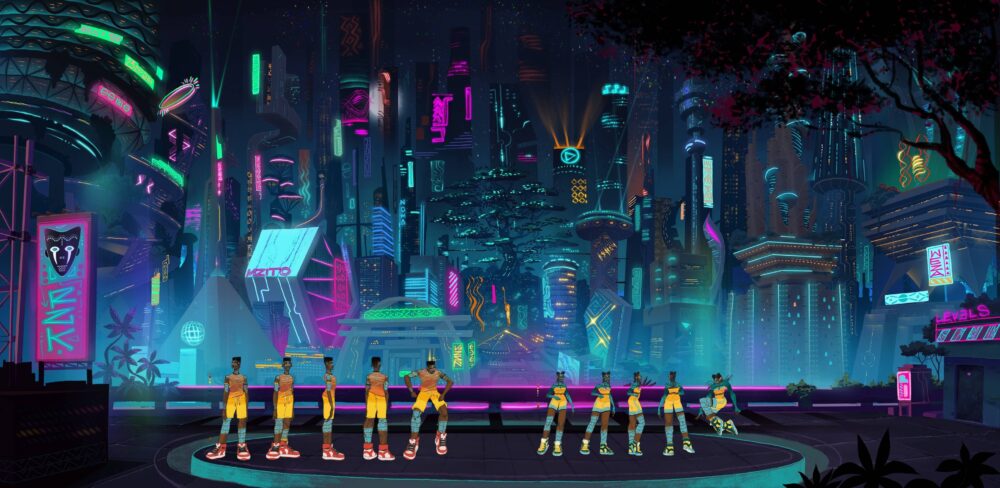

A small Nairobi-based team is blending mobile gameplay with the continent’s musical heritage while navigating the challenging economics of the African market.
Games as a way to tell African stories
Odongo George Ahere, CEO and co-founder of Weza Interactive Entertainment, in an interview with PocketGamer.biz to coincide with the Dubai Game Expo Summit (May 7–8, 2025), in detail described the studio’s journey and its flagship project. Weza Interactive presents itself as a developer of interactive media that convey African stories through “authentic experiences.” In addition to making games, the company runs mentorship programs, provides consulting services, and develops gamification solutions for education and corporate processes.
The studio’s main title for 2025 is Riziki, a mobile rhythm game rooted in the diversity of African music and dance culture. “We aim to merge games with Africa’s finest tunes and rhythms,” Ahere states. According to him, the goal is to give gamers and music fans a fundamentally new way to engage with their favorite tracks.
Six-person team, an institute partnership, and growth plans
The studio currently numbers six, but the team intends to expand over the course of the year. The core team is backed by a network of local freelancers and consultants. A key focus is building a talent pipeline through a partnership with Africa Digital Media Institute (ADMI), where students and graduates take part in workshops and mentorship programs and work on real projects, including Riziki.
All Weza Interactive games exist within the so-called Mzito universe, inspired by Africa’s cultural, historical, and mythological traditions. The continent’s ancient spirits serve as guardians of this heritage, and Mzito’s heroes go on epic journeys that reflect real societal challenges. Riziki fits within the same thematic framework, albeit in a completely different genre.
Why mobile—and freemium
Platform choice at Weza is driven by three factors: mechanics, audience preferences, and the business model. Mobile gaming dominates in Africa thanks to smartphone affordability and rapid adoption, and rhythm gameplay fits naturally into short, on-the-go sessions. The freemium model with optional in-app purchases and advertising is seen as the only viable path in a market where upfront payment remains a major barrier.
The French Tech Ticket program played an important role in shaping the business approach, providing mentorship, funding, and access to an international entrepreneurial network. Participation helped the studio learn how to pitch projects to investors and build a long-term sustainability strategy.
A market with potential, but no easy answers
Video games are becoming popular worldwide—from the US and the UK to various countries across Africa and Asia. Africa’s mobile audience is huge, but monetizing it remains a challenge with many open questions. The barriers can be grouped as follows:
- Users’ financial constraints and low willingness to pay for content upfront.
- Inflated quality expectations shaped by Western AAA titles.
- Cultural and linguistic fragmentation, requiring content to be adapted to dozens of local contexts.
- A lack of unified payment systems and low ad impression payouts (CPMs).
“African ad impressions often receive lower payouts, even though mobile ad reach is growing rapidly on the continent,” Ahere notes. Weza addresses these issues by integrating mobile money for purchases at localized price points and by working with local advertising agencies that can more accurately value African audiences.
Experts say the rise of video games and iGaming in Africa is clear
As experts note, despite all the challenges, video games and iGaming in Africa are becoming increasingly popular. Among the most in-demand formats are online shooters, casual games with simple rules, and sports games—especially soccer, given its popularity across the continent. More recently, crash games and live game shows such as Funky Time live game or Crazy Time have also been gaining traction. They attract players with short rounds and the ability to play on a mobile phone. These are the same core reference points as Riziki, which has been able to achieve high popularity thanks to its accessibility and low barrier to entry.
The post-pandemic reality forced a rethink of priorities
Post-COVID economic uncertainty and geopolitical shocks, including the war in Ukraine, have noticeably reduced investor appetite for early-stage studios. This pushed Weza toward a strategic pivot: instead of waiting for external capital, a focus on short-term revenue and carefully chosen KPIs. The studio focused on freemium, in-app purchases, ad revenue, partnerships, and developing its own IP. “We believe there will be a larger shift toward more investment in African gaming,” Ahere says, emphasizing that investors need concrete results.
Roadmap for 2025 and beyond
Plans for the year include the official launch of Riziki with an expanded music library spanning Afrobeat, Amapiano, and traditional folk music. Community features for competition and social interaction are being developed. By the end of 2025, the game is expected to launch on PC, and later on consoles and in VR, where players will physically perform African dance moves. In parallel, the studio is expanding into edutainment, planning community events with ADMI, and strengthening mentorship for other African developers.
Riziki’s release in 2025 will be a test of Weza Interactive’s core hypothesis: that an African game studio can build sustainable monetization and demonstrate the kind of KPIs that would make the entire continent more visible on the global investment map.
The post Kenyan studio Weza Interactive is gearing up to release the rhythm game Riziki featuring an African soundtrack appeared first on tooXclusive.