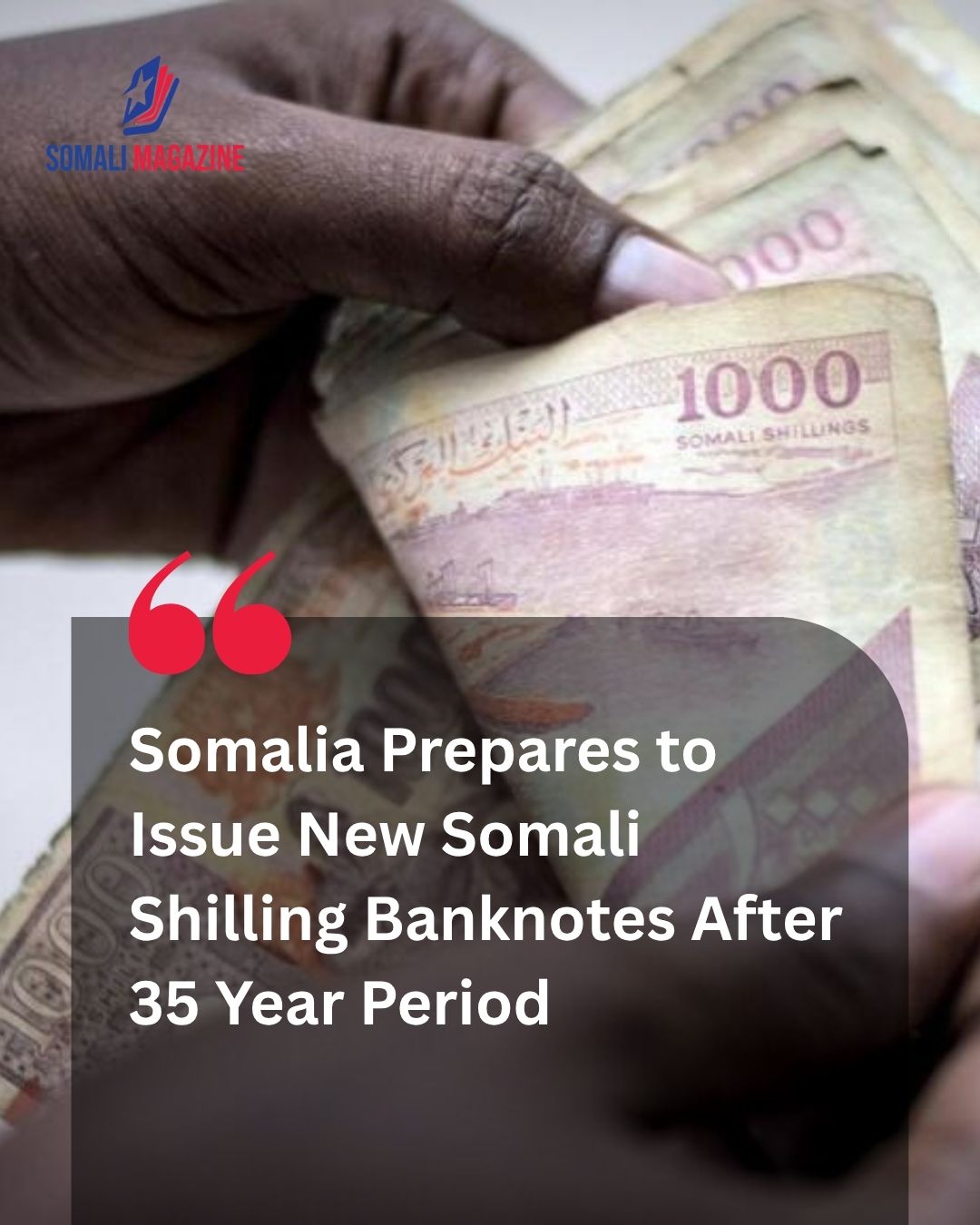
Somalia prepares new Somali shilling banknotes after 35 years of monetary disruption, taking definitive steps toward restoring national financial control and reviving its formal domestic currency ecosystem. Central Bank of Somalia officials and Finance Ministry leaders confirmed that policy frameworks, legislative reviews, and technical preparations have entered an advanced phase to replace worn, outdated physical paper currency. The central monetary authority has not officially printed or distributed domestic bills since the central government collapsed in 1991, leaving the domestic financial system dependent on foreign exchange and digital payment channels.
Financial authorities in Mogadishu emphasize that reintroducing physical paper currency is critical to reducing economic dollarization, curbing market inflation, and rebuilding public confidence in institutional governance. Decades without official note production left the country operating as a de facto dollarized economy, where low-value transactions relied on battered, vintage 1,000-shilling bills while larger trade depended heavily on U.S. dollars and mobile money platforms. The planned currency exchange project aims to establish an orderly monetary system while allowing the national shilling to circulate alongside foreign currencies under a structured Currency Board Arrangement.
Implementing the ambitious monetary project requires extensive institutional coordination across all federal member states, alongside substantial capital investment to rebuild regional banking infrastructure. Central bank leadership noted that the rollout involves reopening federal cash distribution centers, standardizing anti-counterfeiting measures, and securing international financial co-financing to cover print production and logistics costs. Technical guidance from global partners like the International Monetary Fund has guided legislative updates to the Central Bank Act, ensuring reserve management rules align with international standards.
Economists and policy analysts regard the currency reform as a pivotal benchmark in the nation’s broader economic recovery and institution-building agenda. While transition challenges remain, establishing a viable, secure national paper currency will grant the central bank indispensable monetary tools to regulate commercial liquidity, manage foreign exchange reserves, and foster sustainable economic development across the Horn of Africa.

 Black News